
Two Years of Prabowo-Gibran: Government Communications Agency Highlights Religion’s Role in Unity and Fighting Corruption
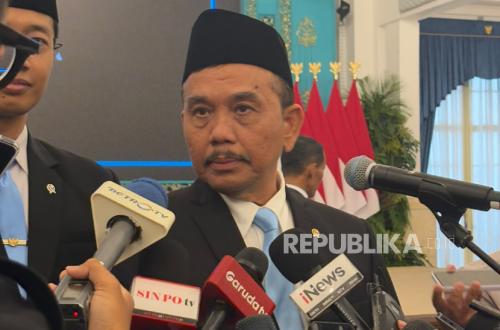
JAKARTA — Syahganda Nainggolan, head of the Republic of Indonesia’s Government Communications Agency (Bakom), has praised three achievements by the Ministry of Religious Affairs during the first two years of President Prabowo Subianto and Vice-President Gibran Rakabuming Raka’s administration. They include strengthening religion as a unifying force, instilling anti-corruption values and improving human-resource quality through education.
Syahganda said the achievements showed that religion’s role extended beyond people’s spiritual lives and was also connected to national affairs, the development of integrity and improving the quality of Indonesians.
“On behalf of Bakom, we greatly appreciate the three things I have noted. First, the Minister of Religious Affairs and his staff have succeeded in strengthening religion as a means of national unity,” Syahganda said at a press conference on the achievements of the two-year Asta Cita programme at the Ministry of Religious Affairs in Jakarta on Monday (19 October 2026).
He said religion’s role in bringing people together was an important achievement for the ministry amid Indonesia’s diversity. Religious values, he said, could strengthen social ties and safeguard national unity.
The praise followed a presentation by Religious Affairs Minister Nasaruddin Umar and ministry officials on the ministry’s achievements in supporting the Prabowo-Gibran administration’s Asta Cita agenda.
One indicator highlighted was the increase in the Religious Harmony Index (IKUB), from 76.47 in 2024 to 77.89 in 2025. This was the highest score since the national index was first measured in 2015.
Religious harmony and national unity
The rise in the index was one basis for Bakom’s praise of the ministry’s performance. The 2025 Religious Harmony Evaluation Survey recorded a national score of 77.89, exceeding the 2025 National Medium-Term Development Plan (RPJMN) target of 76.77.
The survey, conducted by the Ministry of Religious Affairs in partnership with the University of Indonesia, measured three main dimensions: tolerance, equality and togetherness.
Tolerance scored highest, at 88.82, followed by equality at 79.35. Togetherness scored 65.49.
The disparity indicates that, although public tolerance is high, strengthening cooperation and social interaction between religious communities remains a challenge.
The Ministry’s Centre for Religious Harmony (PKUB) has also developed several programmes to strengthen relations between religious communities. These include SI-RUKUN, a digital early-warning system for conflict linked to 1,156 religious counsellors; support for 468 Harmony-Aware Villages; and mediation and interfaith dialogue to address 46 cases involving religious harmony during 2025.
The programmes are intended to improve conflict prevention and create opportunities for communication among people from different religious backgrounds.
In this context, Syahganda said religion had a strategic role in strengthening national unity. He said effective management of religious affairs was also linked to the government’s ability to maintain harmony amid diversity.
Religion as a force against corruption
The second achievement highlighted by Syahganda was the ministry’s effort to make religious values a foundation for building an anti-corruption culture.
He said religion had the moral force to encourage people to reject corrupt behaviour and uphold integrity in their daily lives.
“The second [achievement] is that religion has been successfully made a means of liberation from a culture of corruption,” Syahganda said.
He said the effort showed that fighting corruption required not only oversight and law enforcement, but also the development of public moral awareness.
“I saw how religion can persuade people to become free of corruption,” he said.
In its presentation of two years of Asta Cita achievements, the ministry said it had strengthened integrity through improvements to bureaucratic governance, greater internal oversight and the promotion of anti-corruption values through a religious approach.
Nasaruddin said the ministry had printed and distributed books on anti-corruption from the perspectives of six religions: Islam, Christianity, Catholicism, Hinduism, Buddhism and Confucianism. The materials were developed in collaboration with the Corruption Eradication Commission (KPK).
On International Anti-Corruption Day 2025, the ministry received recognition from the KPK for its cooperation in producing the Anti-Corruption Religious Book. The Madrasah Teachers and Education Personnel Anti-Corruption Counsellors Forum also received second prize nationally in the ministries and institutions category.
Alongside its moral-education approach, the ministry has developed internal oversight through the Inspectorate General’s Impactful Oversight programme.
According to a ministry report published on 20 October 2026, its performance on three actions under the National Strategy for Corruption Prevention (Stranas PK) scored 100 for the digitalisation of public services, 97.5 for strengthening the handling of criminal cases and conflicts of interest, and 80.49 for preventing corruption in public procurement.
The ministry also reported that its Integrated Government Internal Control System (SPIP) maturity level reached 4.132 in 2026, or Level 4. Its Corruption Control Effectiveness Index stood at 4.484, also at Level 4.
These indicators reflect progress in strengthening oversight systems and governance. However, the achievements of prevention and anti-corruption education programmes should be distinguished from direct measurements of a reduction in corrupt practices.
Nasaruddin said efforts to strengthen integrity should not stop at administrative rules, but should become part of the culture of public service.
“We want integrity not merely to be a bureaucratic rule, but a value that is lived out in our service,” Nasaruddin said at the press conference.
Source: jawawa.id (https://jawawa.id/newsitem/two-years-of-prabowo-gibran-government-communications-agency-highlights-religions-role-in-unity-and-fighting-1792554694)
Originally published by Republika (https://news.republika.co.id/berita/tn8lr9451/dua-tahun-prabowo-gibran-bakom-soroti-peran-agama-dalam-persatuan-dan-pemberantasan-korupsi), translated from Indonesian