
Two Years of Prabowo-Gibran: Food Sector Gains and Unfinished Challenges
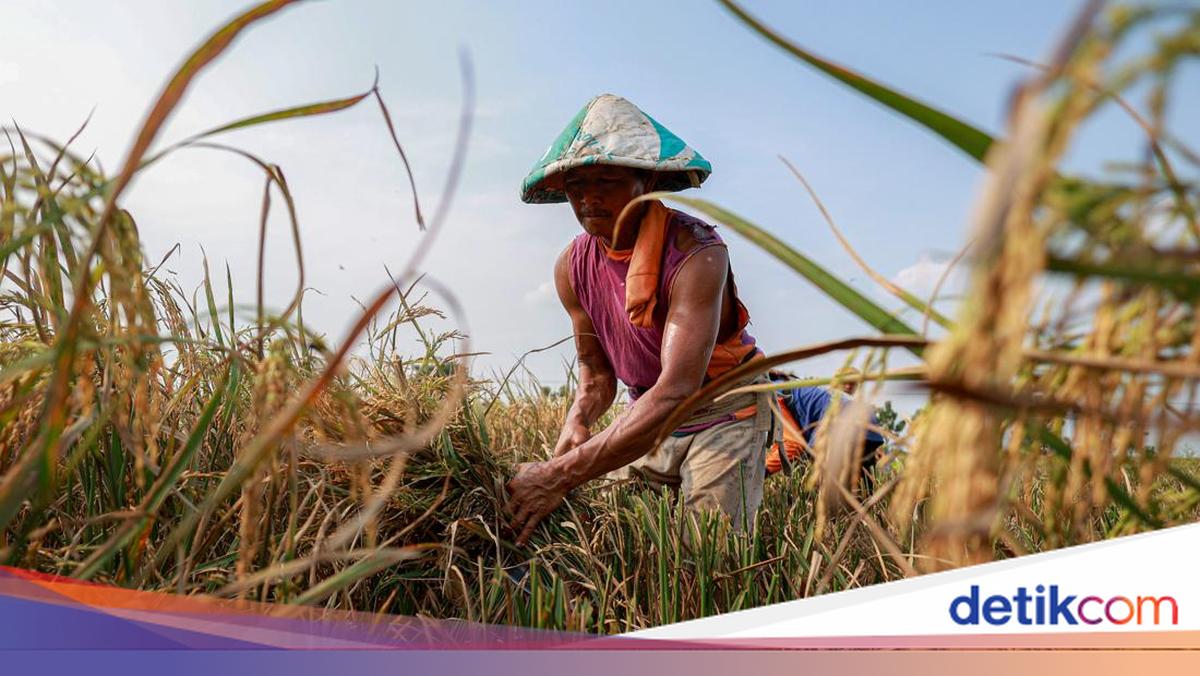
The first two years of President Prabowo Subianto and Vice-President Gibran Rakabuming Raka’s administration have brought several achievements in the food sector. However, the government still faces challenges, particularly rising prices for a number of food commodities.
The government says it has achieved self-sufficiency in eight commodities: rice, maize, consumer sugar, broiler chicken, eggs, shallots, large chillies and bird’s-eye chillies.
Agriculture Minister Andi Amran Sulaiman said rice was among the commodities to have performed well, noting that the government did not import rice in 2025 or 2026.
Indonesia recorded a rice surplus of 4.2 million tonnes in 2025. This was a marked change from 2024, when the country still had to import 4.52 million tonnes of rice.
“Our food supply, particularly rice, a strategic food commodity, has remained self-sufficient during the two years of the current administration. There were no imports last year and there will be none this year. God willing, our stocks are safe. We have enough rice until July. Our stocks are currently at their highest level in history,” Amran said after a Food Security Coordination Meeting at Graha Mandiri in Jakarta on Monday (26 October 2026).
Amran said rice stocks were expected to meet demand until the middle of next year. He said the abundant supply made the government optimistic about coping with El Niño.
“Our standing crop is 10 million tonnes, then hotels, restaurants and other businesses have 10 million tonnes, and Bulog has 4.5 million tonnes, making a total of nearly 25 million tonnes. Monthly demand is 2.5 million tonnes. Twenty-five divided by 2.5 means we are safe for the next 10 months, until July or August. So El Niño is not too worrying because we prepared in advance with pump irrigation, land optimisation and improvements to irrigation, as well as drought-resistant seeds,” he said.
Self-sufficiency is also evident in livestock products. Broiler chicken production is projected to reach 4.90 million tonnes, against national demand of about 4.02 million tonnes, giving an estimated surplus of 876,000 tonnes.
Egg production is estimated at around 6.99 million tonnes, exceeding national demand of 6.47 million tonnes. The projected surplus is 516,000 tonnes.
Amran nevertheless acknowledged an anomaly in egg prices at producer and consumer levels. The government is working to address the issue so that people can obtain eggs at reasonable prices.
“Eggs are also in surplus, and we even export them. The problem is that the price at the farm level is Rp20,000–Rp21,000. It should be Rp26,000 to Rp30,000. But, ironically, the consumer price is Rp40,000–Rp45,000. That is above the retail price ceiling and far too high. There is an anomaly. Thankfully, it has been identified,” he said.
Maize production in 2026 is projected to reach 18 million tonnes of dry shelled maize. The forecast is supported by a 4.18% rise in harvest yields in early 2026. Thanks to the surplus and carry-over stocks of 4.5 million tonnes from 2025, the government has stopped importing maize in 2026.
Statistics Indonesia (BPS) data show that dry shelled maize with a 14% moisture content totalled 16.16 million tonnes from January to December 2025. This was an increase of 1.02 million tonnes, or 6.74%, compared with the 15.14 million tonnes produced in 2024.
BPS also reported a positive outlook for maize-harvested area in early 2026. From January to March, the harvested area is estimated at 0.86 million hectares, with potential production of around 4.94 million tonnes of dry shelled maize at 14% moisture content.
The government also did not import feed maize in 2025 or 2026.
For other commodities, consumer sugar production is projected to reach 3.04 million tonnes, exceeding national demand of 2.84 million tonnes.
Shallot production is estimated at 1.32 million tonnes, above national demand of 1.25 million tonnes. The commodity balance shows a surplus of about 63,000 tonnes.
In horticulture, large-chilli production is projected at 1.52 million tonnes, compared with national demand of 929,000 tonnes, leaving an estimated surplus of 588,000 tonnes.
The national supply of bird’s-eye chillies is also projected to be sufficient through the end of 2026. According to the National Food Agency’s (Bapanas) National Food Balance Projection as at 5 May 2026, production is expected to reach 1.59 million tonnes this year, against national demand of 913,600 tonnes. The projected year-end stock is about 60,500 tonnes.
In May 2026, bird’s-eye chilli availability was projected at 168,100 tonnes, while national demand was about 78,000 tonnes. The supply balance for the month was therefore expected to show a surplus of around 90,100 tonnes.
Food Commodity Prices Continue to Climb
Despite surpluses in various food commodities, the government is still grappling with rising prices for consumers. Some residents have complained that food prices, including those of rice and chillies, keep increasing.
Wildan, a resident of Depok, said the price of premium rice had risen. He said he usually bought a 5kg bag for Rp75,000–Rp85,000, but it now costs Rp90,000–Rp125,000.
“Rice has gone up. I usually buy 5kg of premium rice for Rp75,000 to Rp85,000. Now it is around Rp90,000 to Rp125,000 for 5kg,” Wildan said.
He added that premium rice was sometimes unavailable at modern markets and supermarkets.
“Last month, when I did my monthly shopping, it was out of stock here [at the supermarket]. Now it is available,” he said.
Wiyah, a domestic worker, voiced a similar complaint. She said rising commodity prices, including chillies, had forced her to buy less.
“Chillies are expensive at the moment. When they cost this much, I just buy fewer of them,” Wiyah said.
Wiyah also complained about the quality of rice subsidised under the Food Supply and Price Stabilisation (SPHP) programme. Although it is more affordable, she said the quality was poor.
“This [SPHP] rice is yellow. It has to be mixed with premium rice first to make it nice to eat,” Wiyah said.
Tunov Mondro Atmojo, chairman of the Indonesian Chilli Champion Association, said farmers had been feeling the effects of rising chilli prices since mid-August. He said a key factor was limited water availability due to hot weather and El Niño.
According to price data from Bank Indonesia’s National Strategic Food Price Information Centre (PIHPS), curly red chilli prices rose by 9% to Rp62,950 per kilogram. Red bird’s-eye chilli prices jumped by 7.2% to Rp90,050 per kilogram.
“The increase is purely due to the weather, which has depleted water supplies. The chilli plants farmers have planted are now relying solely on existing crops that are already producing,” Tunov said.
Abdul Hamid, chairman of the Indonesian Chilli Agribusiness Association (AACI), said the price rises were caused by production disruptions in several key growing areas.
He said chilli prices at farm level currently ranged from Rp53,000 to Rp65,000 per kilogram. At wholesale markets, they had risen to Rp70,000–Rp75,000 per kilogram, while consumer prices reached Rp90,000–Rp95,000 per kilogram.
Coordinating Food Minister Zulkifli Hasan, known as Zulhas, also acknowledged rising food prices in several regions. He said chilli price increases had contributed to inflation.
“We understand and have heard the public’s complaints about prices, including inflation. It turns out that bird’s-eye chillies and—what was the other one?—red chillies are among the causes,” he said.
To keep rice affordable, the government is taking several measures, including distributing food assistance and subsidised rice. Food assistance is intended for people in need, while subsidised rice is aimed at those who need a more affordable option.
Zulhas said the government would provide 30kg of rice to 33.2 million recipients in deciles one to four. Distribution is scheduled to be completed by December 2026.
He also said the government was seeking to maximise rice production, including by cutting regulations on fertiliser distribution. He said simplifying the rules would make it easier for farmers to obtain subsidised fertiliser.
“The President has decided and agreed to provide food assistance to 33.2 million people in deciles one to four. We will speed it up—complete it before December,” Zulhas said at the Food Security Coordination Meeting at Graha Mandiri in Jakarta on Monday (26 October 2026).
Home Affairs Minister Tito Karnavian also highlighted rising chilli prices and their contribution to inflation.
“Month on month, from August to September, there was a slight increase of 0.30%, with the main contributor being the food and drink sector. Within that sector, the main factor we see is chillies, not staple foods—bird’s-eye and red chillies,” he said.
To address the problem, Tito urged regional governments to encourage residents to take part in chilli-growing programmes, saying they could help ease price increases.
“This is mainly because of the drought, which has reduced bird’s-eye chilli production in some areas. It can also be addressed by stepping up chilli-planting programmes, which are already being carried out in many places—in villages, urban wards and cities,” he said.
Source: jawawa.id (https://jawawa.id/newsitem/two-years-of-prabowo-gibran-food-sector-gains-and-unfinished-challenges-1793184888)
Originally published by detikcom (https://news.detik.com/berita/d-8728092/melihat-capaian-pekerjaan-rumah-2-tahun-prabowo-gibran-di-sektor-pangan), translated from Indonesian