
Two Years of Prabowo-Gibran: Cooperatives Should Become a Pillar of the People’s Economy, Says Cooperatives Minister
The second year of the Prabowo-Gibran administration is an opportunity to strengthen cooperatives as one of the main pillars of the people’s economy. This is in line with the aspirations of the nation’s founders, including Bung Hatta, and Article 33 of the 1945 Constitution, which recognises cooperatives as an important part of the national economy.
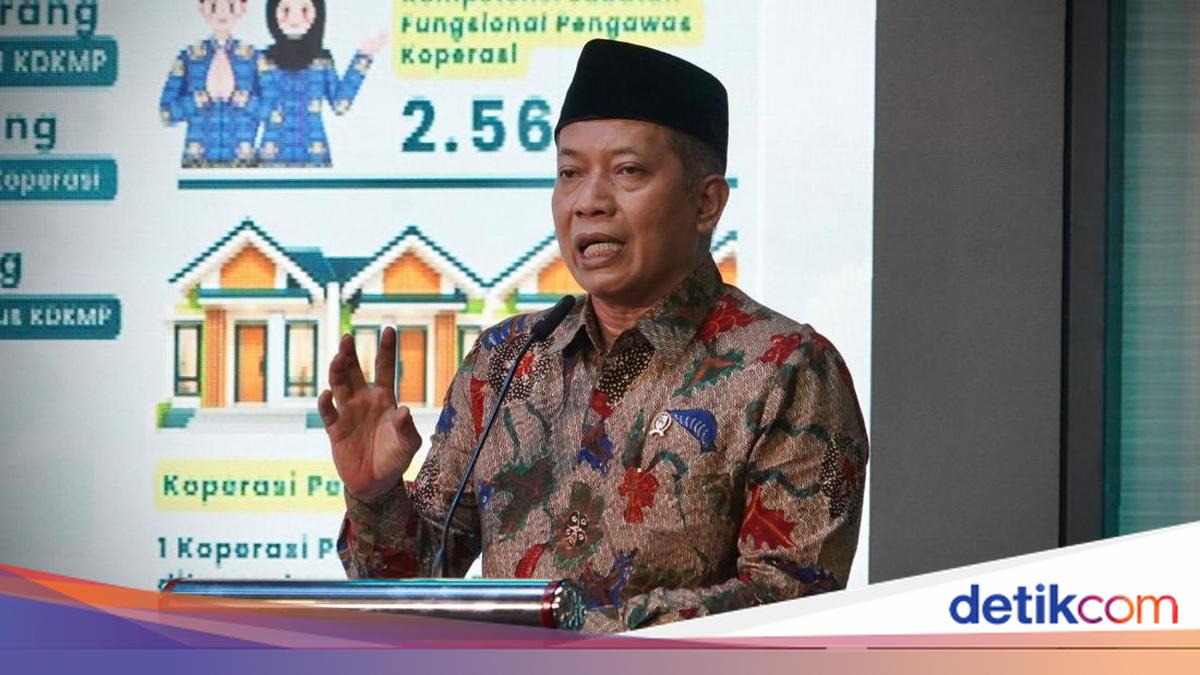
Cooperatives Minister Ferry Juliantono said cooperatives should become part of the mainstream national economy. Alongside state-owned enterprises (SOEs) and private corporations, they are expected to contribute to economic growth.
“The hope is that cooperatives, SOEs and corporations will all make their best contribution to accelerating economic growth towards the target of 8 per cent,” Ferry said in a statement on Tuesday (27 October 2026).
He made the remarks as a speaker at the special event “Two Years of Prabowo-Gibran: Report Card for the People”, organised by Garuda TV at the main auditorium of Tarumanagara University (UNTAR) on Tuesday (27 October).
Ferry said the Ministry of Cooperatives was also responsible for supporting more than 130,000 cooperative business entities across Indonesia. They operate in a range of sectors, from production and distribution to industry and finance.
In production, for example, there are cattle-farming cooperatives in various regions. In distribution, there are warehouses owned by Village Unit Cooperatives (KUD), which were originally built to support food security.
“Cooperatives can therefore play a major role in production, distribution, industry and finance,” Ferry said.
Ferry also outlined progress on the Red-and-White Village/Urban Ward Cooperative (KDKMP) programme. He said it was designed to shift rural communities from being merely objects of the economy to becoming economic actors.
“With the Red-and-White Village and Urban Ward Cooperative programme, rural communities that were previously economic objects have now become economic actors,” he said.
Ferry said 83,000 cooperatives had so far been established as business entities. This figure covers nearly all villages and urban wards in Indonesia.
The establishment of the 83,000 cooperative entities follows Presidential Instruction No. 9 of 2025. The process involved 18 ministries and government agencies, provincial and district/city governments, and communities through special village deliberations. “So it is not true that the Red-and-White Village and Urban Ward Cooperatives are top-down, because we have also followed a bottom-up process,” he stressed.
Ferry said the government had issued Presidential Regulation No. 82 of 2026 on the operational governance of the Red-and-White Village/Urban Ward Cooperatives. The KDKMP has three main functions.
First, it distributes subsidised goods directly from producers to the public. These include subsidised fertiliser, 3-kilogram LPG cylinders, cooking oil and rice under the Food Supply and Price Stabilisation (SPHP) programme.
Second, the cooperatives act as offtakers, purchasing output produced by rural communities. Third, the Red-and-White Cooperatives provide microfinance services as an alternative source of funding for rural communities.
“With these three functions, cooperatives are expected to strengthen the village economic ecosystem while improving people’s access to markets, distribution and financing,” Ferry said.
At the end of his presentation, Ferry also cited several achievements in strengthening the national cooperative ecosystem. One was the reunification of the Indonesian Cooperative Council (Dekopin), which had been divided for more than 15 years. Dekopin is the umbrella organisation for Indonesia’s cooperative movement.
Ferry said stronger institutions and human resources, together with a greater role for cooperatives across economic sectors, were crucial to making them a leading force in the people’s economy and helping Indonesia meet its national growth target.
Source: jawawa.id (https://jawawa.id/newsitem/two-years-of-prabowo-gibran-cooperatives-should-become-a-pillar-of-the-peoples-economy-says-cooperatives-1793112694)
Originally published by detikcom (https://news.detik.com/berita/d-8726940/2-tahun-prabowo-gibran-menkop-dorong-koperasi-jadi-pilar-ekonomi-rakyat), translated from Indonesian