
Two Years of Prabowo-Gibran and 57 Million MBG Recipients
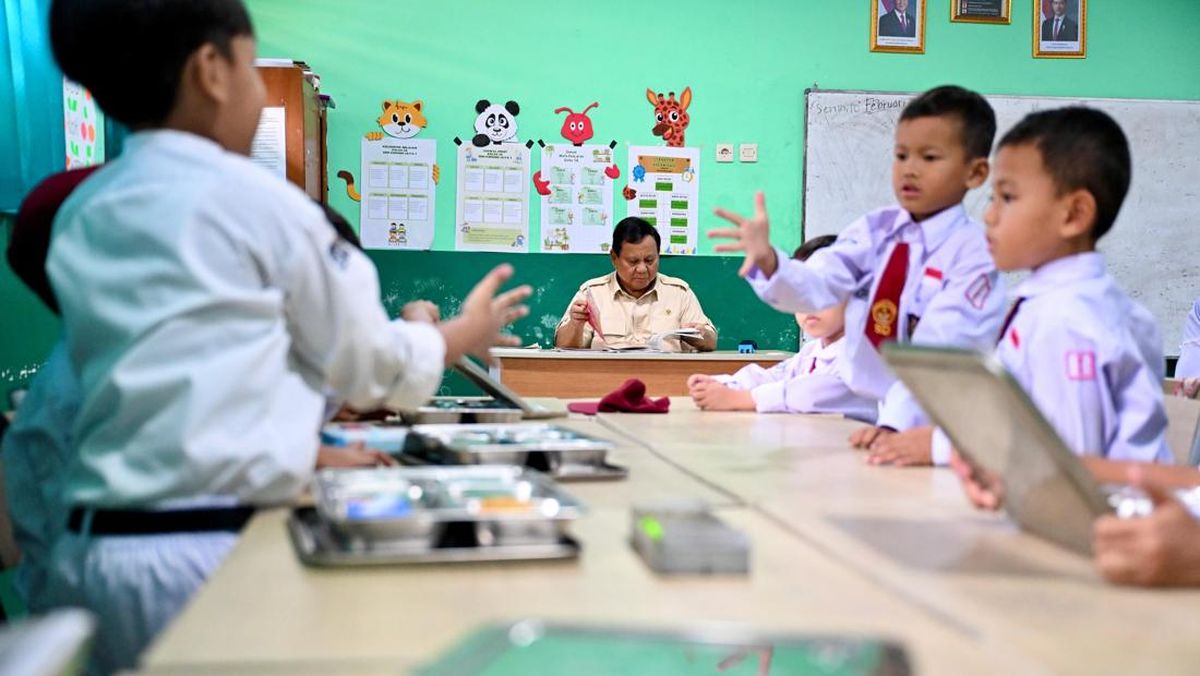
Indonesia’s Constitutional Court (MK), in Decision No. 40/PUU-XXIV/2026, ordered that the free nutritious meals (MBG) programme must not draw on the 20 per cent education budget allocation mandated under the 1945 Constitution. At the same time, the Court affirmed that MBG is a legitimate policy and may continue.
“Based on Decision No. 40, whether we like it or not, the Constitutional Court has declared MBG constitutional. So President Prabowo’s flagship programme can still be implemented,” said Wiwik Budi Wasito, a law and constitutional expert at UIN Malang, East Java, speaking on Tuesday (13 October).
In its ruling, the Court said MBG’s aims include addressing stunting and other health problems caused by unequal access to nutrition. Because those aims are broad, it said, the programme must have its own budget allocation in the state budget (APBN).
Wiwik predicted that MBG funding would in future come from the health budget, as the Court linked the programme to efforts to tackle stunting.
The Court’s legal reasoning also described MBG as part of the constitutional mandate. “The provision of nutritious food free of charge to members of the targeted community is also one of the mandates of the Constitution,” it said.
The Court referred to Article 28H(1) and Article 34(3) of the 1945 Constitution. These provisions affirm citizens’ rights to a good and healthy environment and to healthcare, as well as the state’s responsibility to provide social security and adequate health services.
Wiwik said there was no constitutional basis to cancel the programme unless the government and parliament insisted on funding it from the education allocation. In that case, the state budget could be deemed unconstitutional and challenged again before the Court.
A similar case occurred in 2006, early in President Susilo Bambang Yudhoyono’s administration, Wiwik said. The Constitutional Court annulled the state budget law because education spending amounted to only 7 per cent of the budget, rather than the required 20 per cent.
“It will be more or less the same. If the government still digs in during 2027 and continues to interfere with the 20 per cent education budget, I hope another petition will be filed and upheld by the Court,” Wiwik said.
Background
MBG is a national priority programme under President Prabowo Subianto and Vice-President Gibran Rakabuming. It was launched on 6 January 2025, two months after they were sworn in on 20 October 2024.
The programme is governed by Presidential Regulation No. 115 of 2025 on the administration of MBG. A year before its official launch, in 2024, the government under President Joko Widodo had established the National Nutrition Agency (BGN), which is responsible for implementing it.
In its first year, from January 2025 to January 2026, the programme reached 55.1 million people, including pupils from early childhood education through senior high school, young children, pregnant women and breastfeeding mothers. That exceeded the initial target of 6 million beneficiaries.
Meals were distributed through 19,100 kitchens, known as Nutrition Fulfilment Service Units (SPPGs), across all 38 provinces. The programme involved 780,000 employees and volunteers.
The government allocated 71 trillion rupiah to MBG in 2025, its first year, drawing the funds from the education budget. This was substantially more than the 33.55 trillion rupiah allocated to the Ministry of Primary and Secondary Education.
In 2026, MBG’s allocation nearly quadrupled to 268 trillion rupiah. The government subsequently reduced the effective budget by 14.2 per cent, to 229 trillion rupiah.
“At the start of the year, the BGN’s budget ceiling in the budget implementation document was 268 trillion rupiah. Its effective ceiling is now 229 trillion, meaning about 38 trillion rupiah has been saved through efficiencies,” said Sudarto, director-general of the budget at the Finance Ministry, in Jakarta on Friday (9 October).
As of 30 September, MBG spending had reached 153.2 trillion rupiah. Unlike in 2025, when funding came entirely from the education allocation, the 2026 budget also draws on health and economic funds. Education accounts for 83.4 per cent of the three funding sources, health for 9.2 per cent and the economy for 7.4 per cent.
For 2027, the government and parliament have agreed on an indicative MBG budget of 240.20 trillion rupiah, 30 trillion below the initial proposal of 270.20 trillion. Of the agreed amount, 232.88 trillion rupiah is earmarked for programme delivery and 7.33 trillion for management.
With this allocation, the BGN aims to increase the number of beneficiaries to 72.4 million: 60.6 million pupils and 11.8 million pregnant women, breastfeeding mothers and young children.
“Every rupiah of the budget must be directly linked to improving the nutritional quality of the community,” BGN head Sudaryono said on 17 September.
Changes and improvements
BGN spokesperson Tysa Novenny said that, as of 9 October 2026, MBG had 57.5 million beneficiaries according to its provisional beneficiary determination, with total spending of 153.2 trillion rupiah.
Tysa said the agency had undertaken a number of reviews and improvements following criticism and food-poisoning cases in several areas. These included new cooperation agreements with partners and foundations, labelling meal trays, and trialling buffet-style service.
From 5 October, the BGN also changed the incentive from 6 million rupiah per day for each SPPG to 2,000 rupiah per portion or tray.
Tray labelling was formally introduced on 2 September under a BGN circular. Tysa said labels include the food’s consumption deadline, the place where it must be eaten, a security seal and a complaints contact.
“Tray labelling has been in place since September. It includes the time cooking was completed, the consumption deadline, the SPPG contact number, and the statements ‘food must be eaten on the premises’ and ‘not to be taken home’,” Tysa said on Tuesday (13 October).
The agency has also begun testing buffet-style MBG service during the first two weeks of October. Tysa said the BGN would continue monitoring the trials in several areas.
Buffet service has several potential advantages: food is served hot and the risk of contamination during distribution is reduced. Tysa also said pupils preferred the format.
“We will assess the monitoring and evaluation results comprehensively. During this pilot, our teams are continuing to monitor implementation in the field,” Tysa said.
The BGN aims to trial buffet-style service at 5,000 SPPGs by the end of 2026. So far, 62 SPPGs in several provinces, from Merauke and Madura to Java and Riau, have joined the trial.
“If there are no significant problems, by the end of the year we aim to have at least 1,000 to 5,000 kitchens serving MBG buffet-style,” BGN head Sudaryono said after visiting an MBG distribution at SDN Cot Meuraja in Aceh Besar on Tuesday (13 October).
Rizky Regina Putri, 16, a Year 11 pupil at SMKN 18 Jakarta, said she benefited from the meals, which her school provides every day. She said the menu varied but most often included chicken dishes and burgers. MBG helped meet her daily nutritional needs and saved her from having to bring money for snacks, she said.
“The MBG programme helps me save money on snacks and meet my nutritional needs. Eating together in class also brings us closer and makes us more united,” Putri said on Tuesday (13 October).
She added that the programme helped pupils who were not used to bringing food from home, allowing them to eat with their classmates. However, she and her friends sometimes grew tired of the daily menu, particularly because chicken was served so often.
“The chicken is cooked with much the same seasoning. I hope the menu can include more dishes that children nowadays like,” she said.
Menu variety was also a concern for Abdul Rahman, 35, a parent of a young child in Pamulang, South Tangerang. His four-year-old receives MBG twice a week, but often does not eat it because the menu becomes repetitive. As a result, food is sometimes wasted.
“Sometimes it goes to waste because my child does not like the menu served that day,” Rahman said.
He hoped future menus, particularly those for young children, would offer more variety and include items that can be kept for later rather than eaten immediately, such as fruit or packaged milk.
“Add-on items that can be stored would help, because not every child wants to eat straight away — for example, packaged milk or fruit children like. The meals spoil easily and the taste is not always to their liking,” he said.
Source: jawawa.id (https://jawawa.id/newsitem/two-years-of-prabowo-gibran-and-57-million-mbg-recipients-1792464705)
Originally published by CNN Indonesia (https://www.cnnindonesia.com/nasional/20261019151458-20-1417111/2-tahun-prabowo-gibran-dan-57-juta-penerima-mbg), translated from Indonesian