
Two Years of Prabowo-Gibran: ABP Discusses Efforts to Strengthen Economic Independence
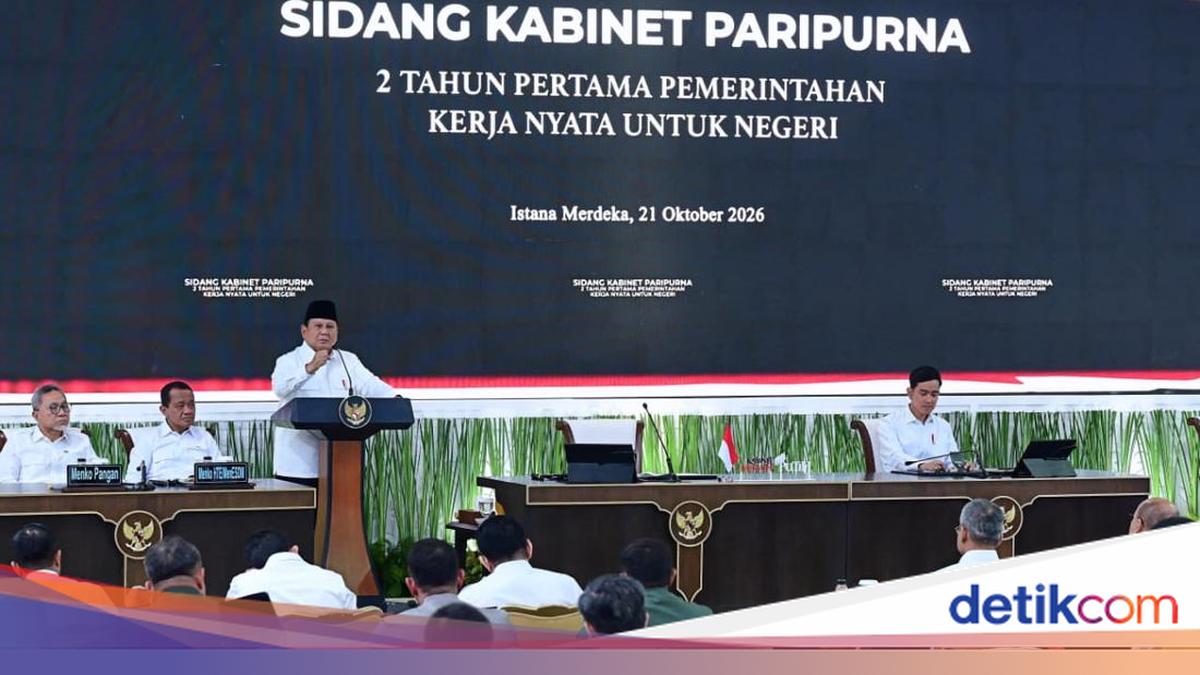
Michael F Umbas, chairman of the Arus Bawah Prabowo Volunteer Group, said the two years of President Prabowo Subianto and Vice-President Gibran Rakabuming Raka’s administration had seen efforts to correct and reset the direction of national economic policy. In his view, this meant moving away from a pattern of growth whose benefits were not fully distributed towards a people-centred economy and greater national self-reliance.
Umbas said the reform era had institutionalised political democracy through freedom of association and expression, press freedom, an independent judiciary and regular elections. However, he said, political democracy needed to advance alongside economic democracy so that the public could also become the principal actors in managing and benefiting from the country’s economic resources and wealth.
“Democracy is not enough if it only gives people room to gather and express their opinions. It must also provide equal opportunities for people to be subjects of economic development. This is one of the directions of the correction currently being pursued by President Prabowo,” Umbas said in a statement on Wednesday (21 October 2026).
Umbas said the Prabowo administration’s main agenda was to institutionalise economic democracy by making Article 33 of the 1945 Constitution the foundation for government policies and programmes.
“The spirit is clear: the national economy must be built as a collective endeavour, and the public must increasingly feel the benefits of development. We therefore see these first two years as part of a process of resetting the direction of development to bring it more into line with the Constitution’s mandate,” he said.
Umbas said the government was seeking to correct an economic growth model that, in his view, had relied too heavily on exports of raw natural resources, consumption of imported goods, foreign capital and external debt. He said the new direction being pursued was growth based on popular participation and national economic self-reliance.
“Economic growth should not be judged solely by an increase in GDP. More important is whether it creates public participation, industrialisation, productivity and a more even distribution of wealth. That is why a people-centred economic approach matters,” Umbas said.
Within this framework, he said, cooperatives, micro, small and medium-sized enterprises (MSMEs), state-owned enterprises and domestic private-sector companies were being encouraged to build broader economic partnerships. Strategic programmes—including Free Nutritious Meals, the Red and White Fishing Villages, Red and White Village Cooperatives, subsidised housing and food self-sufficiency—were being positioned as part of efforts to strengthen the people’s economy.
“These programmes should become engines for public participation in the economy. They should not simply be government programmes, but part of building a national economic ecosystem,” he said.
Umbas also highlighted stronger food self-sufficiency policies, downstream processing of plantation commodities and the development of smelters for natural resources. He said the country’s resources must generate more added value for the national economy.
“Indonesia cannot remain a supplier of raw materials for ever. Downstream processing and industrialisation are important to increase domestic added value, strengthen national capacity and create broader economic benefits,” he said.
In the area of financing, Umbas said the establishment of Danantara was part of an agenda to consolidate national capital. Meanwhile, the policy requiring natural-resource export proceeds to be placed domestically was intended to ensure that the country’s foreign-exchange resources made a greater contribution to the domestic economy.
“This is part of the effort to strengthen economic self-reliance. Capital and foreign exchange generated by national economic activity must increasingly be able to drive development at home,” Umbas said.
He said efforts to increase state revenue also included law enforcement against transfer pricing, under-invoicing and fraud, as part of the agenda to optimise government receipts.
Umbas added that the government was reorganising the management of natural resources by restoring and strengthening the state’s controlling rights over them. He cited the establishment of the PKH Task Force, a moratorium on plantation land-use permits (HGU) controlled by a small number of parties, and the creation of Danantara Sumberdaya Indonesia (DSI) as measures forming part of this effort.
“The principle is to ensure that natural resources are managed in the national interest. Domestic needs must be met first, while any surplus can be allocated for export,” Umbas said.
According to Umbas, the economic self-reliance agenda must go hand in hand with more equal access to people’s basic needs.
He pointed to the Sekolah Rakyat programme, which targets around four million children in difficult circumstances; free health checks; and housing policies, including the FLPP housing finance facility for low-income households, housing credit for MSMEs and a home-renovation programme.
“Economic development must proceed alongside human development. Education, healthcare and housing are fundamental needs, and access to them must be widened,” he said.
Umbas also said democracy under the Prabowo-Gibran administration should be assessed by the state’s ability to incorporate public aspirations and social movements into policy.
He cited several laws that had been passed, including laws on worker protection, agrarian reform and domestic worker protection, as well as the Criminal Code and Criminal Procedure Code. He also mentioned Presidential Regulation No. 27 of 2026 on protecting the digital transport ecosystem, which caps app-based operators’ fees or commissions at 8 per cent.
“Democracy must be able to translate public aspirations into concrete policies. Institutionalising the people’s aspirations is therefore an important part of the reform process we continue to pursue,” Umbas said.
Umbas said the Arus Bawah Prabowo Volunteer Group would continue to monitor the Prabowo-Gibran administration’s policies to ensure they remained consistent with a development agenda grounded in the 1945 Constitution.
“We, the Arus Bawah Prabowo volunteers, will ensure that these corrections are pursued consistently. The goal is a nation that is politically sovereign and economically independent, with people-centred growth that delivers shared prosperity for all Indonesians,” Umbas concluded.
Source: jawawa.id (https://jawawa.id/newsitem/two-years-of-prabowo-gibran-abp-discusses-efforts-to-strengthen-economic-independence-1792597966)
Originally published by detikcom (https://news.detik.com/berita/d-8718098/dua-tahun-prabowo-gibran-abp-bicara-upaya-perkuat-kemandirian-ekonomi), translated from Indonesian