
Two Years of Government: Health Ministry Reports Progress in Free Check-ups and TB Treatment
The Ministry of Health (Kemenkes) said that during 2026, 109,300,240 Indonesians received free health checks, 21 new hospitals began serving patients in disadvantaged areas, and estimated tuberculosis (TB) incidence showed a downward trend for the first time.
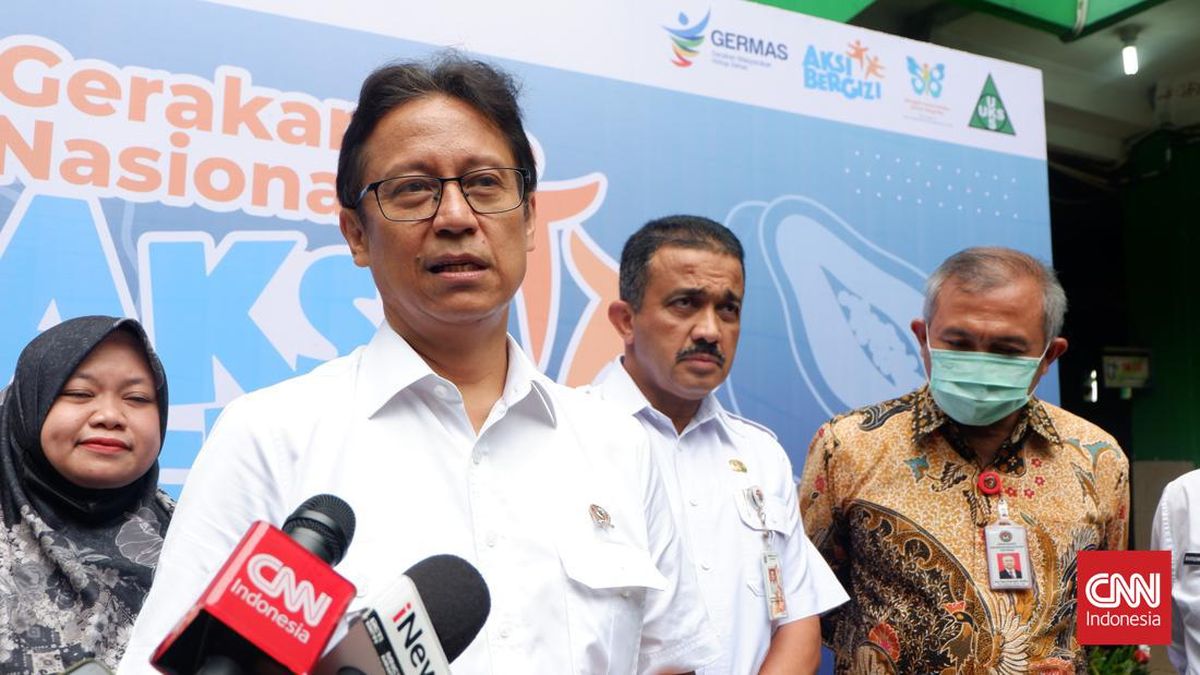
Health Minister Budi Gunadi Sadikin said at a press conference marking two years of the government’s health agenda that these three achievements formed part of the Quick Best Results Programme (PHTC), implemented over the past 24 months.
The Free Health Check (CKG) programme served 109,300,240 people out of a target of 130,344,650. This included around 88 million participants in the annual CKG programme and around 21 million school participants, while 116,313,018 people had registered.
The service is operating at 10,319 community health centres (Puskesmas), or 99.8 per cent of all registered centres, and covers all 514 regencies and municipalities across 38 provinces.
Budi said CKG was designed to raise the average life expectancy of Indonesians from 72 to 76 years. It aims to identify as early as possible the four risk factors responsible for the largest share of premature deaths: hypertension, diabetes, dyslipidaemia or high cholesterol, and obesity, which are major triggers of stroke, heart attacks and kidney failure.
“If we can measure these four risk factors, we can reduce up to 80 per cent of deaths caused by cardiovascular diseases such as heart and blood-vessel disease, stroke, heart attacks and kidney problems,” Budi said at the Ministry of Health’s office on Thursday (22 October).
People identified as being at risk are followed up in their communities. They receive free management and treatment at Puskesmas so that their health indicators can return to normal or fall into the green category.
Under the second pillar, the government has built 66 regional general hospitals (RSUDs) in disadvantaged areas, upgrading facilities that were previously classified as Class D.
“Construction has been divided into several stages. Twenty-two RSUDs were included in batches one and two in 2025, and 21 of them have been completed and are fully operational. Another 20 RSUDs are in batches three and four for 2026, while 24 hospitals in batches five and six for 2027 are still at the planning stage,” Budi said.
Hospitals in Anambas Islands Regency, Buru, Central Bengkulu and Keerom Regency in Papua have now been equipped with medical devices comparable to those found in hospitals on Java. These include mammography machines for early breast cancer detection, CT scanners and catheterisation laboratories (cath labs) for heart and stroke procedures.
However, staffing remains a challenge. The Ministry of Health said only 34 of the 66 RSUDs, or 51 per cent, have all seven types of basic medical specialists.
Under the third pillar, TB incidence has declined steadily. The WHO Global TB Report estimates that tuberculosis cases in 2026 fell to 1,080,000 from 1,092,000 in 2024.
By October 2026, 666,985 cases had been detected and reported, equal to 61 per cent of the target of 972,000. Of those patients, 599,425, or 90 per cent of the target, had started treatment.
Case-finding has been supported by the provision of portable X-ray equipment and Near Point of Care (NPOC) molecular testing machines at thousands of Puskesmas.
TB screening has also been integrated with CKG services and taken directly to places where people gather. A total of 40,910 people in prisons and detention centres, as well as 24,623 students at Islamic boarding schools, have been screened.
The Ministry of Health has also partnered with other ministries and agencies and the private sector, including screening 8,914 employees and partners of ride-hailing services such as Gojek and Grab.
On treatment, the ministry has shortened therapy through modern drug regimens. Indonesia is also taking part in a Phase III clinical trial of the M72 TB vaccine candidate, which is expected to begin production in early 2029.
“TB treatment used to involve taking medicine for a very long time, sometimes for more than a year, every day. It has now come down to 12 months, then six months, and most recently some courses can be completed in four months. This makes TB medicines increasingly easier for the public to accept,” the minister said.
Source: jawawa.id (https://jawawa.id/newsitem/two-years-of-government-health-ministry-reports-progress-in-free-check-ups-and-tb-treatment-1793613189)
Originally published by CNN Indonesia (https://www.cnnindonesia.com/nasional/20261102153247-25-1422366/dua-tahun-pemerintahan-kemenkes-catat-peningkatan-ckg-penanganan-tb), translated from Indonesian