
Two Years of Government: Food Affairs Coordinating Minister Says Efforts Are Bearing Fruit
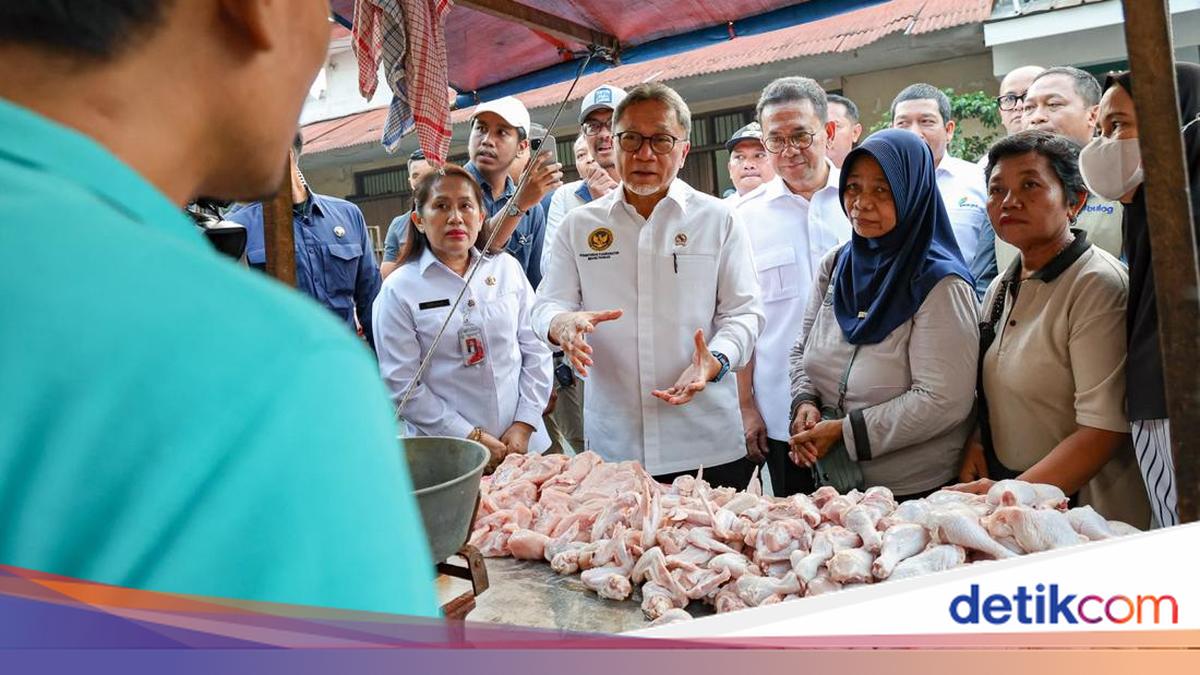
The Coordinating Ministry for Food Affairs said that during the two years of President Prabowo Subianto and Vice-President Gibran Rakabuming Raka’s leadership, the government had strengthened the foundations of national food sovereignty.
Indonesia is now said to no longer import rice for domestic consumption and to have achieved self-sufficiency in eight food commodities. These include rice, maize, sugar for consumption, bird’s eye chillies, large chillies, chicken eggs, chicken meat and shallots.
The government also said it was seeking to improve the position of farmers and fishers in the food supply chain. Through cross-sector co-ordination, the Coordinating Ministry for Food Affairs is pushing for higher production and food availability to be accompanied by improved welfare for farmers and fishers, who provide the country’s food.
“Thankfully, our efforts to strengthen food sovereignty are beginning to show results. We are grateful that Indonesia is increasingly able to meet its food needs from domestic sources. However, these achievements must also be felt by farmers, fishers and communities whose voices have often been less heard in the food supply chain. This is a responsibility we must safeguard together,” Food Affairs Coordinating Minister Zulkifli Hasan said in a written statement on Wednesday (21 October 2026).
In agriculture, the farm-gate price of unhusked rice has risen to at least Rp6,500 per kilogramme and that of maize to at least Rp5,500 per kilogramme. The Farmer Terms of Trade (NTP) has also increased from 116 to 131.
The government has also simplified regulations on the distribution of subsidised fertiliser to speed up deliveries to farmers.
Meanwhile, the government is seeking to improve fishers’ welfare. The Fishers Terms of Trade (NTN) currently stands at 103, with a target of raising it to 120.
These efforts include building 100 Merah Putih Fishing Villages (KNMP). By 2029, the government aims to build 5,000 KNMP sites and is preparing to develop themed fish-farming projects at 40,000 locations to support the livelihoods of coastal communities.
At village level, the government is also strengthening the role of Merah Putih Village/Sub-district Cooperatives (KDKMP) as pillars of the local economy.
A total of 10,070 cooperatives are officially operating out of more than 28,000 established. The number is targeted to rise to between 35,000 and 40,000 by the end of the year.
The KDKMP cooperatives are being developed as village economic infrastructure to support the distribution of subsidised products and government social-assistance programmes. They are also intended to shorten distribution chains and bring economic services closer to rural communities.
Zulkifli said food-system transformation also required a protected environment and sustainable resource management.
His ministry is also promoting stronger environmental governance, particularly integrated waste management from upstream to downstream. This includes processing waste at its source, while residual waste that cannot be reused can be converted into electricity using waste-to-energy (PSEL) technology.
Zulkifli said that in the past four months, preparations to launch construction had begun at least four prospective PSEL sites: Greater Denpasar, Bekasi City, Greater Bogor 1 and Legok Nangka in Bandung. The government aims to have at least 21 PSEL facilities built by the end of 2028 or 2029.
The acceleration of PSEL construction is also supported by Presidential Regulation No. 109 of 2025, which simplifies procedures and strengthens co-ordination between ministries and local governments. This is intended to speed up project preparation and implementation.
In the carbon market sector, Indonesia now has a Carbon Unit Registry System (SRUK), which serves as the basis for orderly and transparent national governance.
Zulkifli said the achievements of the past two years provided a foundation for further work to strengthen food security amid global volatility.
He said the success of food policy should be measured by Indonesia’s ability to meet people’s needs while also providing a better livelihood for farmers and fishers.
“We want Indonesia’s food system to become increasingly sovereign and people working in the food sector to become more prosperous. This hard work must continue through policies that support farmers, fishers and village communities. By working together, God willing, the foundations we build today will make Indonesia more resilient in facing change and upheaval in global food markets,” he concluded.
Source: jawawa.id (https://jawawa.id/newsitem/two-years-of-government-food-affairs-coordinating-minister-says-efforts-are-bearing-fruit-1792601521)
Originally published by detikcom (https://news.detik.com/berita/d-8718167/dua-tahun-pemerintahan-menko-pangan-alhamdulillah-ikhtiar-tunjukkan-hasil), translated from Indonesian