
Two Years of Asta Cita: Religious Affairs Ministry Expands Access to Education and Educator Welfare
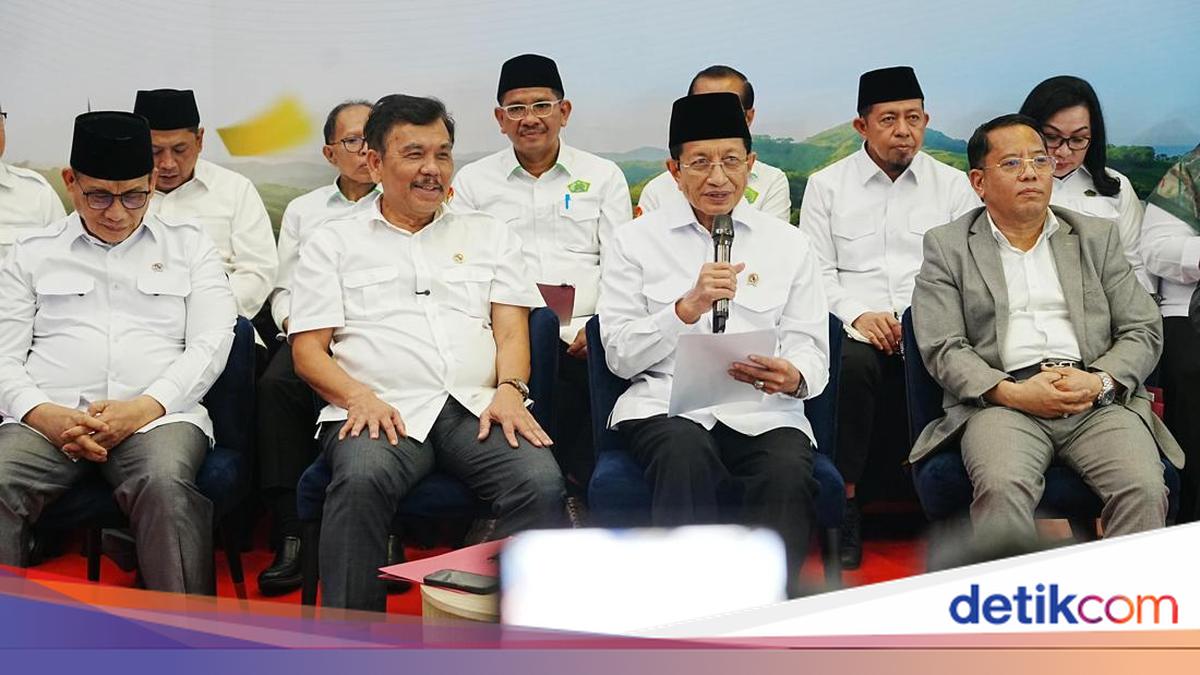
The Ministry of Religious Affairs (Kemenag) is continuing to expand access to education so that economic hardship does not prevent Indonesian children from receiving a quality education. Its efforts include more evenly distributed and inclusive education assistance, scholarships, improved educator welfare, and stronger facilities and infrastructure.
Religious Affairs Minister Nasaruddin Umar said equal access to learning was one of the ministry’s priorities in supporting the Asta Cita agenda of the Prabowo-Gibran administration.
“Economic hardship should not cut off our children’s opportunities to learn. Through its various initiatives and its Islamic boarding schools, madrasahs and other religious education institutions, the Ministry of Religious Affairs is seeking to address these circumstances by providing a good standard of education,” Nasaruddin said in a written statement on Tuesday (20 October 2026).
Nasaruddin also expressed pride in the achievements of madrasahs and religious education institutions under the ministry’s supervision.
He said these accomplishments showed that madrasahs not only strengthened religious education but could also improve academic standards and students’ competitiveness.
To widen access to learning, Kemenag has also distributed assistance through the Indonesia Smart Programme (PIP) and the Indonesia Smart Card for Higher Education (KIP Kuliah).
In 2025–26, PIP reached 5,180,170 madrasah pupils, with a budget of Rp4.038 trillion. KIP Kuliah, meanwhile, supported 289,255 students at religious higher education institutions, with a budget of Rp3.032 trillion.
Together, the two programmes provided Rp7.07 trillion in assistance to support pupils’ and students’ continued education.
Education assistance also reached students from different religious communities, including 30,615 pupils at Christian religious schools, supported by Rp26.956 billion; 4,054 pupils at Catholic senior high schools, receiving Rp7.2 billion; and 1,455 pupils at Hindu Widyalaya schools, receiving Rp1.10 billion.
“There is also PIP, KIP Kuliah and scholarships for our children at Islamic boarding schools, madrasahs and universities. These have been very helpful. The figures show that in 2025–26 the Ministry of Religious Affairs disbursed Rp7 trillion for PIP and KIP Kuliah,” he said.
Alongside student assistance, Kemenag has sought to improve the welfare of teachers and lecturers by paying professional allowances.
In 2025, 452,796 madrasah teachers and religious education teachers from different faiths received professional allowances totalling Rp19.148 trillion. In 2026, the allocation rose to Rp25.996 trillion for 671,704 teachers.
Professional allowances for lecturers amounted to Rp5.783 trillion for 183,787 recipients. The total value of professional allowances for teachers and lecturers presented by the ministry was therefore Rp50.927 trillion.
“More than Rp50 trillion has been allocated for professional allowances for teachers and lecturers. That is in addition to improvements to facilities, expanded digital learning, support for achievement, and wider services for people with disabilities. We are giving these areas special attention as well,” he said.
Silvy Okta Erviana, a non-civil servant teacher at MA PSA Nurul Amal in Semarang Regency, said she had also benefited from the professional allowance. She said it had positively affected her welfare and supported her work as an educator.
On facilities and infrastructure, Kemenag has carried out revitalisation work at 80 madrasahs, with a budget of Rp169.99 billion.
Under the Quick Best Results Programme (PHTC), 857 madrasahs also received facilities worth Rp214.58 billion, while 203 madrasahs received Academic Competency Test facilities worth Rp89.52 billion.
Digital learning has also been strengthened through the provision of 2,180 interactive digital whiteboards (smartboards) to 551 madrasahs, funded with Rp71.62 billion.
Efforts to distribute religious education facilities more evenly have included building or renovating 36 Hindu Widyalaya schools, providing Rp3.15 billion in facilities and infrastructure assistance to 48 Christian schools, and building or revitalising facilities at six Catholic religious higher education institutions at a cost of Rp2 billion.
As well as improving facilities, Kemenag is focusing on inclusive education services for people with disabilities. About 2,000 madrasahs currently provide inclusive education, supported by 1,547 Disability Service Units (ULD), to widen access for pupils with additional needs.
“We are indeed giving particular attention to our children with disabilities,” he concluded.
Through expanded education assistance, improved educator welfare, stronger learning facilities and inclusive education services, Kemenag is seeking to ensure that all students have more equal opportunities to learn and develop their potential.
Source: jawawa.id (https://jawawa.id/newsitem/two-years-of-asta-cita-religious-affairs-ministry-expands-access-to-education-and-educator-welfare-1792507871)
Originally published by detikcom (https://news.detik.com/berita/d-8716304/2-tahun-asta-cita-kemenag-perluas-akses-pendidikan-kesejahteraan-pendidik), translated from Indonesian