
Two Years into Government, School Revitalisation and Digital Learning Expanded
The government is continuing to expand school revitalisation and digital learning programmes during President Prabowo Subianto’s first two years in office. Both initiatives aim to improve educational facilities and support more interactive teaching and learning.
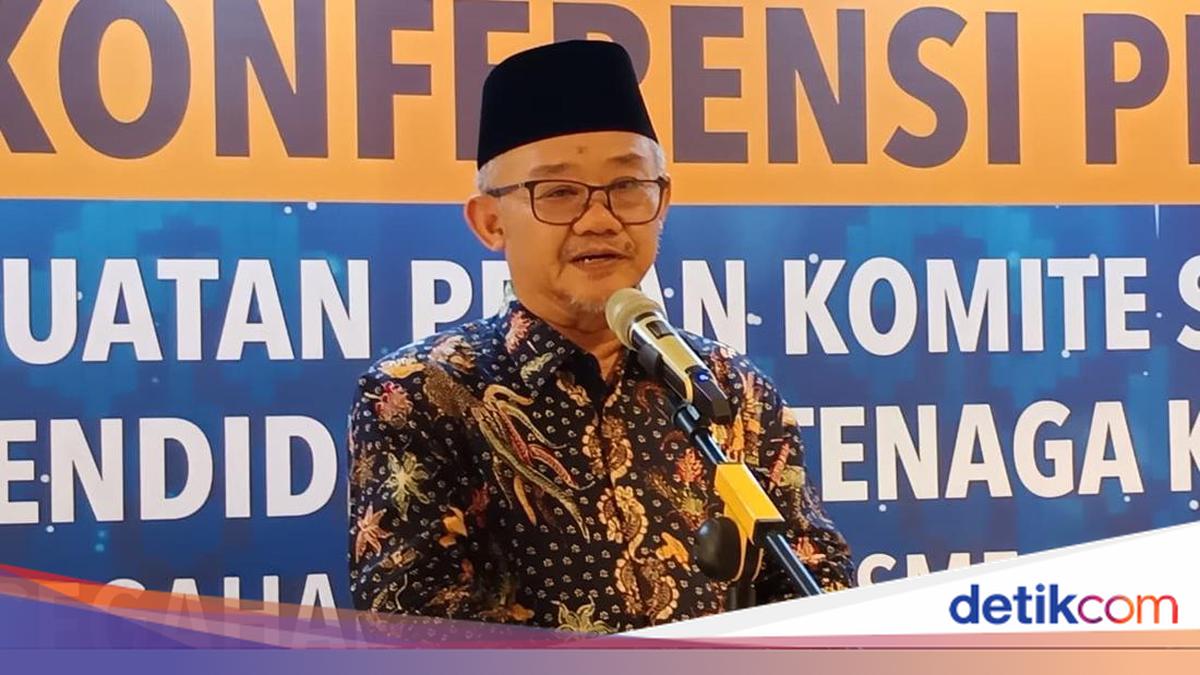
Basic and Secondary Education Minister Abdul Mu’ti said that school revitalisation and digitalisation were not ends in themselves, but means of improving the quality of education.
“Revitalisation and digitalisation are not goals, but means of achieving quality education,” Mu’ti was quoted as saying on Thursday, 21 October 2026.
In 2025, the revitalisation programme reached 16,167 educational institutions, exceeding its initial target of 10,440. It benefited more than 4.2 million students across 38 provinces and 514 regencies and municipalities.
Improvements to school facilities and infrastructure are expected to make teaching and learning safer and more comfortable. The programme also involves micro, small and medium-sized enterprises (MSMEs) and local workers, creating economic opportunities for communities.
The government is continuing the programme in 2026 with a higher target of 51,744 educational institutions. This comprises 11,744 institutions in the initial allocation and an additional 40,000 to be funded in two phases.
Priority is being given to schools in need of repairs, particularly those with severe damage, schools in disadvantaged, frontier and outermost (3T) regions, and schools affected by disasters.
The 2026 revitalisation programme is expected to benefit 8,453,369 students across 38 provinces, 514 regencies and municipalities, and 6,481 sub-districts. By 28 September 2026, assistance had been provided to 38,586 educational institutions.
Digital learning reaches 289,000 schools
Alongside upgrading school facilities, the government is expanding the use of technology in teaching and learning. In a progress report in September 2026, the Ministry of Basic and Secondary Education said about 289,000 educational institutions had received digital learning equipment since 2025.
The equipment distributed includes Digital Interactive Boards (PID), or interactive flat panels (IFPs), laptops and external storage devices.
The boards are expected to help teachers present material in more engaging ways and encourage students to participate actively in lessons.
“The presence of these boards is useful for making it easier for everyone to learn, making the learning process more engaging and richer in creativity through interactive methods,” Mu’ti said.
However, providing digital equipment needs to be accompanied by electricity, internet access and improved teacher skills. This will enable schools to make the best use of the devices in teaching and learning.
School revitalisation and digital learning are complementary initiatives. Better facilities provide more suitable learning spaces, while technology gives teachers opportunities to use a wider range of teaching methods.
The government hopes the two programmes will widen access to quality education, including for students in areas with limited infrastructure.
Going forward, the programmes’ success will be measured not only by the number of schools renovated or devices distributed, but also by their impact on teaching and learning and the benefits experienced by students and teachers.