
Two Years in Office, Prabowo Pledges Support for MSMEs to Tackle Poverty
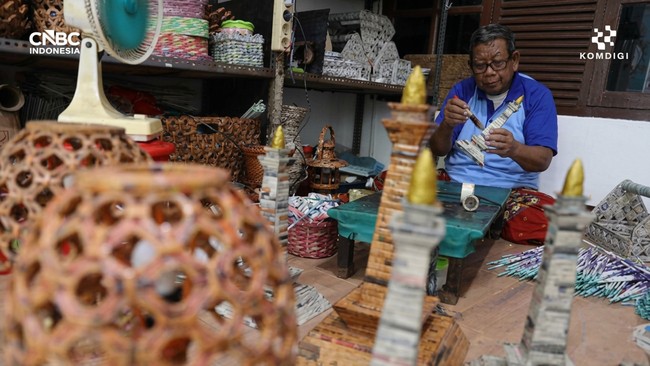
The Government’s commitment to empowering communities by strengthening micro, small and medium-sized enterprises (MSMEs), expanding social protection and accelerating poverty alleviation remains in place. This was one of President Prabowo’s pledges when he was inaugurated on 20 October 2024.
Co-ordinating Minister for Community Empowerment Muhaimin Iskandar has said that President Prabowo has given serious attention to MSMEs and the creative economy.
“All programmes that have been planned and implemented by the co-ordinating ministry and other ministries will continue. In particular, we will promote MSMEs and continue to ask and instruct ministries and agencies to facilitate their growth and provide them with support,” Muhaimin said in an official statement on Monday, 12 October 2026.
The Government has also demonstrated its commitment through plans to provide additional funding specifically for MSMEs and the creative economy. It believes that making it easier to increase the entrepreneurship rate and establish new and young entrepreneurs can boost employment.
If the Government succeeds in creating several leading entrepreneurs in Indonesia, employment opportunities and the resulting multiplier effects will also expand.
The Government has issued Government Regulation No. 20 of 2026 on adjustments to the final income tax policy for MSMEs.
MSMEs with annual turnover below Rp4.8 billion are eligible for a 0.5% final income tax rate, while those with turnover below Rp500 million may qualify for a 0% rate.
Support for MSMEs also includes protecting the entire supply chain, including curbing the circulation of illegal imported products, such as those from China. The Ministry of MSMEs and the Ministry of Industry are working together to strengthen oversight of imported goods sold through e-commerce while improving product quality.
The Ministry of MSMEs has also recorded positive results, with businesses growing and moving upmarket into global markets. Through the SAPA UMKM application, the Government is encouraging the use of artificial intelligence (AI), product education and training for MSME operators, as well as access to financing to support business growth.
The Government says Indonesia’s 57 million MSMEs and the integration of central and regional systems pose challenges to strengthening the sector. Support has also come from the Ministry of Communication and Digital Affairs. Minister Meutya Hafid said the Government would not allow digital platforms to impose one-sided burdens on local MSMEs.
“We fully support the Ministry of MSMEs’ efforts to protect businesses. Digital platforms must operate fairly and must not impose one-sided burdens on small and medium-sized businesses or the public. The Government is here to protect local MSMEs so they can grow with confidence and develop sustainably,” Meutya said.
She added that the ministry was ready to support fair regulations and policies for MSMEs within its authority and in accordance with the law. The relevant regulations are currently being prepared for formal approval.
The Government stressed that any changes to service fees by marketplace platforms must be transparent and provide business certainty for MSME operators. The initial approach will be persuasive, but firm action will be taken if violations of the principle of protecting MSMEs continue.
Nailul Huda, Director of Digital Economy at the Center of Economics and Law Studies (Celios), said the important role played by MSMEs had prompted the Government to strengthen its commitment to economic equality and national resilience through support for MSMEs and the people’s economy. MSMEs have also proved their resilience in weathering shocks, including the crises of 1998 and 2008.
“Few of our MSMEs are involved in exports and imports. Their markets are domestic, and most of their raw materials also come from within the country. So it is no surprise that during the 1997–98 global crisis, MSMEs were still able to survive, although many also went out of business,” Nailul told CNBC Indonesia.
Mariani Montu of Zabay Collection, an MSME from Manado, praised the Government’s support. As a business assisted by Bank Indonesia, she said she had received equipment and help to expand market access.
“The batik we produce can now be exhibited overseas,” she said.
Mariani added that frequent invitations from Bank Indonesia to exhibit in different regions had helped Zabay Collection understand its target market and adapt its products.
She hopes the support and facilities provided to MSMEs will continue for a long time, so that more businesses can have experiences like hers.