
Two Whale Sharks Stranded in Cilacap, Suspected Poisoning
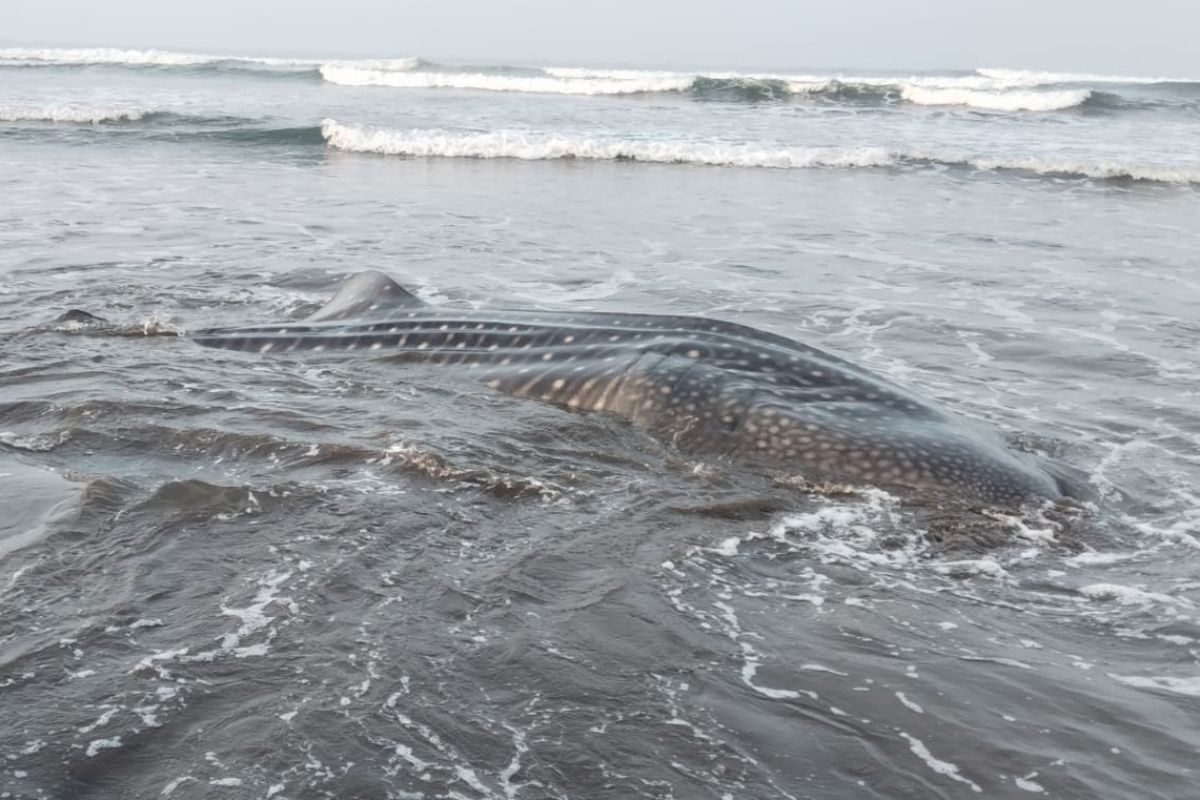
A joint team from various agencies is conducting an in-depth investigation into the cause of two whale sharks (Rhincodon typus) stranding on the coast of Cilacap Regency, Central Java. This phenomenon has drawn significant attention as both incidents occurred within a one-week period in May 2026.
Darmawan, an official from the Pontianak Marine Management Office (Semarang Working Area), revealed that preliminary suspicions regarding the deaths of these protected animals point towards intoxication. However, definitive confirmation of the primary cause is pending comprehensive laboratory test results.
“Looking back, the stranding of whale sharks in Cilacap Regency has been relatively frequent. Similar consecutive strandings occurred between October and November 2022,” Darmawan stated in a written report received on Monday (01/06/2026).
According to field data, the first incident occurred on 17 May 2026, when a whale shark measuring approximately four metres was found stranded. Six days later, on 23 May 2026 at 05:30 WIB, another whale shark measuring about 8 metres was discovered at Banjarsari Beach, Nusawungu District.
Darmawan explained that both locations are on the same coastline, only about six kilometres apart. Factors such as weather, the animals’ health conditions, and interactions with human maritime activities, such as propeller strikes, are suspected triggers for these incidents.
The evacuation of the giant carcasses involved heavy machinery, including excavators, and required coordination across multiple agencies, including the Cilacap Fisheries Office, PSDKP, the Indonesian Navy, the National Police, and academics from Jenderal Soedirman University (Unsoed).
The Head of the Cilacap Regency Fisheries Office, Indarto, stated that handling large marine biota requires speed and precise procedures to ensure environmental safety. Following a two-hour evacuation, a team of veterinarians performed a necropsy.
Field observations by Dwi Suprapti, a Marine Megafauna Specialist at the Sealife Indonesia Foundation, reinforced the suspicion of acute intoxication. Currently, samples of organs, stomach contents, and seawater have been sent to laboratories for histopathological testing and analysis for chemical pollutants and heavy metals.
“We are also conducting studies on water quality and oceanography alongside the Unsoed team to determine if there have been extreme changes in environmental conditions in the Cilacap coast that could have affected the behaviour of these animals,” Dwi concluded.