
Two Whale Sharks Strand on Cilacap Coastline Within a Week
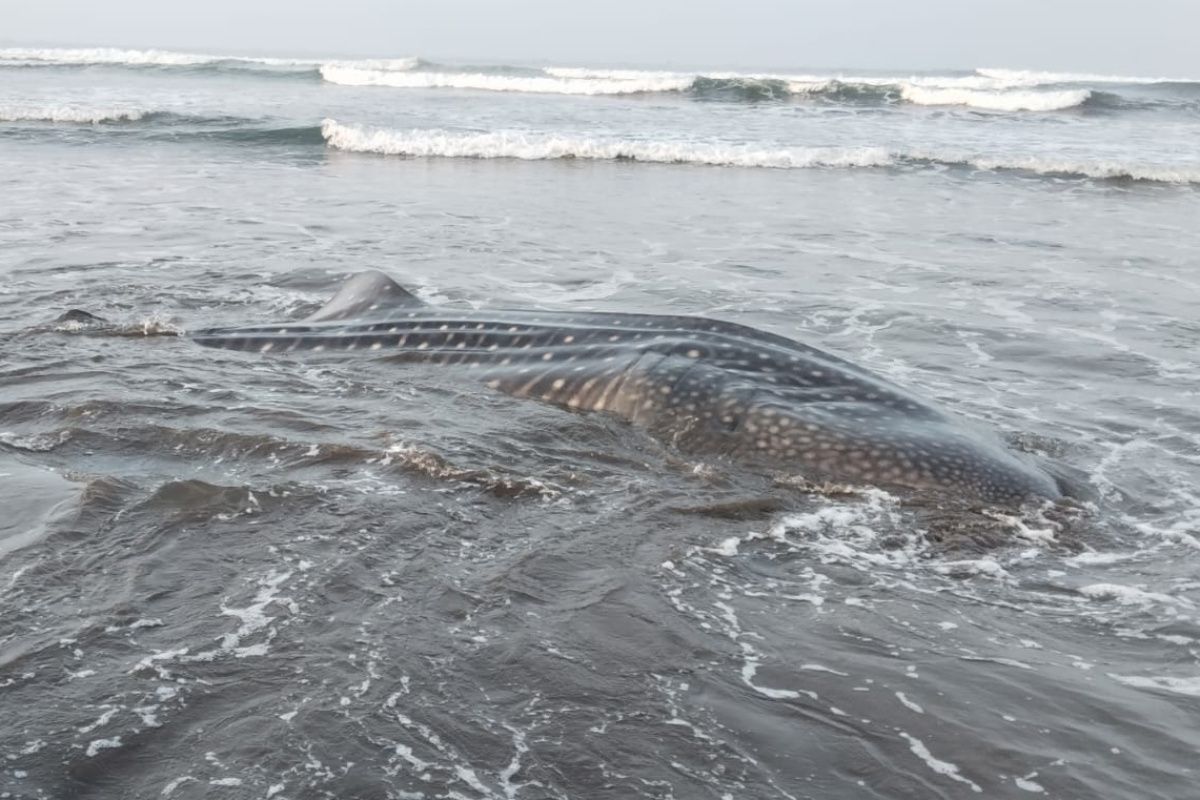
A joint team from various agencies is investigating the cause of two whale sharks (Rhincodon typus) stranding on the coast of Cilacap Regency, Central Java, within a week in May 2026. Darmawan, a staff member of the Pontianak Marine Management Office’s Semarang Working Area, stated the preliminary suspicion points to intoxication or poisoning, pending laboratory test results. “Looking back, whale shark strandings in Cilacap Regency have been relatively frequent. A similar consecutive stranding occurred in 2022, on 5, 12, and 31 October, followed by another on 5 November,” he said. A whale shark approximately 8 metres long was found stranded at Banjarsari Beach, Nusawungu District, on 23 May 2026 at around 5:30 AM WIB. Previously, a four-metre whale shark was reported stranded in the same area on 17 May 2026. The causes of strandings can include weather conditions, animal health, and interactions with objects at sea surface, such as ship propellers causing injuries. Therefore, further examination via necropsy is needed to determine the exact cause of death. The disposal of the carcasses involved Cilacap Regency’s Marine Stranded Fauna Response Network, comprising Cilacap’s Fisheries Department, PSDKP Cilacap, Pontianak Marine Management Office’s Semarang Working Area, TNI AL, Polri, veterinarians, researchers from Universitas Jenderal Soedirman (Unsoed) Purwokerto, volunteers, and local communities. Due to the animal’s large size, heavy machinery such as an excavator was required for evacuation. The team successfully moved the carcass to a safe location after nearly two hours of evacuation. Veterinarians and conservation teams then conducted a necropsy to uncover the cause of death. Examination revealed a male whale shark measuring 8.36 metres in length and 3.71 metres in diameter. The team found five cut wounds likely caused by ship propellers and plastic debris in the stomach. The digestive tract also contained undigested small anchovies. Dwi Suprapti, a Marine Megafauna Specialist at Yayasan Sealife Indonesia, stated that post-mortem and field observations suggest acute intoxication as the cause of death. “To confirm the cause, organ samples, stomach contents, and seawater have been sent to laboratories for histopathology, chemical contamination, heavy metal analysis, genetic testing, and water quality and oceanographic studies,” she said. Whale sharks, the world’s largest fish species, have been fully protected in Indonesia since 2013. Internationally, they are listed as endangered on the International Union for Conservation of Nature (IUCN) Red List due to threatened populations.