
Two Weeks Before the Election, Trump Supporters Discuss Martial Law
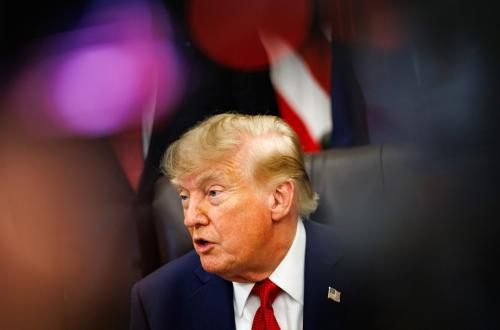
WASHINGTON, DC — The United States is facing sharper political tensions ahead of the midterm elections on 3 November 2026. Some activists who support President Donald Trump have discussed the possible use of emergency powers, including martial law, if they believe the election is fraudulent. The debate has emerged as the Trump administration faces mounting electoral pressure and the US Department of Justice comes under scrutiny over a series of actions ahead of voting.
A recent investigation by The Guardian, published on Sunday (18 October 2026), revealed that the Justice Department under the Trump administration had taken several steps questioned by legal experts and government ethics watchdogs. These included investigations into Democratic members of Congress, legal action concerning California’s voter rolls, and political activity by senior department officials.
On the same day, a Washington Post–ABC News–Ipsos poll found that public approval of Trump’s performance had fallen to 33 per cent. Sixty-six per cent of respondents disapproved, while Democrats led Republicans by eight points in voters’ preferences for Congress.
Together, the developments point to mounting pressure on the Trump administration ahead of an election that will determine control of Congress. However, electoral pressure and controversy over law enforcement do not, in themselves, prove that the government plans to impose martial law.
The issue drew attention after Axios reported on Friday (16 October 2026) that some activists in the Make America Great Again (MAGA) movement had openly discussed using extraordinary powers to address alleged election fraud.
The discussion took place during a virtual meeting on the Rumble platform on 30 September. Some participants advocated changing voting procedures, while others discussed the possible use of the president’s emergency powers.
One figure who raised the idea of martial law was Peter Ticktin, a lawyer who has known Trump since their schooldays. Amid these developments, questions about how real the threat of martial law is have become increasingly pertinent. Beyond political debate, the issue concerns the limits of presidential authority, the independence of law-enforcement agencies and states’ responsibility for administering elections.
MAGA Activists and the Use of Emergency Powers
According to Axios, the 30 September virtual meeting involved several activists who had previously questioned the security and integrity of the US election system.
Among those named was Tina Peters, a former Mesa County, Colorado, election official who was convicted in a case involving breaches related to election equipment systems following the 2020 presidential election.
Peters was sentenced in 2024. Her sentence was later commuted by Colorado Governor Jared Polis in 2026, and she was released.
Ahead of the November election, Peters promoted changes to voting procedures, including the use of hand-marked paper ballots and recounts.
Axios also reported that Peters met Trump in October 2026. Earlier, she had visited the White House with her lawyer, Peter Ticktin, in late June.
The relationship has brought greater attention to Peters’ political activity. However, a meeting with the president does not, by itself, show that the government endorses all the ideas put forward by the activists.
In addition to Peters and Ticktin, the Axios report named Gregory Stenstrom as a participant who discussed the use of emergency powers.
Stenstrom raised the possibility of invoking the National Emergencies Act, which governs presidential powers during a national emergency.
The activists’ proposals were not identical. Peters focused on changing voting procedures, Ticktin discussed martial law, while Stenstrom raised the use of national emergency powers.
The distinction matters because declaring a national emergency and imposing martial law are separate legal questions.
Reuters Investigation: Nine Election Flashpoints
Concerns about the conduct of the November election were also examined in a Reuters investigation published on Wednesday (14 October 2026).
The news agency interviewed more than 50 election officials, voting experts and election-law specialists. Reuters also reviewed Trump’s public statements, court documents and actions by federal agencies.
The investigation identified nine potential flashpoints that could trigger disputes or disruption during the election process.
These included pressure on election officials, investigations into election administration, the involvement of federal law-enforcement agencies, disputes over vote counting and disagreements over certification of the results.
Reuters emphasised that the US Constitution gives states broad authority to administer elections.
Courts have also reinforced that authority in several rulings that limit federal government efforts to change voting procedures and obtain certain voter data.
Even so, election officials in several states are preparing for possible disputes.
The tensions concern not only the contest between Republicans and Democrats, but also the relationship between the federal government and the states in managing the democratic process.
The 3 November election will determine the new composition of the House of Representatives, some Senate seats, and a range of state and local government positions.
The results will affect the Trump administration’s ability to advance its political and legislative agenda for the remainder of its term.
Source: jawawa.id (https://jawawa.id/newsitem/two-weeks-before-the-election-trump-supporters-discuss-martial-law-1792403464)
Originally published by Republika (https://news.republika.co.id/berita/tn55e1451/2-pekan-jelang-pemilu-wacana-darurat-militer-muncul-di-kalangan-pendukung-trump), translated from Indonesian