
Two Tankers Turn Back in Strait of Hormuz After US Imposes Iran Blockade
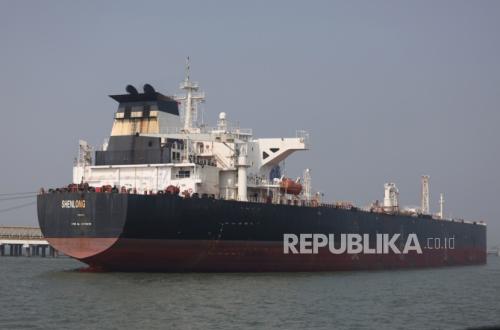
REPUBLIKA.CO.ID, LONDON — Two tankers linked to Iran exited the Gulf on Monday (13/4/2026), while other vessels began avoiding the Strait of Hormuz. This occurred after the United States announced it would begin a blockade of Iranian ports on the same day. The move has shaken the shipping market in that strategic energy route, according to shipping data.
This development follows the failure of weekend negotiations between Washington and Tehran. On Sunday, President Donald Trump stated that the US Navy would enforce a blockade on ships entering and exiting Iranian ports, although Washington emphasised it would not restrict traffic through the Strait of Hormuz.
Trump’s announcement has effectively slowed the movement of oil tankers in the strait, with only two Iran-linked tankers exiting the Gulf. Under normal conditions, crude oil and energy products from Iranian ports are generally shipped to China, with India as a recent buyer.
The tanker Auroura is carrying Iranian oil products, while the New Future is transporting diesel loaded from the Hamriyah port in the United Arab Emirates and heading to Sohar, Oman, according to data from Kpler and LSEG. Both are medium-sized tankers with a capacity of around 330,000 barrels.
The US Central Command stated that US forces would begin enforcing the blockade on all maritime traffic entering and exiting Iranian ports at 10:00 local time (14:00 GMT) on Monday.
In its statement, it was mentioned that this policy would be applied comprehensively to ships from all countries entering or leaving Iranian ports and coastal areas, including in the Arabian Gulf and Gulf of Oman.
However, the US emphasised that it would not interfere with the freedom of navigation for ships transiting the Strait of Hormuz to or from non-Iranian ports. Additional information would be provided to shipping actors through official notices before the blockade is enforced.
Meanwhile, Iran’s Revolutionary Guard stated on Sunday that any military vessel attempting to approach the Strait of Hormuz would be considered a violation of the ceasefire and would be dealt with firmly.
Before Trump’s announcement, two Pakistan-flagged tankers, Shalamar and Khairpur, entered the Gulf on Sunday, according to LSEG and Kpler data. The Shalamar is scheduled to head to the United Arab Emirates to load Das crude oil, while Khairpur is heading to Kuwait to load refined products.
On the other hand, the Liberia-flagged giant tanker Mombasa B, which previously transited the strait on Sunday, is now sailing empty towards Basra, Iraq. Meanwhile, the Malta-flagged tanker Agios Fanourios I, which attempted to enter the Gulf to load crude oil from Basra, turned around and anchored near the Gulf of Oman.
Despite the heated situation, three fully laden supertankers were recorded successfully transiting the Strait of Hormuz on Saturday. Those vessels were the first to exit the Gulf since the ceasefire agreement was reached the previous week.