
Two Surabaya Universities Promote Healthy Lifestyles for Elderly Group in Bojonegoro
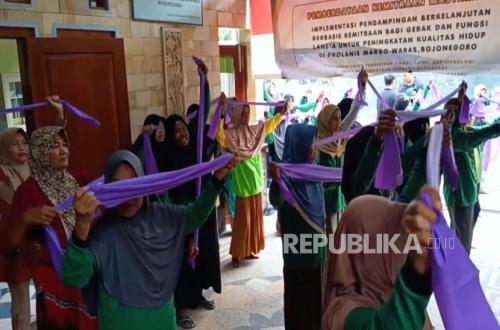
BOJONEGORO – A morning at the meeting hall in Dusun Tikung, Gondang Village, was filled with the smiles and enthusiasm of elderly residents. Soft exercise music accompanied dozens of participants as they eagerly followed every movement. Although some occasionally held their knees or aching waists, their spirit to keep moving never waned. For them, the morning activity was not just group exercise, but an effort to stay healthy, independent, and enjoy their later years with a better quality of life.
This atmosphere was part of a community service programme organised by Stikes Katolik St. Vincentius A Paulo Surabaya and Widya Mandala Catholic University Surabaya through mentoring for the Prolanis Margo Waras group, held from May to August 2026. The programme reflects the universities’ concern for the growing need for elderly health support, particularly in semi-rural areas.
Gondang Village is an area where most residents work as farmers and informal sector workers. With limited access to advanced health services, the Chronic Disease Management Programme (Prolanis) serves as an important platform for the elderly to maintain their health and support one another.
The head of the community service team, Anastasia Putu Martha Anggarani, explained that the programme is not only aimed at improving the physical abilities of the elderly but also at building a mentoring system that can continue within the community. “We want to provide sustainable assistance, not an activity that stops after one implementation. The hope is that the elderly remain active, while the cadres have the capacity to continue assisting them independently,” she said.
This community service programme was funded by the Directorate of Research and Community Service, Directorate General of Research and Development, Ministry of Higher Education, Science, and Technology for the 2026 fiscal year under the Community-Based Empowerment scheme. The programme carries a ‘Sustainable Mentoring Model Based on Partnership for Elderly Movement and Function’. Through this model, the team aims to improve the elderly’s motor functions, strengthen the capacity of Prolanis cadres, and develop a simple, easy-to-implement mechanism for continuous physical condition monitoring.
The activities began with movement exercises designed to meet the needs of the elderly. A team of lecturers and students guided participants through simple exercises to improve balance, flexibility, and muscle strength. The elderly also received education on the use of activity aids, such as knee braces, lumbar corsets, and footwear designed to lower blood sugar levels.
The participants were also taught simple movements they could perform independently at home. These exercises are intended to help reduce complaints of joint pain, address stiffness in the knees, waist, and shoulders, and maintain the ability to perform daily activities.
For the participants, this kind of mentoring provides tangible benefits. One Prolanis member admitted she now feels more confident about staying active. “I used to be afraid to move because my knees hurt. After being taught the correct exercises, my body feels lighter and I am more enthusiastic about doing activities every day,” she said.
The mentoring did not only target the elderly. The community service team also provided training to Prolanis cadres, who are the front line of health services at the community level. The cadres were equipped with skills to safely guide movement exercises, monitor the condition of the elderly, and utilise technology to support organisational administration and health promotion to the public.
Initial assessment data showed that the health challenges faced by Prolanis Margo Waras members were quite complex. About 90 per cent of participants suffer from hypertension, while 80 per cent live with diabetes mellitus. Additionally, around 70 per cent complained of joint pain, particularly in the knees and ankles, accompanied by muscle stiffness, balance disorders, and limitations in functional activities that increase the risk of falls and dependency in carrying out daily tasks. After the training and mentoring, complaints of joint pain decreased and the knowledge of both cadres and the elderly improved.
These findings further underscore the importance of consistent, community-based mentoring. With the involvement of cadres as key partners, the programme is expected to continue even after the formal community service period has ended.
Through collaboration between universities, health workers, cadres, and the community, Stikes Katolik St. Vincentius A Paulo Surabaya and Widya Mandala Catholic University Surabaya demonstrate that community service is not just about providing temporary health services, but about building the community’s independence in caring for its members. A healthy old age is not merely about longevity, but about the ability to keep moving, remain independent, and continue to enjoy each day with meaning.
Source: jawawa.id (https://jawawa.id/newsitem/two-surabaya-universities-promote-healthy-lifestyles-for-elderly-group-in-bojonegoro-1786423946)
Originally published by Republika (https://news.republika.co.id/berita/tjl41m291/ajarkan-gaya-hidup-sehat-dua-kampus-di-surabaya-dampingi-kelompok-lansia-di-di-bojonegoro), translated from Indonesian