
Two Students Demand State Funding for Islamic Boarding Schools, Muhammadiyah Council Responds
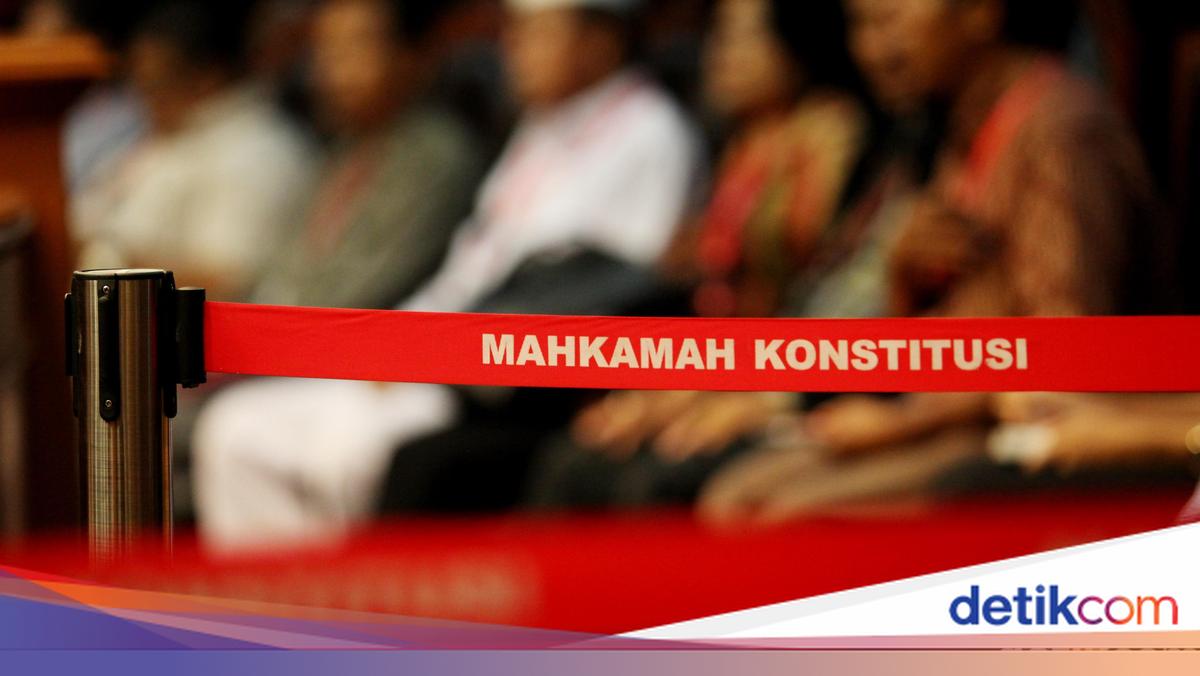
The views were expressed by the Chairman of the Majelis Masyayikh, KH Abdul Ghaffar Rozin, and the Chairman of the Muhammadiyah Pesantren Development Institute, Dr Maskuri, during their testimony as related parties in Constitutional Court case number 75/PUU-XXIV/2026 on Wednesday (3/6/2026). Both the Majelis Masyayikh and Muhammadiyah hope that the government will fund pesantren.
Regarding the petitioners’ request, the applicants, Muh Adam Arrofiu Arfah and Isfa’zia Ulhaq, are seeking to amend specific phrases in Article 48, paragraphs 2 and 3 of Law No. 18/2019 concerning Pesantren. Their petition requests the Court to declare that the phrases ‘in accordance with the state’s financial capacity’ and ‘in accordance with its authority’ are unconstitutional, as they reduce the state’s constitutional obligation to fund pesantren. They further demand that the state guarantee funding for pesantren as an integral part of the national education system, allocated from at least 20% of the national and regional budgets (APBN and APBD) as mandated by Article 31, paragraph 4 of the 1945 Constitution.
Currently, Article 48 states that the primary source of pesantren funding comes from the community, while the Central Government and Regional Governments provide assistance ‘in accordance with the state’s financial capacity’ and ‘within their authority’ respectively.
KH Abdul Ghaffar Rozin argued that the state holds a responsibility to fund pesantren, aligning with the norms of Article 31 of the 1945 Constitution. He stated that the phrase ‘assisting the funding of pesantren’ should be interpreted constitutionally as a mandatory state responsibility to fund pesantren, particularly in fulfilling educational functions within the national education system. He further argued that the current phrasing regarding ‘financial capacity’ contradicts the constitutional mandate.
From the perspective of the Majelis Masyayikh, funding for pesantren is a matter of government policy, and adequate, sustainable financial support is crucial for improving the quality and continuity of pesantren operations. He emphasised that the provision in Article 48, paragraph 1, stating that funding comes from the community, should not be interpreted as an exemption from the state’s obligation to fund religious education.
Similarly, Dr Maskuri, Chairman of the Muhammadiyah Pesantren Development Institute, requested that the Constitutional Court rule that the state must provide fair, proportional, transparent, and sustainable funding support. He urged the judges to interpret the Pesantren Law such that state funding becomes a mandatory obligation within the framework of national education financing, ensuring it is distributed equitably to all qualifying pesantren.