
Two Sides of Ramadan Beneath the Roof of a Temporary Shelter
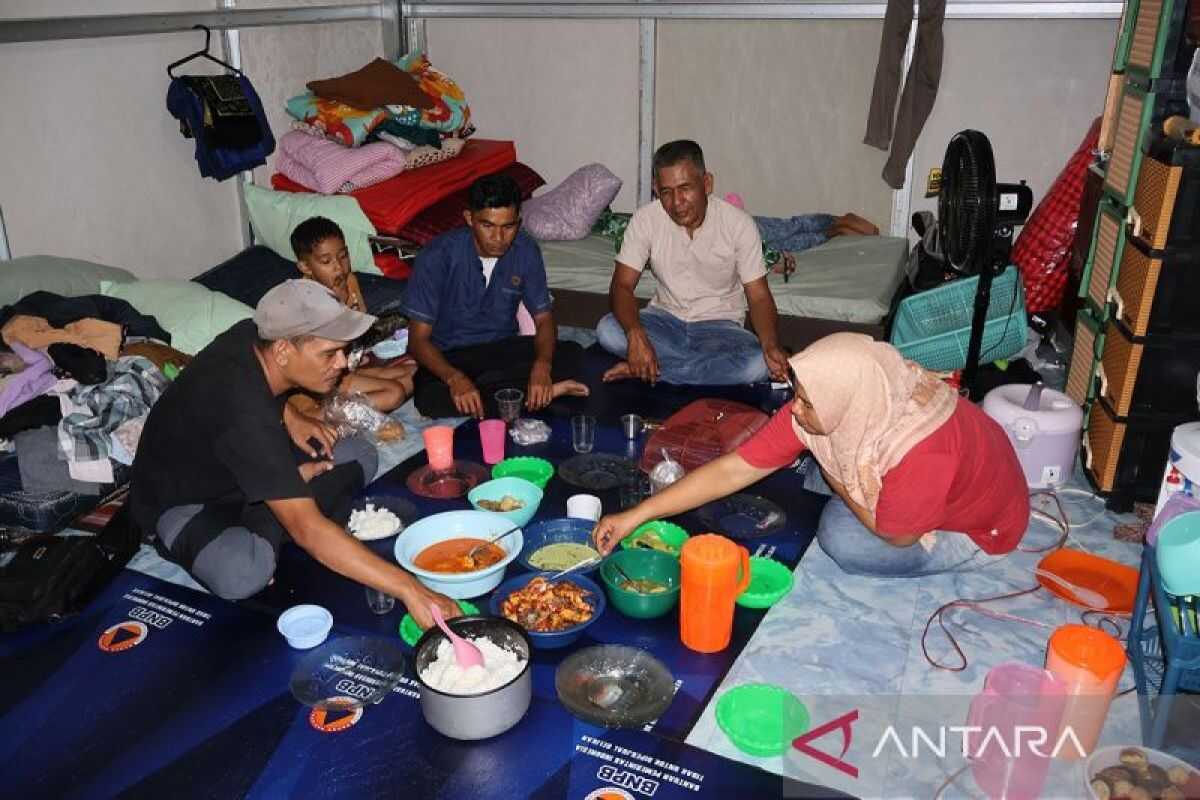
Agam Regency (ANTARA) — Every time the holy month of Ramadan arrives, Muslims always welcome it with great joy.
In West Sumatra, one day before the start of fasting, communities begin purchasing essential supplies such as beef, spices and the like to cook rendang. This iconic Minangkabau dish typically serves as the opening meal on the first day of sahur and at iftar.
The first day of Ramadan is the most eagerly awaited moment, as all relatives gather under one roof to share sahur and break their fast together.
However, that warmth cannot be fully felt by everyone. Ramadan 1447 Hijriah is profoundly different for some people, particularly the survivors of flash floods and landslides in West Sumatra.
Where families once enjoyed sahur and iftar together with their extended families at home, that is no longer possible — especially for those who lost family members swept away by the flash floods.
One such person is Yuni Efnita, a resident of Jorong Kayu Pasak, Nagari Salareh Aia, Palembayan sub-district, Agam Regency, West Sumatra. Ramadan 1447 Hijriah has become the most emotional period she has ever endured in her life.
During this month of blessings, Yuni feels something is missing because she can no longer see her younger sister and her five-year-old niece. Both became victims of what the Minangkabau people call galodo — flash floods.
“This Ramadan, my heart is deeply saddened,” said Yuni, tears streaming down her face.
Since settling in the temporary shelter at SD Negeri 05 Kayu Pasak, Yuni is constantly overcome with grief when she sees her two nephews who no longer have their birth mother. Her sorrow deepens whenever she witnesses the two unfortunate children being left behind by their father, who must go out to work. Yuni frequently sees her nephews crying each time their father leaves for work.
“My heart aches every time I see the children. Especially during the holy month of Ramadan,” she said, tears flowing without pause.
At the same time, Yuni must continually answer the repeated questions from her own children, asking why their lives have changed completely and why they must live in such a basic temporary shelter.
“The children often ask why things are like this,” she said.
With every question her children pose, she sheds more tears. As a mother, she continues to try to explain as simply as possible to her three children.