
Two Scientists Win 2026 Nobel Prize in Chemistry for Solving the Mystery of Homochirality
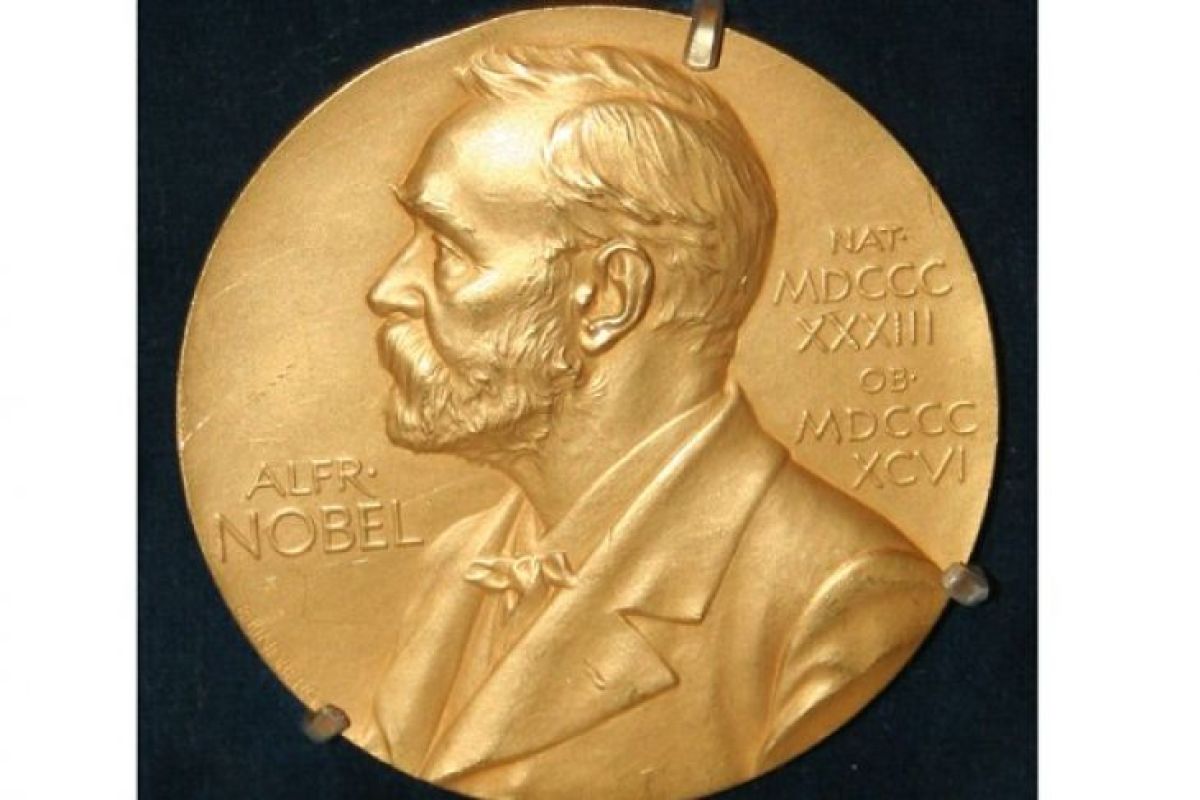
Tokyo (ANTARA) – This year’s Nobel Prize in Chemistry has been awarded to Japanese organic chemist Kenso Soai and French scientist Henri Kagan for their work solving a mystery involving mirror-image molecules, the Nobel Committee announced on Wednesday.
Soai, 76, is professor emeritus at the Tokyo University of Science in Japan, while Kagan, 95, is also a professor emeritus, at Université Paris-Sud in France.
“Henri Kagan and Kenso Soai have provided a solution to a chemical mystery more than a century old: how homochirality can arise spontaneously. The chemical reactions they developed are truly spectacular,” said Heiner Linke, chair of the Nobel Committee for Chemistry.
Some molecules occur as pairs of mirror-image forms, but most natural organisms have only one of the two forms. This phenomenon is known as homochirality.
The two researchers are credited with creating chemical reactions that can induce homochirality artificially.
Their discovery of “non-linear effects and autocatalysis in asymmetric organic synthesis” has played a “decisive” role in helping chemists trigger chemical reactions in pharmaceutical production, according to the Nobel Committee.
Soai’s award this year means Japanese nationals have won the Nobel Prize in Chemistry for two consecutive years.
The 2025 Nobel Prize in Chemistry was awarded to Susumu Kitagawa of Kyoto University and two other recipients for their work developing porous materials capable of storing and releasing gas.
“I am very happy to receive the prize together with Professor Henri Kagan,” Soai said by telephone during a press conference after the Nobel Prize in Chemistry was announced.
Soai, who is from Hiroshima, said he was out shopping when he received the call from the Nobel Committee. He said he was pleased that this year’s Nobel Prize in Chemistry had “recognised” his field of study.
The announcement was widely welcomed in Hiroshima, in western Japan, and at his university in Tokyo, where several students described the achievement as “unexpected”.
Prime Minister Sanae Takaichi also called Soai to congratulate him, expressing pride in him as a fellow Japanese citizen.
At a press conference at the Tokyo University of Science on Wednesday evening, Soai thanked Japan’s chemistry community, which he said had provided a strong foundation for his research.
He joked that, because his discovery concerned the foundations of life, “no one would refuse to let me receive the prize”.
Soai also said he hoped his win would raise interest in his field, including among people unfamiliar with it.
Before Soai published his findings in 1995 on “a chemical reaction with the potential for homochirality for the first time”, Kagan had proposed a new way to manipulate chemical reactions in research published in 1986.
Source: jawawa.id (https://jawawa.id/newsitem/two-scientists-win-2026-nobel-prize-in-chemistry-for-solving-the-mystery-of-homochirality-1791449809)
Originally published by Antara (Indonesian) (https://www.antaranews.com/berita/5776862/dua-ilmuwan-raih-nobel-kimia-2026-usai-jawab-misteri-homokiralitas), translated from Indonesian