
Two New Biodigesters to be Built in North Jakarta, Turning Organic Waste into Energy
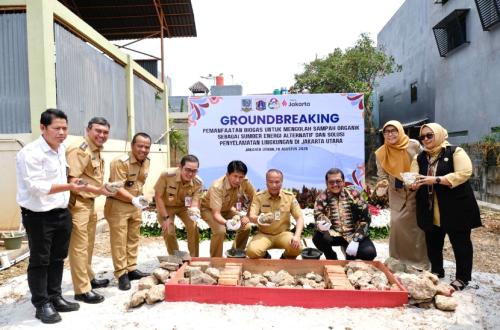
Organic waste processing in Jakarta is set to be strengthened through the construction of two communal biodigesters in North Jakarta. The two facilities are projected to process up to 500 kilogrammes of organic waste per day while producing biogas and organic fertiliser.
The biodigesters will be built at the Rorotan Public Housing (Rusunawa) and the TPS 3R in Rawa Badak Utara Urban Village. The construction is carried out through the Social and Environmental Responsibility (TJSL) programme of Bank Jakarta in collaboration with the DKI Jakarta Provincial Government.
Bank Jakarta President Director Agus Haryoto Widodo stated that the construction of the biodigesters is an effort to process organic waste at its source while generating reusable products. “The construction of the biodigester in Rorotan is a tangible contribution from Bank Jakarta to help address the challenges of waste management in Jakarta. We want the TJSL programme to provide real benefits to the community while supporting efforts to preserve Jakarta’s environment,” Agus said in a statement on Tuesday (11/8/2026).
Each biodigester has a processing capacity of up to 250 kilogrammes of organic waste per day. With two units, the total processing capacity reaches 500 kilogrammes per day. Based on a technical study, the two facilities are projected to produce approximately 37.5 cubic metres of biogas per day. Waste processing through the biodigesters is also estimated to reduce greenhouse gas emissions by around 423 kilogrammes of CO2e per day, or 154.4 tonnes of CO2e per year.
The programme is also part of the implementation of Bank Jakarta’s 2026 Sustainable Finance Action Plan (RAKB), particularly concerning organic waste management, greenhouse gas emission reduction, and renewable energy utilisation.
Bank Jakarta Corporate Secretary Arie Rinaldi said that waste management requires programme continuity and collaboration between various parties. According to him, processing organic waste at its source can open up opportunities to convert waste into energy sources and value-added products. “Collaboration with the DKI Jakarta Provincial Government is an important part of ensuring that waste handling efforts can be carried out in a more integrated manner,” Arie said.
The construction of the two biodigesters in North Jakarta continues the support for organic waste processing technology previously implemented in East Jakarta. In November 2025, Bank Jakarta supported the construction of a communal biodigester installation in Pekayon Urban Village, Pasar Rebo, East Jakarta. “Now, we are expanding the utilisation of biodigester technology derived from processing organic waste at its source through a collaborative programme with the DKI Jakarta Provincial Government,” he said.
The development of waste processing facilities at the source is becoming increasingly important as Jakarta seeks to reduce the burden of waste ending up in final disposal sites. The use of biodigesters also opens up another approach to organic waste management by converting it into energy and reusable materials.
Source: jawawa.id (https://jawawa.id/newsitem/two-new-biodigesters-to-be-built-in-north-jakarta-turning-organic-waste-into-energy-1786431129)
Originally published by Republika (https://esgnow.republika.co.id/berita/tjldtd416/dua-biodigester-baru-disiapkan-di-jakarta-utara-sampah-organik-diolah-jadi-energi), translated from Indonesian