
Two Muslim Nations Sever Ties, Expel Ambassadors and Block Airspace
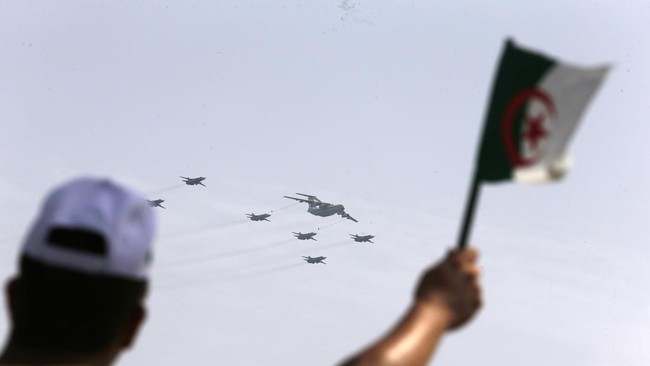
A new chapter of the Arab Cold War has officially erupted in North Africa. This week, Algeria unexpectedly announced the severance of diplomatic relations with the United Arab Emirates (UAE) and requested the Ambassador of Abu Dhabi to depart within 48 hours.
Citing Russia Today on Monday (14/09/2026), Algerian authorities stated in an official communiqué that they accuse Abu Dhabi of increasingly frequent provocative and hostile actions, asserting that “all efforts to maintain bilateral relations have been exhausted.”
In response, UAE Presidential Advisor Anwar Gargash implicitly criticised Algeria, stating that diplomacy must be based on clear interests rather than enigmas.
Political Observer from Russia’s RUDN University, Farhad Ieybragimov, revealed that the reasons for this split are spread across the North African map. Algeria has increasingly encountered UAE manoeuvres that side with its rivals.
The first impact of this severance is the closure of Algerian airspace to UAE civilian and military aircraft, effective from 11 September. A temporary exception applies only to commercial flights to and from Houari Boumediene Airport until the end of 2026, pending the conclusion of the air services agreement signed in 2013.
The Morocco & Western Sahara Conflict Vortex
The boiling point of this conflict is rooted in the territorial dispute between Algeria and Morocco. Algeria has long been in conflict with Morocco over the struggle for Western Sahara and strongly rejects the annexation by Rabat. The issue intensified when the UAE openly chose to side with Morocco.
In November 2020, the UAE became the first Arab nation to open a consulate general in Laayoune, a city in Morocco-controlled Western Sahara.
Escalation worsened in the same year when the UAE and Morocco normalised relations with Israel through the Abraham Accords. Cooperation between Morocco and Israel has since expanded into the military and intelligence sectors, which Algeria views as the formation of a lethal “alliance” with full UAE support.
Algerian suspicion has peaked alongside the influx of UAE investment amounting to 15 billion euros (€15bn) into Moroccan infrastructure, including the ports of Dakhla in Western Sahara and Nador.
Threat Belts in the South and East
Algeria’s geopolitical concerns do not end there. In the southern region, Algeria’s influence in Mali has declined due to a series of coups. This vacuum is being exploited by Russia, Turkey, Morocco, and the UAE, all of whom are increasing their presence in the Sahel.
Abu Dhabi is aggressively forging ties with new authorities, providing loans to Chad, and expanding its network in Sudan—all of which Algeria perceives as an attempt to strengthen its closest partner, Morocco.
To the east, Libya remains the most sensitive issue. The UAE is a major external supporter of Khalifa Haftar, whose forces control eastern Libya and much of the Fezzan region in the south. This province borders Algerian territory directly. The movement of Haftar’s armed groups is viewed as a direct threat, leading Algerian President Abdelmadjid Tebboune to threaten decisive action if these forces approach his nation’s borders.
These UAE manoeuvres are creating a “red belt” that strategically encircles Algeria from the west, south, and east.
The Red Line of Internal Intervention
Algeria’s most serious grievance against the UAE concerns allegations of direct Abu Dhabi interference in its domestic affairs. Media affiliated with the Algerian government have accused the UAE of having links to the Kabylia Self-Determination Movement.
This organisation, which advocates for the independence of the Berber region, operates from abroad, maintains links with Morocco and Israel, and has been officially designated as a terrorist group by Algerian authorities.
For the Algerian leadership, foreign involvement in the Kabylia issue is an absolute red line that cannot be tolerated. The closure of airspace now serves as tangible proof of Algeria’s anger.
“Algeria is drawing political boundaries. The era when trade could be developed independently of the struggle for influence has ended,” concluded Farhad Ibragimov.
Source: jawawa.id (https://jawawa.id/newsitem/two-muslim-nations-sever-ties-expel-ambassadors-and-block-airspace-1789358121)
Originally published by CNBC Indonesia (https://www.cnbcindonesia.com/news/20260914080844-4-767578/2-negara-muslim-putus-hubungan-usir-dubes-blokir-wilayah-udara), translated from Indonesian