
Two Muslim Countries Unite to Build a New "Nuclear Umbrella"
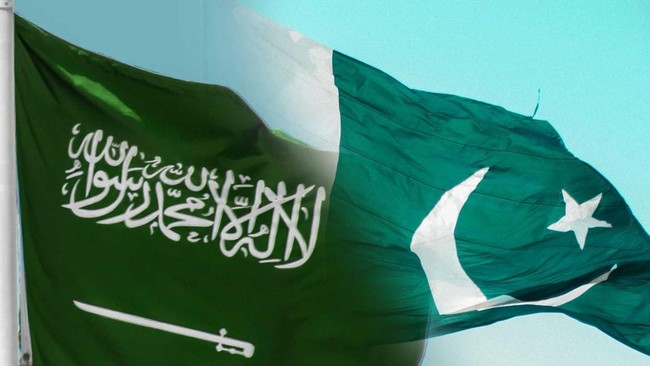
Saudi Arabia is beginning to reduce its dependence on the United States amid escalating security tensions in the Middle East. Riyadh is now strengthening its defence relations with Pakistan as a new step to maintain the stability and security of the kingdom.
This move was marked by the signing of the Strategic Military Defense Agreement (SMDA) between Saudi Crown Prince Mohammed bin Salman and Pakistani Prime Minister Shehbaz Sharif last September. The pact states that an attack on one country will be considered an attack on both.
Political analyst and lecturer at Russia’s RUDN University, Farhad Ibragimov, views this agreement as a strong signal that Saudi Arabia is seeking alternatives to US military protection. “This agreement effectively creates the world’s first ‘nuclear umbrella’ in the Islamic world,” Ibragimov wrote in his analysis, as quoted by RT on Friday (8/5/2026).
Pakistan is known to possess around 150-160 nuclear warheads and short- to medium-range missile systems. Although not explicitly mentioned in the agreement’s content, Islamabad’s nuclear capabilities are seen as the primary factor strengthening Saudi Arabia’s defence position.
According to Ibragimov, one of the main triggers for Riyadh’s change in stance is the declining trust in Washington. Saudi Arabia is said to view the US as increasingly unreliable as the primary protector of the Gulf region.
“Saudi Arabia sees the US prioritising its own interests more and more,” he said.
This doubt has intensified following the escalation of Iran-US conflicts and Washington’s tacit support for several Israeli military actions in the region. Riyadh fears that Iran will emerge from the conflict with a stronger geopolitical position.
“Riyadh will face a neighbour that is far stronger than before,” Ibragimov wrote.
On the other hand, Saudi Arabia also faces pressure from Israel’s aggressiveness under Prime Minister Benjamin Netanyahu. The kingdom’s position is now seen as increasingly difficult, caught between the equally aggressive Iran and Israel.
This situation positions Pakistan as a strategic partner capable of providing a new deterrent effect in the region. Ibragimov states that this cooperation is more than mere diplomatic symbolism.
“This vulnerability makes the partnership with Pakistan not just a diplomatic gesture, but a matter of survival,” he said.
Saudi-Pakistani cooperation has actually been ongoing for decades. Pakistani military personnel have been stationed in Saudi Arabia since 1967, and thousands of Saudi troops have also undergone training in Pakistan.
However, the SMDA now provides a formal legal basis for the two countries’ defence relations and strengthens their strategic dimension amid changing geopolitics in the Middle East.
Last April, the Saudi Ministry of Defence announced the arrival of a Pakistani military contingent at King Abdul Aziz Air Base. The deployment reportedly includes fighter jets and support aircraft as part of the initial implementation of the defence agreement.
Nevertheless, Pakistan remains cautious to avoid being directly drawn into open conflict with Iran. Islamabad is still striving to maintain its position as a mediator between Tehran and Washington.
“Pakistan is sending a signal of deterrence rather than aggression,” Ibragimov wrote. According to him, the “present but not engaged” strategy is how Pakistan expands its geopolitical influence in the Middle East without directly entering the battlefield.