
Two Indonesian Tycoons Who Frequently Visited Mount Kawi and Became Conglomerates
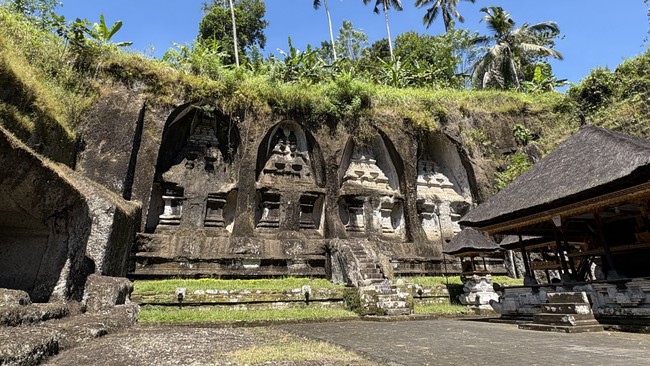
Jakarta, CNBC Indonesia - Mount Kawi in Malang Regency, East Java, has long been known as a pilgrimage site believed by some to bring good fortune, including in business matters. This belief has drawn many businesspeople hoping to receive guidance before making important decisions.
Historical records show at least two major Indonesian entrepreneurs routinely visited Mount Kawi. They are Bentoel founder Ong Hok Liong and Salim Group founder Liem Sioe Liong, also known as Salim. Both have different stories but are similarly linked to a belief in the guidance obtained from Mount Kawi.
Historian George Quinn, in his book Wali Berandal Tanah Jawa (2021), noted that Ong Hok Liong was a businessman who diligently made pilgrimages to Mount Kawi. “Ong frequently visited Mount Kawi near Malang to pray to Eyang Jugo and Iman Soedjono for his business to succeed,” wrote George Quinn.
One of his visits around 1954 became the most well-known story. While on a pilgrimage, Ong fell asleep near the tomb and dreamt of a taro tuber. After waking, he asked the tomb’s caretaker about the meaning of the dream. According to the caretaker, the dream was a sign from Eyang Jugo, a revered figure buried in the area, instructing Ong to change the name of his factory and cigarette brand, which had not yet developed. At the time, Ong was running a factory named Strootjes-Fabriek Ong Hok Liong with poor sales. Based on the dream’s interpretation, he changed the company and brand name to Bentoel, the local Malang term for the taro tuber that appeared in his dream.
Believe it or not, that decision became a turning point in his business journey. After using the name Bentoel, cigarette sales continued to rise. The company grew rapidly, employing around 3,000 workers before 1960 and becoming one of the largest cigarette producers in Indonesia. “In a country where, then and now, a large portion of the male population is addicted to cigarettes, Bentoel brought enormous wealth to Ong Hok Liong. By the time he died in 1967, Ong was a multi-millionaire,” Quinn stated.
The belief in Mount Kawi was also held by Salim Group founder Liem Sioe Liong. In the book Liem Sioe Liong and Salim Group: The Business Pillar of Soeharto (2016), Richard Borsuk and Nancy Chng revealed that Salim regularly travelled back and forth from Surabaya to Mount Kawi three to five times a year. Every time he was about to start a major business venture, he would spend time at a Chinese temple in the Mount Kawi area to seek guidance from a fortune teller and perform several rituals.
“At the temples where he worshipped, Liem often relied on supernatural methods to help him decide what steps to take. One common method he used was shaking a bamboo tube containing sticks with writing on them until one stick fell out; the writing on that stick would then be read and interpreted by a monk or fortune teller,” wrote Richard Borsuk and Nancy Chng.
One of the most well-known stories concerns the appointment of Mochtar Riady to develop Bank Central Asia (BCA). According to the authors, this decision was also influenced by the conviction Salim gained after meeting a fortune teller at Mount Kawi. “Upon returning from Mount Kawi [after meeting the fortune teller], he said with conviction that ‘I will be the Tang Sheng for Mochtar’,” they wrote. Under Mochtar Riady’s leadership, BCA grew to become the largest private bank in Indonesia from the 1980s until today.
Additionally, Salim was known to believe in feng shui when making business decisions. In 1968, when starting a partnership with a conglomerate group known as the Gang of Four alongside Sudwikatmono, Djuhar Sutanto, and Ibrahim Risjad, he insisted on using a small room furnished with only one telephone, one table, and two chairs because it was considered to have good feng shui.
Regardless of the truth of these beliefs, the stories of Ong Hok Liong and Liem Sioe Liong show that Mount Kawi has long been part of the journey of several major Indonesian entrepreneurs. Both went on to build business empires that grew into billion-dollar groups and left a significant mark on the nation’s business history.
Source: jawawa.id (https://jawawa.id/newsitem/two-indonesian-tycoons-who-frequently-visited-mount-kawi-and-became-conglomerates-1783813839)
Originally published by CNBC Indonesia (https://www.cnbcindonesia.com/entrepreneur/20260710144741-25-749854/2-pengusaha-ri-sering-bolak-balik-ke-gunung-kawi-jadi-konglomerat), translated from Indonesian