
Two Historic Lempuyangan Station Houses Spared from Demolition, May Become Heritage Buildings
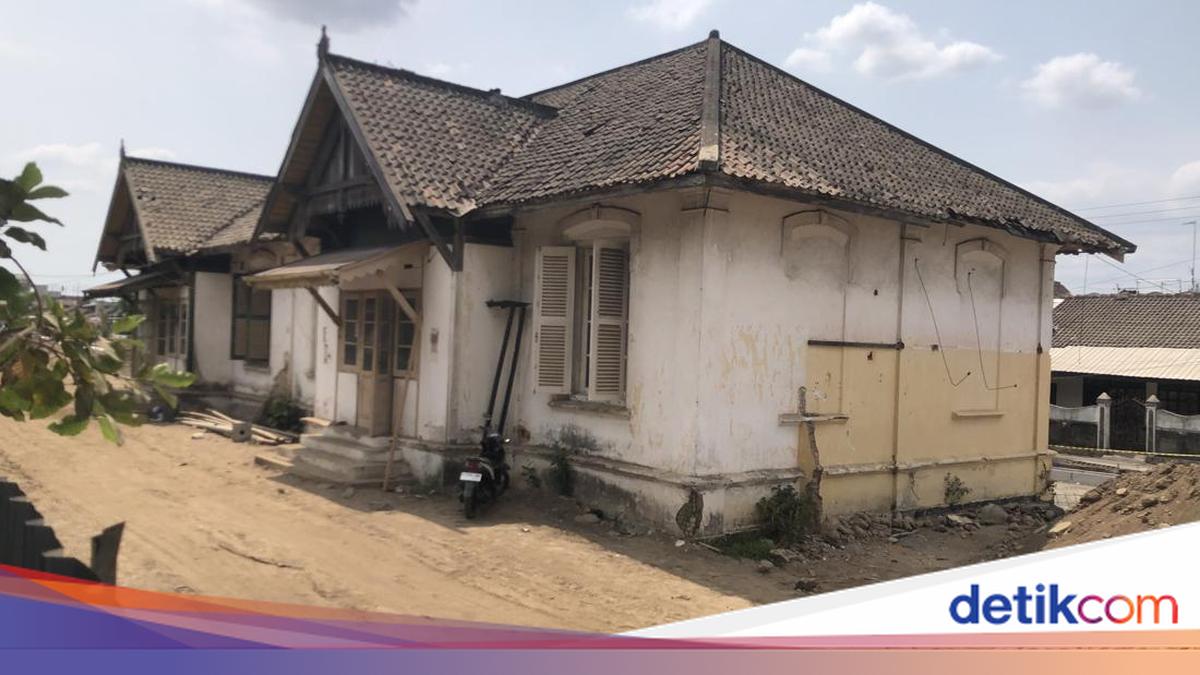
PT KAI has left two of the 13 historic houses at Yogyakarta’s Lempuyangan Station standing after the others were demolished some time ago. The two surviving houses are set to be proposed for heritage-building status.
“Numbers 10 and 11 are to be preserved and recommended for registration so they can be designated as heritage buildings,” said Susilo Munandar, head of the Cultural Heritage Division at the Yogyakarta City Cultural Affairs Office, when met at his office on Wednesday (14 October 2026).
The 13 houses were formerly railway staff residences. The other 11 were demolished on Friday (9 October) to make way for the expansion of Lempuyangan Station.
Susilo said KAI had consulted the office before carrying out the demolition, with the process beginning last year.
“KAI first wrote to us at the City Cultural Affairs Office on 24 October 2025. The process has been a lengthy one,” Susilo said.
“The letter requested that the houses be demolished because of the station development. They wanted to expand it, and therefore wanted to demolish them all. The houses were affected by the expansion,” he added.
The office then conducted an inspection with the Heritage Building Expert Team (TACB). It also consulted the Yogyakarta city administration’s legal division to confirm that the houses were not individually designated as heritage buildings.
“Although this is a station complex, the ministerial decree clearly designates Lempuyangan Station as a heritage site. We therefore confirmed that the houses to the south of KAI’s station area were not covered by a heritage designation decree,” he said.
Office says it did not recommend demolition
Following inspections, research and meetings with several parties, the city’s Cultural Affairs Office issued a recommendation to KAI concerning the 13 former staff houses. Susilo said it had not recommended their demolition, but had written that two houses should be retained.
“Our formal letter did not recommend demolition. Instead, it called for the houses to be preserved by record for KAI’s documentation, and added that houses numbers 10 and 11 should be retained and, if KAI agreed, registered as heritage buildings,” he said.
KAI was also asked to document all 13 houses in as much detail as possible, including visual records and detailed information about each building.
“We asked for comprehensive documentation, including measurements and the form of the buildings down to details such as door dimensions and materials,” Susilo said.
Why two houses were selected
The city’s Cultural Affairs Office recommended that KAI retain two of the 13 houses as a conservation measure and propose them for heritage status.
“The first is a detached house, while houses two to 13 are semi-detached. We therefore asked that one pair be retained,” he said.
The two houses were selected because they were considered the most authentic in terms of materials and layout.
“They are the two most authentic and complete houses. Although they have been altered, they have undergone the fewest changes compared with the others. Some of the houses had lost all their original roof tiles, and rooms had been added. The interiors had also changed because they were used as homes,” he said.
KAI explains why it demolished the houses
KAI had earlier demolished 11 of the 13 historic houses near Lempuyangan Station. The houses stood behind the food stalls in front of the station.
The site has now been cleared, leaving open ground ready for construction and a road foundation running from east to west. Only the two houses on the western side remain standing. Their original forms are still visible, although they have not yet been restored.
Feni Novida Saragih, public relations manager for KAI’s Daop 6 Yogyakarta operating region, said the former Dutch-style staff houses were demolished to provide space for the expansion of the Lempuyangan Station rail yard.
She said the station had become busier year by year, with passenger numbers rising for both long-distance trains and the KRL commuter service. In 2024, Lempuyangan Station served 5,392,700 passengers; in 2025, the figure rose by 4 per cent to 5,605,414.
“On an average day, 12,586 long-distance rail passengers board or alight at Lempuyangan Station. The Yogyakarta–Palur KRL Commuterline carries 3,500 passengers. The station also handles freight,” Feni said when met by detikJogja.
Regarding the demolition of the historically significant houses, Feni said KAI had co-ordinated with the Yogyakarta city administration and local authorities through focus group discussions, presentations and other meetings.
“The 13 company houses are neither cultural heritage buildings nor heritage buildings. The City Cultural Affairs Office has officially stated that they are not listed in the city’s register of regional cultural heritage buildings or in its cultural heritage data,” she said.
Feni said the two houses were spared on the recommendation of the Cultural Affairs Office. She did not provide details about their future use.
“Before the demolition, KAI completed full documentation of the houses so that they would remain properly recorded,” she added.