
Two Families, Two Stories, One Shared Assurance
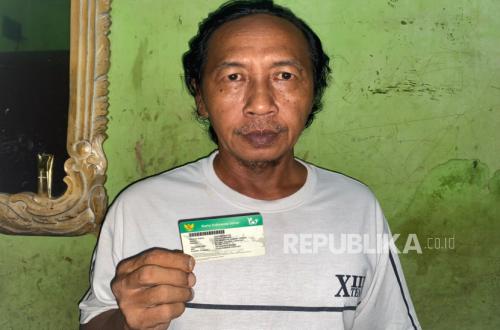
Heni’s mobile phone rang whilst she was chopping vegetables on the kitchen table. She put down the knife and reached for the phone, which was not far from where she was sitting. The name ‘Bay’ was displayed on the screen. It was unusual for her youngest son to call in the early morning, before the sun had risen very high.
“Dad’s right leg can’t be moved, Mum,” the voice of Bayu (17) at the other end sounded panicked and nervous. Heni was startled and instinctively uttered an istighfar. Before she could ask any questions, the tenth-grade senior high school student reported that his father’s right arm also felt numb and paralysed. This time Heni fell completely silent.
When Heni had left the house, Zulkarnain (51) had been going about his day as usual. There had been no signs that her husband was ill. The 45-year-old woman stood stunned and confused.
“What’s the matter, Ma’am?” asked Nur (35), breaking the silence. Heni explained what had just happened.
Nur immediately urged her to hurry home and take Zul to hospital as quickly as possible. She advised going straight to the emergency department upon arrival. “Don’t forget to bring his KIS card, Ma’am.”
Heni has worked at Nur’s house for the past few years, in Bambu Apus subdistrict, Pamulang, South Tangerang. Heni’s home is not far from Nur’s — no more than a ten-minute walk.
On arriving home, Heni searched for the Kartu Indonesia Sehat (KIS) card in Zulkarnain’s name. Heni, Zul and their two children are registered as KIS participants under the Premium Assistance (PBI) scheme. Four KIS PBI cards were kept neatly in a wardrobe drawer, though they had almost never been used. Not because Heni distrusted their benefits, but simply because the family had been healthy and never hospitalised.
When Heni asked Bayu to order an online taxi to take his father to hospital, Zul instead asked to call off the plan. “Just stay at home,” Zul said briefly, closing his eyes. Bayu asked why, but Zul said nothing.
Heni knew exactly what was weighing on her husband’s mind. Not the pain in his right leg. Nor the arm that had suddenly become difficult to move. It was the cost.
Zul was only a labourer at a building materials shop. He earned money only if there was work for him that day. His daily income was often just enough to meet the family’s food needs. The thought of a hospital made the middle-aged man anxious.
Heni then telephoned Nur. “Ma’am, with the KIS card, do we still have to pay for hospital treatment?”
From the other end of the line, Nur reassured Heni and briefly shared her own experience. Perhaps it was Nur’s explanation, or perhaps he finally realised the state of his body, but Zul relented and agreed.
Ten Minutes
In late June 2026, under the blazing midday sun, Zul arrived at the emergency department of a hospital in Ciputat, South Tangerang. Two nimble nurses assisted by bringing a wheelchair. Another nurse prepared a bed. The emergency doctor then carried out an initial examination. Heni, standing beside the bed, occasionally massaged her husband’s arm.
Meanwhile, Bayu was directed by a nurse to handle the administrative requirements. He brought his father’s ID card and KIS PBI card. He hurried to the registration counter and handed over the ID and KIS card in his father’s name.
The registration officer’s fingers danced across the keyboard, her eyes fixed on the monitor. In less than ten minutes, the printer beside her whirred into action. Several sheets of paper emerged. One of them was handed to Bayu. The officer asked Bayu to sign at the bottom right of a half-A4-sized sheet.
“The doctor says Dad may have had a stroke, Bro,” Heni said softly when Bayu returned from completing the registration paperwork. Not a single word came out of Bayu’s mouth. His gaze shifted towards his father, lying slumped on the emergency bed.
Zul was then moved to a treatment ward according to his membership class. He was cared for there for five days. Bayu and his elder sister, Elin (21), took turns keeping watch over their father. Five days that felt long for the modest family.
After five days of treatment, Zul was allowed home. He could already walk, though not yet as well as before. His steps were still weak. Zul was asked to continue treatment with rehabilitation therapy three days after leaving the hospital.
Three Years Earlier
A day after Zul returned from hospital, Nur came to visit with her husband and their two children. In the simple rented room, Zul sat relaxed against the wall on a thin mattress in the living room. Heni was at his side, occasionally massaging her husband’s legs.
“It’s true we didn’t pay anything at all, Ma’am. When we were discharged, I was only asked to sign a small piece of paper by the officer, then given one sheet for the follow-up check, for the therapy,” said Heni.
That answer left Nur silent for a moment. Her memories stretched back. Three years ago, Nur had given birth to her second child. The delivery did not go entirely as usual. The baby she was carrying had the umbilical cord wrapped around it, requiring special handling. That three-year-old child now accompanied her on the visit to see Zul.
When completing the discharge paperwork, Nur’s husband paid only Rp 35,000. Not for the cost of treatment. Nor for the cost of delivery. The money was to cover a clay pot — a container for keeping the placenta, which would later be buried.
Nur and her family are registered as Class 1 BPJS Kesehatan participants, with premiums they must pay themselves each month. Meanwhile, Heni and her family are registered as KIS PBI participants. KIS PBI is specifically for the poor. The monthly premiums for participants in this scheme are fully covered by the government, whether from the central government through the state budget (APBN) or regional governments through regional budgets (APBD).
Mr Zul has now fully recovered and returned to his usual activities. Nur, meanwhile, has never forgotten the struggle of giving birth to her beloved child. Their membership classes are different. Their economic circumstances are indeed not the same. Their stories of illness are different as well. Yet the two families met in one thing: the National Health Insurance Programme (JKN).
Gotong Royong