
Two Decades of the Lapindo Mudflow: Unhealed Wounds and Lingering Hopes
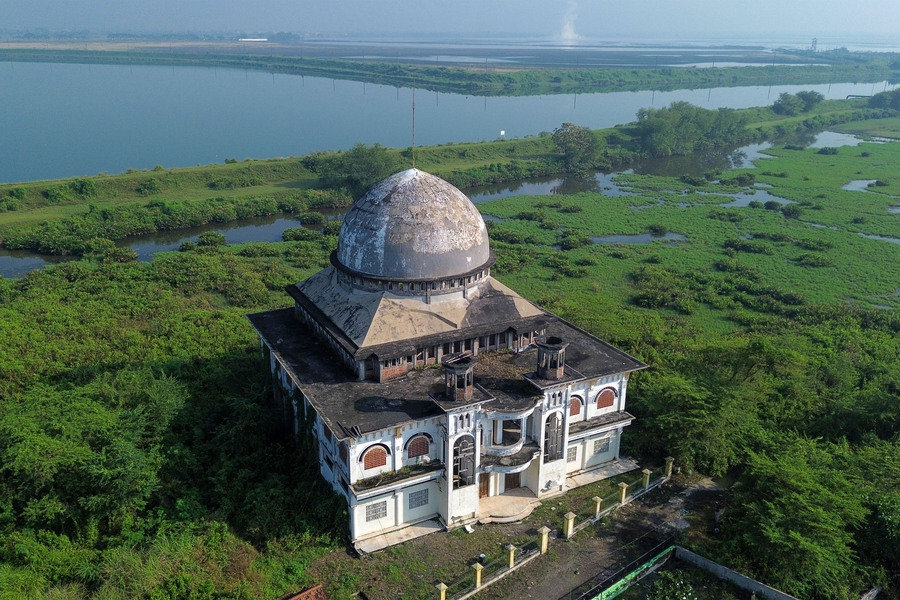
Exactly 20 years have passed since the first eruption of hot mud broke the peace of the residents of Porong, Sidoarjo, on 29 May 2006. What was once considered a common natural disaster has now transformed into one of Indonesia’s most prolonged environmental and humanitarian tragedies. At this two-decade mark, the area surrounding the eruption centre resembles a ‘ghost town’. However, for the thousands of victims, the wounds of losing homes and livelihoods remain fresh, particularly as compensation rights remain a legacy being fought for by subsequent generations.
It all began on 29 May 2006, when gas exploration drilling activities by PT Lapindo Brantas at the Banjar Panji-1 well in Porong encountered technical difficulties. A surge of hot mud emerged outside the drilling point, which gradually expanded, submerging thousands of houses, dozens of schools, and places of worship, and severing the national transport artery, the Porong-Gempol Toll Road.
Long debates regarding the cause—whether due to technical drilling factors or geological phenomena—led to significant public pressure. The government eventually intervened, including through the formation of the Sidoarjo Mud Management Agency (BPLS) and the obligation for compensation to be fulfilled by the company through PT Minarak Lapindo Jaya.
Twenty years later, the view around the mud containment embankments leaves a sense of grief. Many villages, such as Renokenongo, Siring, and Jatirejo, have effectively ‘vanished’, buried under mud. The environmental impact remains severe, with residents living near the embankments, such as in Gempolsari Hamlet, frequently facing poor clean water quality and flood threats. Regarding the victims’ lives, many survivors are now elderly, while their descendants must bear the burden of the unfinished struggle for compensation. Economically, affected local entrepreneurs have reported massive losses, with total estimates reaching hundreds of billions of rupiah, for which payment remains uncertain.
As of 2026, the status of compensation remains the primary obstacle. Various negotiations with the developers often reach deadlocks regarding land prices and payment mechanisms. ‘Our community is tired of waiting. These twenty years have seen a change in generations. Those who were grandfathers or fathers are now passed on to children and grandchildren. We hope President Prabowo will resolve this immediately,’ said Willy, a community representative.
Victims are now demanding government decisiveness to take concrete steps. Although previous governments provided bridge financing to assist victims, many residents feel the company’s remaining obligations have not been fully met, referencing the Constitutional Court (MK) ruling which affirms that the state must be present in resolving this issue. Entering the 20th year, residents in the affected areas are no longer just demanding compensation, but also the certainty of a decent life. Their hope is simple: that the government focuses not only on the maintenance of embankment infrastructure but also provides long-term solutions for the rights to health, clean water, and economic recovery for those who have endured two decades of uncertainty.
The Sidoarjo Mud Control Centre (PPLS) is currently focusing on coordinating with Task Forces to validate and synchronise compensation payment data. Meanwhile, the Sidoarjo Regency Government has committed to resolving the long-standing compensation issues resulting from the Lapindo mud disaster. In a recent demonstration, residents conducted a long march from Taman Dwarakerta to the mud embankment, even sending a letter to President Prabowo Subianto, urging the settlement of Rp1.5 trillion in compensation through a Special Presidential Decree.