
Two Decades After Its First Nuclear Test, North Korea Is Increasingly Confident
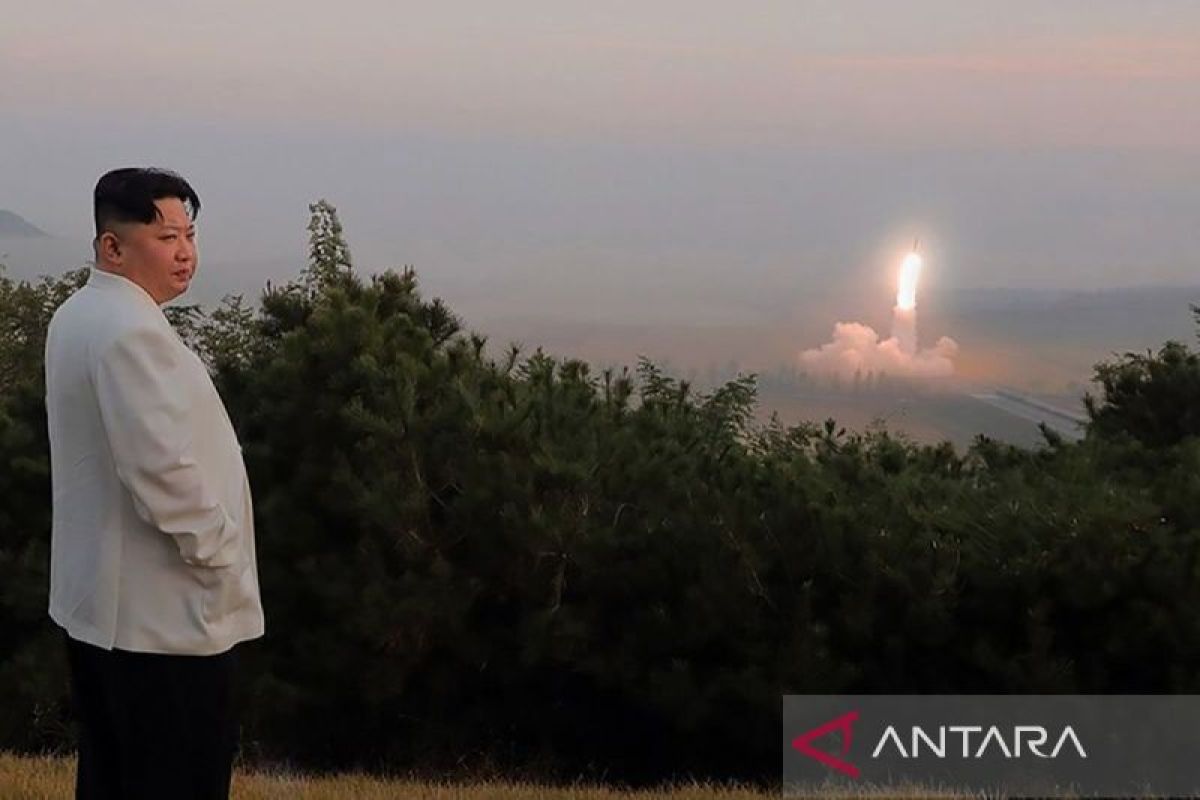
North Korea is increasingly confident as a nuclear-armed state after expanding its stockpile of nuclear weapons and rejecting the international community’s demands for denuclearisation.
The situation is in focus as Friday marks 20 years since the country carried out its first nuclear test, the Kyodo News Agency reported.
In recent years, North Korea has deepened military cooperation with Russia, following the two countries’ signing of a comprehensive strategic partnership treaty in 2024 that provides for mutual support in an emergency.
North Korea has also improved relations with China, its largest trading partner and long-standing main source of economic support, through exchanges of high-level visits.
During his visit to North Korea in June — his first in seven years — Chinese President Xi Jinping did not publicly mention the country’s nuclear programme, a diplomatic gain for Pyongyang.
With North Korea becoming more politically and economically stable thanks to support from its two neighbours, efforts to negotiate denuclearisation now appear more difficult than ever.
Even US President Donald Trump, who has signalled a desire to resume direct dialogue with North Korean leader Kim Jong Un, has publicly called the country a “nuclear power”, although Washington’s official policy remains the pursuit of North Korea’s complete denuclearisation.
North Korea conducted six nuclear tests between 2006 and 2017.
Through a constitutional amendment in 2012, the country formally declared itself a nuclear-armed state.
The Stockholm International Peace Research Institute (SIPRI) estimates that North Korea has assembled around 60 nuclear warheads and possesses enough fissile material to produce at least 30 more.
Negotiations on the denuclearisation of the Korean Peninsula, involving North Korea, South Korea, China, Japan, Russia and the United States, took place from 2003 to 2008.
The process ultimately failed because of disagreements over verification procedures.
During his first term as president, Trump met Kim Jong Un three times.
The meetings began with a summit in Singapore in 2018, followed by meetings in Vietnam and at the truce village of Panmunjom in 2019.
Denuclearisation talks collapsed when the two leaders met in Hanoi.
They failed to bridge the gap between US demands and North Korea’s call for international sanctions to be lifted.
North Korea has long sought recognition as a state possessing nuclear weapons.
Pyongyang has demanded such recognition, as well as an end to what it regards as hostile US policy, as preconditions for resuming bilateral dialogue.
With support from Russia and China, both permanent members of the United Nations Security Council (UNSC), sanctions imposed over North Korea’s nuclear and ballistic missile programmes are now considered to have diminishing impact.
In 2024, Russia vetoed the renewal of the mandate of a UN panel established in 2009 to monitor North Korea’s compliance with international sanctions, leading to the panel’s dissolution.
China abstained in the vote.
On the development of its nuclear capabilities, North Korea is suspected of having trained to operate a small-scale reactor designed for installation on a nuclear-powered submarine currently under development.
This was reported by Yuki Kobayashi, a senior researcher specialising in nuclear non-proliferation at the Sasakawa Peace Foundation in Tokyo.
Kobayashi said the training is believed to have taken place at a 100,000-kilowatt light-water reactor facility at the Yongbyon nuclear complex in north-western North Korea.
In 2023, the International Atomic Energy Agency (IAEA) said it had detected indications that the reactor had reached “criticality” — the stage at which nuclear fuel can sustain a continuous fission chain reaction.
According to IAEA analysis, the reactor’s operation was suspended from September to October 2024, in April 2025, from August to November 2025, and from March to April 2026.
The relatively frequent shutdowns have prompted speculation among Japanese nuclear experts that the pauses are part of exercises to operate and start up the light-water reactor, in preparation for operating a nuclear-powered submarine.
Source: Kyodo
Source: jawawa.id (https://jawawa.id/newsitem/two-decades-after-its-first-nuclear-test-north-korea-is-increasingly-confident-1791543364)
Originally published by Antara (Indonesian) (https://www.antaranews.com/berita/5778762/dua-dekade-setelah-uji-nuklir-pertamanya-korut-semakin-percaya-diri), translated from Indonesian