
Two Babies Born Under Emergency Tents as Earthquake Shakes NTT
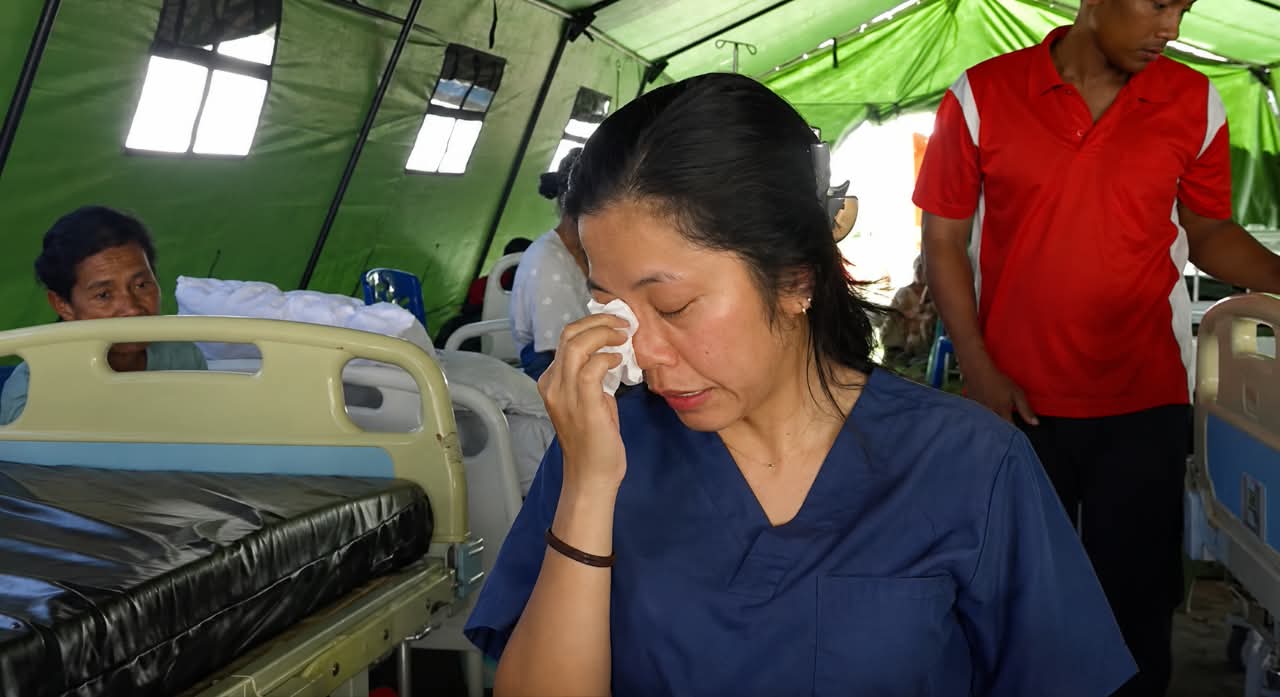
East Nusa Tenggara was still facing aftershocks when health services at Aeramo Regional Hospital in Nagekeo Regency had to be moved to emergency tents. The hospital building was no longer adequate. A number of pieces of equipment were damaged and the electricity supply was cut. Amid these conditions, doctors, midwives and nurses remained on duty to serve patients in need of help.
Two deliveries took place under the emergency tents. There was no operating theatre with complete facilities. There was no lighting as in normal conditions. All that was available was equipment that could still be used and medical staff working with every limitation.
Obstetrician Dr Paramita Sari said the conditions at the time meant the deliveries had to be carried out in the emergency tents. “We all surrendered to the limitations. There were earthquake tremors, then all the equipment was damaged, the building was inadequate, and our electricity was cut. So the delivery process was indeed carried out in the emergency tent,” said Dr Paramita.
One of the most tense deliveries was experienced by Maria Florida Noko Kelen. The 39-year-old woman had to undergo an emergency caesarean section around two months earlier than her estimated due date. At the same time, aftershocks were still occurring.
Obstetrician Dr Yona Sara Pardede handled the operation. The baby’s breech position made the delivery require even greater care. The baby to be born weighed around 1.3 to 1.4 kilograms. In the middle of the operation, earthquake tremors were still being felt.
“In the middle of the operation there were still many earthquake tremors. The bed was also not easy to raise and lower. The baby was around 1,300 to 1,400 grams and was in a breech position,” said Dr Yona.
Under these conditions, every action had to be carried out carefully. The breech position meant the birth required a special technique to avoid injury to the baby. “If a baby is born breech we have to go slowly. Meanwhile an earthquake could happen at any time. We were afraid the legs would break, the arms would break. We were also afraid of a neck injury,” she said.
Amid the situation, Dr Yona could only pray while continuing the medical procedure. “God, please. God, help me,” she said, recalling the situation during the operation.
The operation was eventually completed. The premature baby was born safely weighing around 1.3 kilograms. The birth became an unforgettable experience for both the family and the health workers who handled it. The baby was later named Gempita, taken from the word “gempa” (earthquake), which formed the backdrop to the birth.
For Maria Florida, her child’s safety was inseparable from the health workers who remained at the hospital when the disaster situation put everyone at risk. “The building had collapsed. At that time I actually thought about saving ourselves individually. But the doctors, midwives and nurses remained loyal to those of us in need,” said Maria.
The other delivery also took place under the emergency tents. With limited facilities, health workers continued to provide assistance until the baby was born safely. Maria said she was grateful that the midwives and doctors did not abandon her in the emergency conditions.
“Praise God, the midwives and doctors did not leave me just like that. They really helped me in an emergency situation, under the tent,” she said.
At Aeramo Regional Hospital, emergency tents served as both treatment rooms and the place where two births took place while the earthquake and aftershocks still loomed. Amid damaged facilities, power cuts and limited equipment, health workers continued to carry out their duties.
Two babies were born safely. One arrived earlier than expected and was born by caesarean section while the earthquake was still shaking. Under those emergency tents, new life began as health workers raced against time to ensure that two mothers and their babies made it through the disaster situation safely.