
Two AKSARA Student Programmes at Universitas AKPRIND Win DPPM Funding for 2026
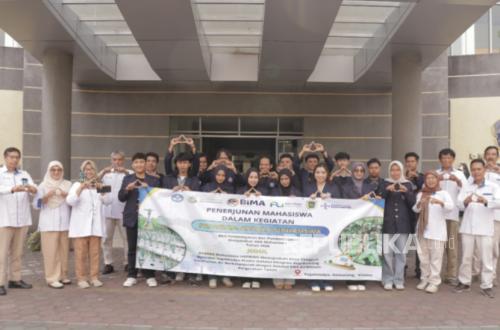
Universitas AKPRIND Indonesia is continuing its higher education mission through community-service programmes. In 2026, two proposals under the Student Action for Community Learning and Empowerment (AKSARA Mahasiswa) submitted by the university passed selection and received funding from the Directorate of Research and Community Service (DPPM) at the Ministry of Higher Education, Science and Technology.
The two programmes are designed to focus on applying appropriate technology, making use of local economic potential, increasing residents’ productivity and establishing sustainable community-empowerment schemes. They will be carried out in two locations: Banaran Hamlet in Cangkringan, Sleman, Special Region of Yogyakarta, and Tegalmulyo Village in Klaten, Central Java.
The funding gives students the opportunity to apply knowledge gained in the classroom directly in the field. The activities are also intended to develop leadership, social awareness, creativity and the ability to collaborate in responding to local community needs.
Universitas AKPRIND Indonesia Vice-Rector for Academic and Student Affairs, Prof. Dr Anak Agung Sustrawan, said the funding would help strengthen implementation of the university’s Tridharma, particularly student involvement in community activities. “The AKSARA Mahasiswa programme gives students the opportunity to learn directly from the community. They not only apply what they have learnt in lectures, but also learn to understand community needs, communicate, work in teams and develop solutions that can deliver tangible benefits,” Prof. Agung said in a written statement received by Republika on Wednesday (21 October 2026).
He said field involvement was part of a learning process that connects academic material with real-world conditions. The experience is expected to help students develop a structured mindset, social awareness and a sense of responsibility towards their surroundings.
“The success of the programme is measured not solely by whether the activities are completed, but also by the benefits of the technology applied, improvements in community capacity and the sustainability of the results after the programme ends,” he said.
Universitas AKPRIND Indonesia DP2M Director Prof. Dr Ir Sri Mulyaningsih said universities needed to ensure that knowledge and innovation could be applied in practical ways to support people’s livelihoods. The AKSARA Mahasiswa programme, she said, provides a platform for lecturers, students, residents and stakeholders to work together on solutions suited to local potential.
“Community empowerment needs to be based on actual conditions in the field. Appropriate technology and innovation must address community needs, strengthen local economic potential and encourage the sustainable use of resources,” she said.
In Banaran Hamlet, Cangkringan, Sleman, the programme will focus on strengthening poultry farming and horticulture through appropriate technology. Combining the two sectors is intended to help increase residents’ business productivity and make the best use of available local resources.
The programme’s lead in Banaran, Dr Ir Ganjar Andaka, said it had been designed to encourage the use of technology suited to the needs and capacities of residents in both poultry farming and agriculture.
“Through this programme, we want to encourage the community to develop its farming and agricultural potential more effectively with the support of appropriate technology. We hope its application will raise productivity, strengthen local businesses and deliver lasting benefits,” Ganjar said.
He said developing the farming and agricultural sectors required a contextual approach to ensure consistent results. The second programme, in Tegalmulyo Village, Klaten, will focus on developing local economic potential through the management of coffee and onion crops, combined with water-resilience management. The approach is intended to help agricultural activity in the area operate effectively while taking long-term water availability into account.
The Tegalmulyo programme lead said proper resource management was essential to developing local commodities. “This programme seeks to optimise the potential of coffee and onions through an integrated approach that includes sustainable water management. We hope it will help the community develop agricultural businesses, increase productivity and strengthen local economic potential,” the lead said.
The lead added that agricultural success depended on a combination of crop selection, water-resource management, appropriate technology and cooperation between regions. With funding from the DPPM of the Ministry of Higher Education, Science and Technology, the two 2026 AKSARA Mahasiswa programmes are expected to proceed according to their respective work plans. Integrating education, the practical application of knowledge and community participation is central to the activities, which aim to deliver tangible benefits to Banaran Hamlet and Tegalmulyo Village.