
Twenty-two per cent and the promise of educational quality
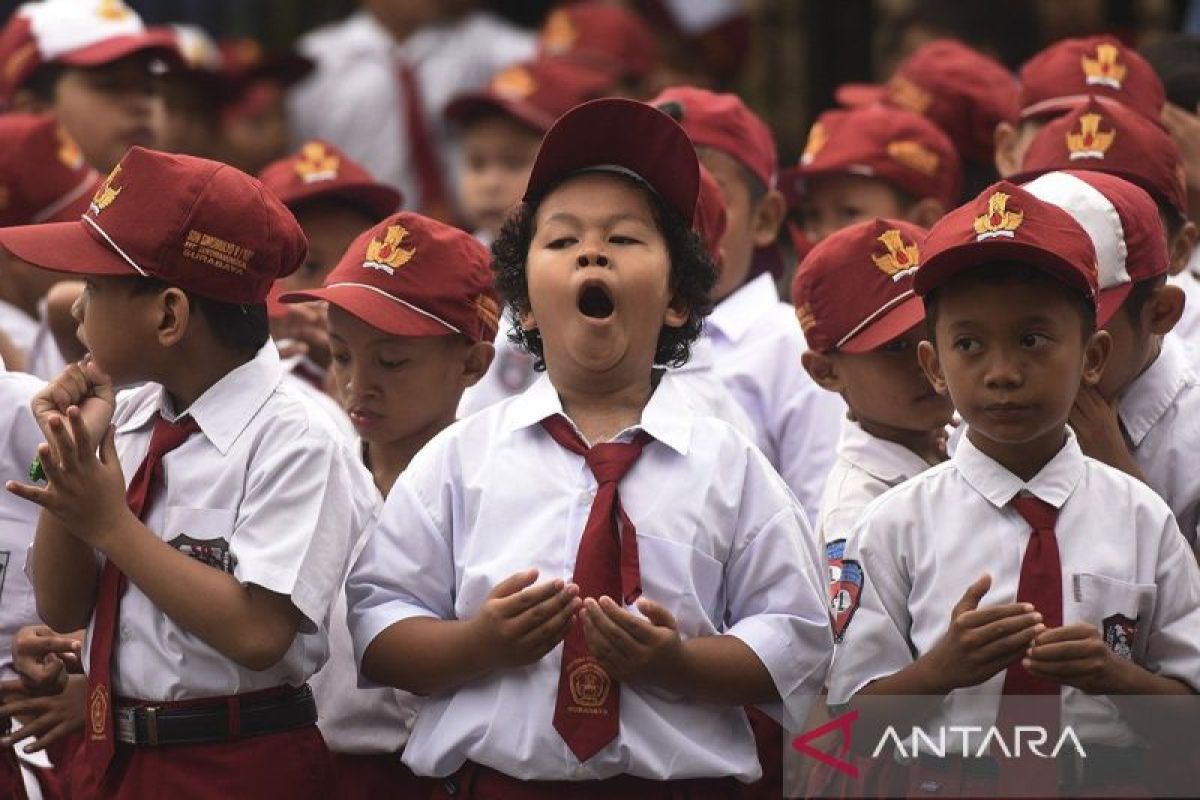
In the classroom, budget figures eventually meet with things that are not always visible in financial tables: a child’s ability to read, calculate, remain in school, and eventually find a path to a better life.
This is why the increase in the education function allocation in Surabaya, East Java, to 22 per cent in the 2027 Draft Regional Budget (RAPBD) deserves to be read as more than just news about government spending. The 2027 Surabaya RAPBD is projected to reach Rp12.8 trillion, with an allocation for education of 22 per cent. Calculated from this total, the portion is equivalent to approximately Rp2.82 trillion. For comparison, the 2025 Regional Budget (APBD) allocated Rp2.588 trillion for education spending, representing 20.96 per cent of the total Rp12.3 trillion APBD.
The increase from 20 per cent to 22 per cent also means that Surabaya is placing education above the minimum threshold mandated by the constitution. Article 31, paragraph 4 of the 1945 Constitution emphasises that the state must prioritise at least 20 per cent of the state and regional revenue and expenditure budgets to meet the needs of educational implementation. This provision is further reinforced in Law Number 20 of 2003 concerning the National Education System.
However, immediately after that figure was announced, a more important question began: What is the purpose of this additional two per cent? Education does not lack problems simply because its budget is small. Some problems actually arise when the available funds are not yet fully connected to the issues that most determine a child’s future.
Surabaya already possesses strong capital. The Human Development Index (HDI) of Surabaya City in 2025 reached 85.65, an increase of 0.96 points from 84.69 in 2024. At the same time, the percentage of the poor population in March 2025 fell to 3.56 per cent, with the number of poor residents amounting to 105,090 people.
Education has been one of the pillars of these achievements. The city government provides free education in public schools and continues to expand interventions for vulnerable groups. For the 2026/2027 academic year, for example, 7,380 students in SMA, SMK, and MA (or equivalent) received educational assistance. Students from low-income families attending private schools received assistance of Rp350,000 per month, in addition to school supplies.
Such policies are vital because poverty often does not stop at income issues. It can manifest as costs for uniforms, transport, practical exams, books, or other small necessities that ultimately cause children to drop out of school. Therefore, a large education budget should not only make schooling cheaper but should also make the educational journey longer and of higher quality.