
Tuyul Emerged in the Colonial Era, Afraid of Metal and Unable to Steal Money from Banks?
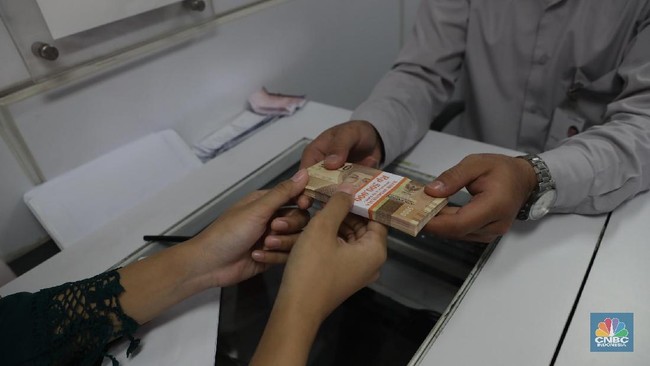
Tuyul emerged in the colonial era, afraid of metal and unable to steal money from banks?
Jakarta, CNBC Indonesia - The tuyul figure has long been known to Indonesian society as a supernatural being believed to steal money for its master. Stories about this small-headed creature continue to surface, especially when someone becomes suddenly wealthy in a short time.
However, if you trace further, the tale of the tuyul does not arise solely from the world of mystique. There is a strong social and economic backdrop behind the emergence of this belief.
One of the questions commonly raised in society is, if tuyul really can steal money, why is money in banks safe? Why are there no stories of bank accounts looted by tuyul or bank vaults suddenly empty?
Cultural critic Suwardi Endraswara in Dunia Hantu Orang Jawa (2004) wrote that tuyul activities were carried out from house to house and their work was not only about stealing money, but also goods and valuable letters. Usually, this was done by someone obsessed with wealth.
However, to date there have been no cases of banks losing money due to theft by the small, child-like supernatural beings.
On the internet, information circulates about answers to this question. Some say tuyul fears metal because money in banks is kept in safes. Others say there is a ‘guardian’ at banks in the form of another supernatural being feared by tuyul.
These answers are only conjecture, but there is a scientific explanation behind the tuyul myth. This explanation is what can debunk the existence of tuyul and also explain why tuyul does not steal money from banks or take someone’s e-money balance.
To understand the explanation, we must go back to 1870. At that time, the Netherlands formalised an open-door policy or economic liberalisation, replacing the forced-cultivation system. At a glance, this change seemed to bring a windfall since it was seen as capable of improving the people’s welfare. But in reality, it did not.
According to Jan Luiten van Zanden and Daan Marks in Economy of Indonesia 1800-2010 (2012), economic liberalisation actually gave birth to a new colonial regime in which the expropriation of peasant plantations was turned into large plantations and sugar factories. This situation then pushed the lives of people into poverty, especially small farmers in Java who increasingly sank into the depths of poverty. For they no longer had control over the plantation lands.
On the other hand, there were also segments of society that profited from the system. They were traders, whether indigenous or Chinese, who in an instant became new rich. The rapid rise of their wealth caused astonishment among the increasingly impoverished farmers. The farmers were puzzled as to the origins of their wealth.
It should be noted that farmers at the time lived simply. According to Ong Hok Ham in Wahyu yang Hilang Negeri Yang Guncang (2019), they adhered to a subsistence system. In other words, farming was just enough for their own consumption. If there was surplus harvest, it would be given as tribute or sold.
As a result, they held the view that wealth accumulation was an open process. In other words, each person must undergo a transparent process and effort that could be seen by others. The problem was they did not see the hard work of the new rich. Moreover, they could not prove the origin of their wealth if asked by the farmers. Consequently, envy and resentment from farmers toward traders arose because they could obtain so much wealth.
Moreover, according to George Quinn in An Excursion to Java’s Get Rich Quick Tree (2009), farmers always believed that wealth must be accounted for. So when the wealthy failed to account for the origin of their wealth, the farmers envied and accused the money of being the product of theft.
Because the views were steeped in mysticism, farmers regarded the theft as the result of the collaboration between the wealthy and supernatural beings and the unseen. One of them is tuyul. Tuyul is a Javanese mythological figure known for a long time. It is the form of a supernatural being or a ghost with a small body and bald head that can be kept.
Thus, the envious farmers constantly accused the new rich of obtaining wealth by unlawful means. As Ong Hok Ham writes in another book titled Dari Soal Priayi sampai Nyi Blorong (2002), this caused merchants and successful entrepreneurs to lose status in society. They were considered ‘lowly’ because they fostered wealth through unlawful means, namely by allying with devils. In fact, all of this occurred due to Dutch colonial policy changes that left entrepreneurs with a windfall.
The farmers’ disdain for the suddenly wealthy did not only affect personal relationships but more. As a result, there were changes in the exchange of goods by the wealthy. The wealthy then tended to buy goods that did not reveal their true wealth, such as gold or luxury goods. If they bought land or houses, they would be accused by farmers of harbouring a devil or tuyul.
These baseless accusations drove the popularity of the tuyul figure as a mystical subject regarding wealth to rise and remain popular in Indonesia to this day. Moreover, Indonesians, who for years lived in an agrarian society, further perpetuate the imagination and the accusation of using tuyul.
(dce/dce) Add as a preferred source on Google [Gambas: CNBC Video]
Source: jawawa.id (https://jawawa.id/newsitem/tuyul-emerged-in-the-colonial-era-afraid-of-metal-and-unable-to-steal-money-from-banks-1779533739)
Originally published by CNBC Indonesia (https://www.cnbcindonesia.com/market/20260523075020-17-737277/tuyul-muncul-di-era-kolonial-takut-logam-tak-bisa-curi-uang-di-bank), translated from Indonesian