
Turning Waste into Income: TPS 3R GO-SARI Drives Bantul Residents' Economy
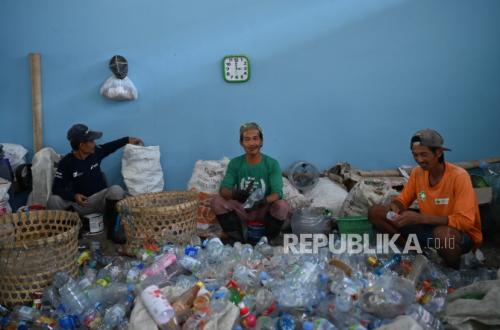
The waste problem has become a challenge for the community of Guwosari, Pajangan District, Bantul Regency, Special Region of Yogyakarta, as the volume of household waste increases and the regional government closes the Piyungan final disposal site. This situation has encouraged residents to find ways to resolve waste at its source.
These efforts are now developing through the TPS 3R GO-SARI facility. Every day, around 3–3.5 tonnes of household waste are managed at this site. Waste is not simply collected but sorted and reused as compost, animal feed, recycled materials, and various products with economic value.
The impact is also felt by the community. TPS 3R GO-SARI now serves around 1,500 households and has created jobs for 27 local residents. The various productive activities developed also generate total income of around Rp98 million per month.
Waste management was developed by the community through a simple approach close to daily life. Waste is grouped into ‘bosok, rosok, popok, and bodongkok’ to make it easier to understand and sort.
Organic waste is used for compost and Black Soldier Fly maggot cultivation. The maggots are then used as feed for fish and livestock, including around 458 laying hens that produce about 27 kilograms of eggs per day. Meanwhile, HDPE plastic is processed into eco-furniture such as tables, chairs, shelves, and flower pots.
GO-SARI’s development has received support from PT Pertamina Patra Niaga since 2022. Area Manager Communication, Relations & CSR Pertamina Patra Niaga Central Java, Taufik Kurniawan, said the support is directed so that waste management does not stop at solving environmental problems but can develop into productive activities managed independently by the community.
‘We certainly do not want that after Pertamina leaves, this excellent programme simply fades away. So we are not only providing CSR programmes but also making them self-reliant,’ said Taufik.
In 2026, TPS 3R GO-SARI management will be strengthened with the use of clean energy through a 6.6 kWp solar power plant with a 10 kWh battery. The energy produced is used to support the operation of various waste processing equipment.
Local Hero of the DEB GO-SARI Rehabcycle Programme and manager of TPS 3R GO-SARI, Hendry, said the use of solar power can reduce operational electricity costs by up to about 60 percent. Electricity costs that previously reached Rp3.5 million–Rp4 million per month have now fallen to around Rp1.5 million–Rp2 million per month.
‘With the help of the solar power plant, our electricity needs can be saved by up to about 60 percent. Our colleagues can also continue working when there is a power outage,’ said Hendry.
The economic benefits of GO-SARI are also directly felt by workers. Ardian Sajidanto, who has worked for almost 2.5 years at TPS 3R GO-SARI, said the job has become one of the sources of income for his family.
‘In terms of income, Alhamdulillah it can help my economy and my family. It can also be used to buy milk for my child,’ said Ardian.
The programme’s benefits continue to be expanded. Waste processing also involves elderly groups and assisted residents of the Class IIB Bantul Detention Centre in processing plastic into eco-furniture. GO-SARI services are also strengthened through the Gosari Lestari application, which supports waste service payments, inorganic waste savings, and marketing of processed products.
As part of strengthening this ecosystem, on 12 August 2026 Pertamina symbolically handed over support for the Desa Energi Berdikari Programme solar power plant and BPJS Ketenagakerjaan protection for TPS 3R GO-SARI workers. On the same occasion, 771 basic food packages were distributed to underprivileged residents around the programme area.
From the waste problem, the Guwosari community is now building productive activities that provide layered benefits. Waste ending up in disposal can be reduced, jobs are created, sources of income grow, while clean energy helps make processing activities more efficient.
‘The hope is that they can be independent, self-reliant, and without our guidance they can also continue and further increase the income generated,’ said Taufik.