
Turning Waste into Blessings with Earthworms
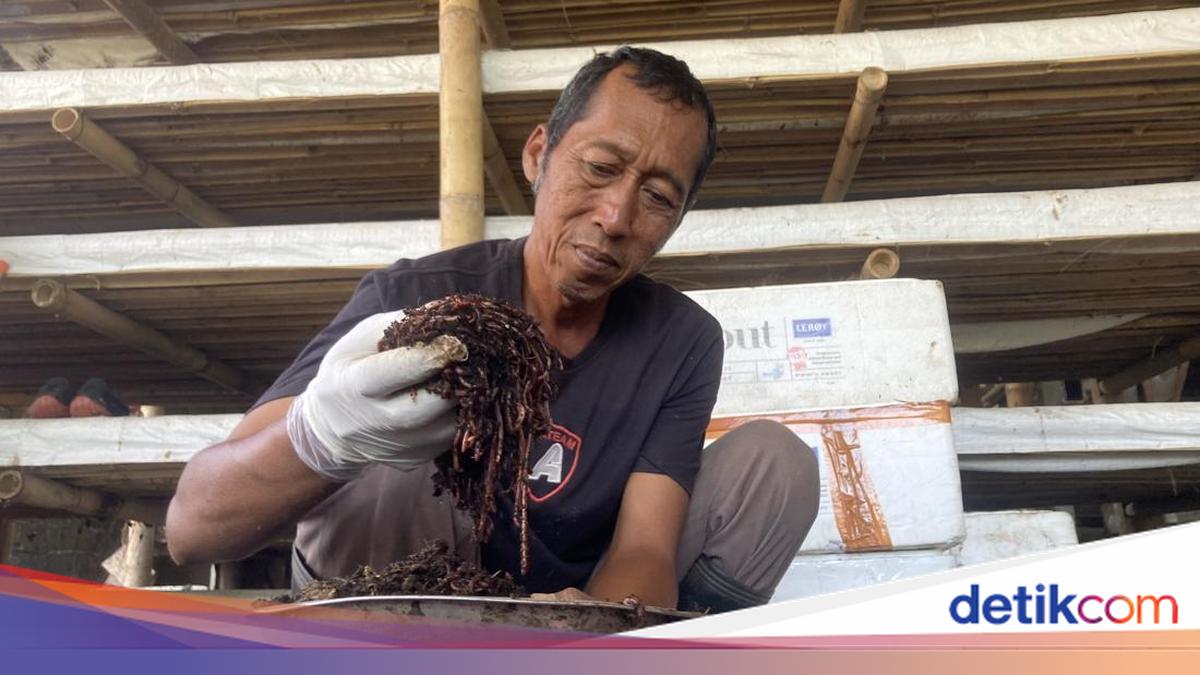
Wayan Pariata was busy harvesting organic fertiliser from worm castings at the Reduce, Reuse, Recycle Integrated Waste Processing Site (TPS3R) in Gelgel Village, Klungkung, Bali. He is one of the workers there. His hands moved skilfully, separating the worms from their castings. The worm castings Pariata harvested are vermicompost, or cascing, a high-quality organic fertiliser. TPS3R Gelgel Village has been producing vermicompost with the help of earthworms for three years. The TPS3R, managed by PT Asta Manah Liang, is now reaping the benefits of vermicompost production. The economic turnover from these earthworm castings is even sufficient to cover the TPS3R’s operational costs independently. PT Asta Manah Liang Director I Putu Gede Indra explained that this innovation is an effort to tackle the abundance of organic waste at TPS3R Gelgel. Organic waste, if left untreated, causes unpleasant odours and poses risks if burned. “So, over the last three years, we have sought a solution so that this organic waste can return to nature as high-value fertiliser,” Indra explained. The vermicompost system at TPS3R Gelgel relies on two superior species of earthworms that voraciously consume organic waste: Lumbricus Rubellus from Germany and the African Night Crawler (ANC) from Africa. Both are highly effective and fast at decomposing organic waste into high-quality organic fertiliser. The fertiliser produced by these two worm species was recently tested by Sucofindo and Saraswanti Indo Genetech (SIG). Based on the test results, the vermicompost organic fertiliser has the best carbon-to-nitrogen (CN) ratio. “According to Sucofindo and SIG, this organic fertiliser has the highest CN ratio. We also apply it to plants around the TPS3R,” Indra stated. Turning waste into a high-value commodity requires significant initial capital. Indra revealed that the initial investment was allocated specifically for breeding rack infrastructure and worm seeds. Limited land forced Indra to utilise the available space by building worm racks at an initial cost of around Rp 200 million. Another initial cost was the imported worm seeds from Germany and Africa, valued at Rp 150,000 per kilogramme. From this initial investment, TPS3R Gelgel Village now manages a total worm population of 10 tonnes. With this capacity, the average cascing fertiliser production reaches 3 tonnes per month. “We sell this organic fertiliser for Rp 15,000 per kilo. Besides the worms, we also earn additional income from sorting plastic waste. The combined sales revenue is stable and has proven capable of covering all operational costs,” Indra said. Indra hopes to increase cascing fertiliser production, which currently reaches 3 tonnes per month. He is working to partner with various parties to expand the land. Indra even dreams of a vermicompost factory in Klungkung. “My dream is to have a factory. Hopefully, it will come true. Not just for the business, but for its impact on alleviating the massive amount of organic waste in Bali,” Indra hoped. The success of this organic fertiliser plant has not only had a positive impact on the environment but has also boosted the local economy. TPS3R Gelgel Village now employs 23 workers divided into several strategic positions, including waste sorting teams, machine operators, specialised worm cultivation staff, and maggot cultivation staff. Management pays close attention to worker welfare. All employees are paid according to decent standards, plus comprehensive social protection benefits. “Every month, our employees receive a salary in line with the regency minimum wage of Rp 3.2 million, and that is net, plus BPJS Kesehatan and BPJS Ketenagakerjaan facilities. We want waste workers to also have a future and guaranteed health security,” Indra asserted. TPS3R Gelgel Village is clear proof that environmental problems can be solved while generating profit that prospers the community if waste is managed professionally.