
Turning the Spirit of Struggle into National Resilience
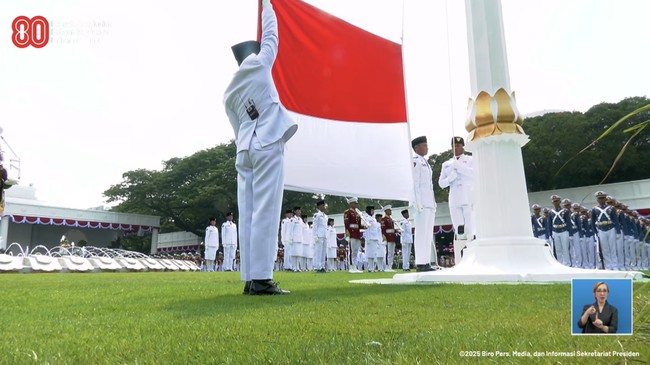
Every 10 November, Indonesia commemorates Heroes’ Day to honour the courage and sacrifice of those who fought to defend independence. The Battle of Surabaya on 10 November 1945 was not merely a historical event; it showed that the nation’s independence, sovereignty and dignity had to be fought for collectively. It teaches that heroism is not only the courage to face an enemy, but also a willingness to put the national interest above personal interests.
In 2026, Heroes’ Day carries the theme, “My Hero, My Example: Moving Forward Together, Continuing the Struggle”. The theme is a reminder that heroism must not remain a ceremony or an act of paying tribute to the past. Its values must be put into practice to address the nation’s challenges. How can today’s generation continue the struggle of the heroes amid an increasingly complex strategic environment?
Whereas Indonesia once faced colonialism and armed threats, today’s challenges are more varied. Geopolitical competition, global economic uncertainty, technological developments, the climate crisis, food and energy security, corruption and social inequality are interconnected.
Threats to the state do not always take the form of armed conflict. Economic dependence, environmental damage, weak institutions and declining public trust can also undermine national resilience.
Why do I emphasise this? I recall a statement by President Prabowo Subianto, who warned that Indonesia’s path to becoming a developed country would not be easy. Many countries have similar ambitions, but not all succeed in achieving them. This warning should not merely remind us of the scale of the challenges; it should also prompt reflection on whether we are prepared to face them.
These challenges are undoubtedly complex. But we must not stop at worrying or simply acknowledging our limitations. Instead, they should be an opportunity to improve ourselves, strengthen human resources, develop knowledge and encourage innovation across sectors.
A nation’s progress depends not only on its natural resources or the scale of its development ambitions, but also on the ability of its people and institutions to learn, adapt and produce breakthroughs. Indonesia must not only aspire to become a developed country; it must also build the capacity to make that aspiration a reality.
This view is consistent with the concept of human security in the United Nations Development Programme’s (UNDP) 1994 report. Security is not only about protecting a country’s territory, but also about protecting people from poverty, hunger, disease, employment insecurity and environmental damage. National security and public welfare therefore reinforce one another.
These challenges were evident in a number of events from October to early November 2026. Student demonstrations in several cities on 20 and 28 October, for example, raised concerns about the cost of living, the handling of forest and land fires, state spending priorities, the fight against corruption and the protection of civil liberties.
These demands should be viewed objectively as a reminder that development requires communication, participation and accountability. The peaceful expression of opinion is part of democratic life and must be respected and acted upon.
Forest and land fires in Sumatra and Kalimantan also show that environmental issues are not merely ecological. Their effects reach public health, economic activity, biodiversity and people’s livelihoods. On 24 October 2026, the National Disaster Mitigation Agency (BNPB) reported that around 25,409 hectares had burned, with approximately 17,942 hectares still alight, according to preliminary monitoring.
Meanwhile, Bank Indonesia recorded annual inflation of 3.23 per cent in October 2026, while volatile food inflation stood at 5.81 per cent. This needs to be anticipated because it affects people’s purchasing power. In the energy sector, President Prabowo discussed strengthening national energy security, including the development of E20 bioethanol, at a limited meeting at Merdeka Palace on 3 November.
These events show that today’s struggle is no longer solely about defending territory and territorial sovereignty. It is also about ensuring the state protects people’s lives, improves welfare, preserves the environment and safeguards the future of coming generations. In this context, the development agenda and the substance of President Prabowo’s Asta Cita should be understood as efforts to refocus development on the interests of the people.
Ultimately, sovereignty should not be understood merely as the state’s authority over its territory. It must also be reflected in a system of government that recognises the people as the true holders of sovereignty. The state must not simply build for the people; it must ensure they are the subjects, owners and principal beneficiaries of every development policy.
Asta Cita and the meaning of today’s struggle
In this context, the Asta Cita programme of President Prabowo Subianto’s administration has strategic relevance. Its eight missions cover strengthening Pancasila ideology and democracy, defence and food and energy self-sufficiency, improving the quality of human resources, industrialisation, rural development, government reform, and development that takes the environment and culture into account. The agenda forms part of efforts to realise Golden Indonesia 2045.
However, the success of Asta Cita cannot be measured simply by the number of programmes or the size of their budgets. More important is the extent to which policies deliver justice, improve welfare, strengthen national capacity and build sustainable national resilience.
Mohammad Hatta’s thinking is relevant to understanding this. In Hatta’s view, independence must have social and economic meaning for the people. Political sovereignty is incomplete without welfare and equal opportunity. Development must therefore be genuinely felt by the public, particularly groups vulnerable to economic pressures and environmental change.
The values of heroism can be expressed through five key qualities. First, courage and integrity. The heroes of the past had the courage to face threats in the interests of the nation. Today, that courage should be demonstrated by fighting corruption, rejecting abuses of power, upholding the law fairly and adopting policies that serve the public interest. Integrity is essential to building public trust in the state.
Second, sacrifice and commitment to the people. Food and energy self-sufficiency mean not only increasing production, but also protecting farmers, fishers, workers, small businesses and vulnerable groups. Development programmes, including Free Nutritious Meals, education and rural economic empowerment, should be implemented transparently, targeted appropriately and measured against clear outcomes.
Amartya Sen’s ideas in “Development as Freedom” reinforce this view. Sen explains that development is a process of expanding people’s freedoms and capabilities so they can lead lives they value. Economic growth is not enough if people still face poverty, limited access to education and poor health services. Public welfare must therefore be the main measure of development’s success.
Third, unity and mutual cooperation. Indonesia’s independence was won by people from many parts of society. The same spirit should now be expressed through cooperation between the government, the Indonesian National Armed Forces (TNI), the National Police (Polri), universities, businesses, civil society and local communities. Disaster response, environmental protection, food security and digital literacy require cross-sector collaboration.
Elinor Ostrom, the 2009 Nobel Prize in Economic Sciences laureate, showed that communities can establish shared institutions to manage resources sustainably through agreed rules, trust and mutual monitoring.
Her ideas are relevant to Indonesia: managing forests, water and strategic resources requires both government capacity and public participation. Mutual cooperation is not merely a cultural legacy, but an important asset in strengthening national resilience.
Fourth, intelligence and innovation. Advances in artificial intelligence, cyber security and information warfare require Indonesia to improve its command of science and technology. Nationalism cannot be expressed through symbols and slogans alone; it must also involve the ability to create technology, raise productivity and combat disinformation.
Through the concept of soft power, Joseph S. Nye explains that a country’s strength comes not only from its military and economic capabilities, but also from the appeal of its values, culture and legitimacy. Indonesia should therefore build strength that makes it not only respected, but trusted, through democracy, the rule of law, education, innovation and a commitment to peace.
Fifth, concern for the environment and future generations. Development must not undermine the ability of future generations to meet their needs. Emil Salim’s thinking underlines the importance of integrating economic, social and environmental dimensions into development. Economic growth, downstream processing, and food and energy self-sufficiency must go hand in hand with ecosystem protection. Protecting forests, water resources and the environment is a form of service to the homeland.
Strengthening national resilience
From the perspective of strategic and global studies, heroism today also means building the nation’s resilience in the face of crises. National resilience is determined not only by military strength, but also by the quality of institutions, economic self-reliance, social cohesion, environmental resilience, technological capabilities and public trust in the government.
Three strategic steps are therefore needed. First, integrate national character education with geopolitical, technological, environmental and civic literacy so that young people develop critical awareness and a sense of national responsibility.
Second, strengthen development governance that is transparent, participatory and evidence-based, so that Asta Cita’s implementation can be evaluated against tangible outcomes. Third, foster collaboration between the government, universities, businesses and the public to generate innovation and solutions to national challenges.
Universities have an important responsibility in this agenda. Campuses should serve as centres for developing knowledge, critical thinking and policy recommendations that address national and global challenges.
Strategic and global studies should connect geopolitical developments with development priorities such as food security, energy, the environment, defence and public welfare. In this way, knowledge becomes an instrument of service to the nation.
Ultimately, Heroes’ Day on 10 November 2026 should be an opportunity to broaden the meaning of struggle. The heroes of the past bequeathed independence through courage and sacrifice. Today’s generation is responsible for safeguarding it through integrity, competence, unity, justice and sustainability. The government must ensure that development genuinely benefits the people, while the public should play an active role in overseeing, criticising and building the nation constructively.
Continuing the struggle does not mean repeating the forms of struggle used in the past, but carrying its values forward in response to the challenges of the times. If the heroes once fought for Indonesia’s independence, the task of the next generation is to ensure that Indonesia becomes a sovereign, just, prosperous, resilient and dignified nation.
True heroism is not remembered only through names carved into history; it is measured by the contribution one makes to the nation. Today’s heroes are those who dare to uphold the truth, fight for justice, protect lives and build Indonesia’s future.
Source: jawawa.id (https://jawawa.id/newsitem/turning-the-spirit-of-struggle-into-national-resilience-1794271860)
Originally published by CNBC Indonesia (https://www.cnbcindonesia.com/opini/20261109093422-14-783424/mengubah-semangat-perjuangan-menjadi-ketahanan-nasional), translated from Indonesian