
Turning Plastic Waste into an Alternative Fuel
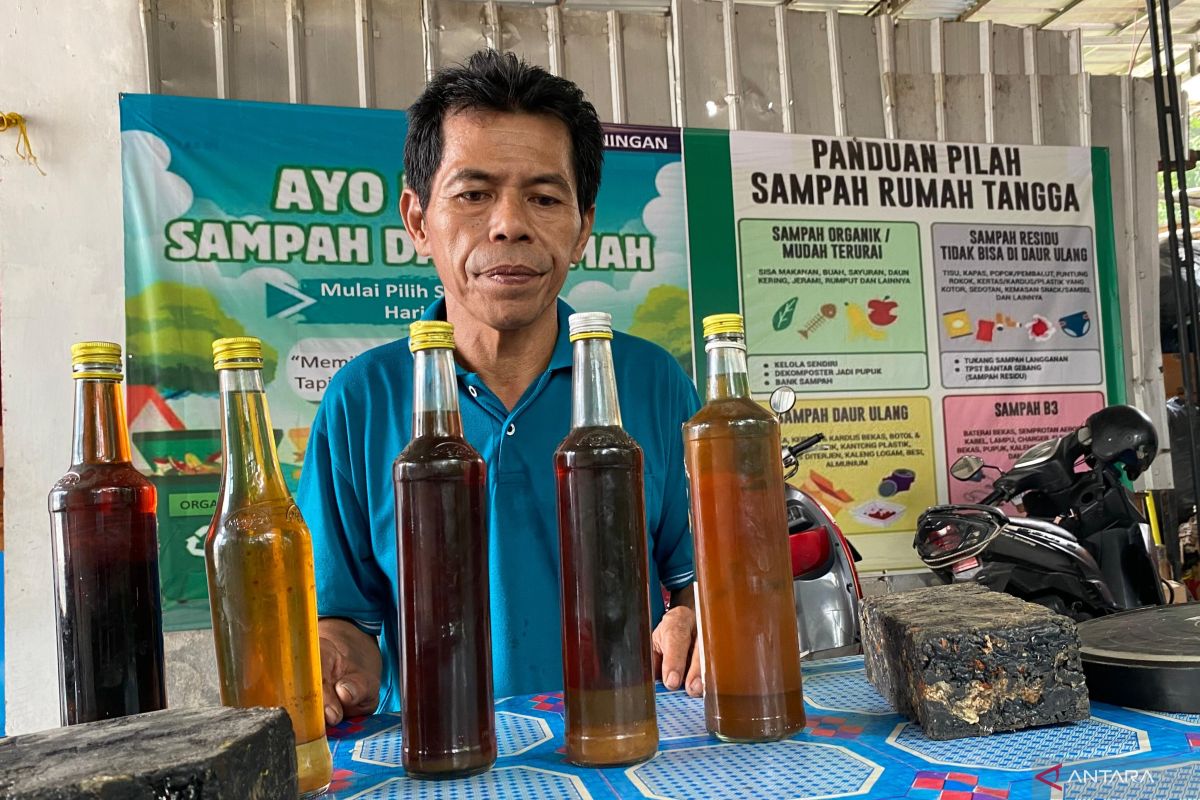
Jakarta (ANTARA) – At a modest waste-processing site in Karet Kuningan, South Jakarta, piles of plastic and used bottles can be seen. More waste is stored behind a small building that serves as the centre of residents’ waste-management activities.
A different sight lies behind the piles of rubbish. A simple, homemade device stands in one corner of the room. It resembles a used drum fitted with a network of wires, pipes and hoses.
A heat source powered by liquefied petroleum gas (LPG) is positioned beneath the device. On the other side, a hose connects to a cooling channel and leads to a tap from which the processed liquid emerges.
Plastic waste is placed inside the drum and heated. As the temperature rises, the plastic breaks down and produces vapour. The vapour is channelled through a hose to the cooling section, where it condenses into liquid.
The resulting liquid flows through a channel and is collected in a container. When the tap is opened, a clear, yellowish liquid begins to drip out. At first glance, it resembles the oil used as vehicle fuel.
A motor vehicle has been positioned beside the device to demonstrate the results of the experiment in converting plastic waste into an alternative fuel.
The distilled liquid has even been tested to start a vehicle engine, although laboratory tests are still needed to establish its quality and safety.
It is difficult to imagine that plastic which was once simply part of a rubbish heap can gradually be processed using a basic set-up into a valuable oil-like liquid.
At this site, efforts to reduce waste do not stop at sorting and collecting it. They also involve seeking new ways to make discarded materials, long regarded as worthless, useful to the surrounding community.
For Dadang, waste that no longer has resale value is not necessarily useless. He is experimenting with processing plastic that has been considered worthless into an alternative fuel.
Dadang is the head of Neighbourhood Unit (RW) 01 and chair of the RW 01 Waste Bank in Karet Kuningan sub-district, Setiabudi district, South Jakarta. Driven by curiosity and concern for the environment, he built a simple distillation device himself to process plastic waste into a liquid containing fuel components.
The initiative arose from the waste problem in his neighbourhood. Every day, the RW 01 Waste Bank receives around 30 to 40 kilogrammes of plastic waste from 12 neighbourhood units (RTs).
Some of the waste still has economic value and can be sold to collectors. But not all types of plastic meet the same fate. Some are left behind because they are considered to have no resale value.
“What I am pursuing is not the fuel itself, but how to address the problem of plastic waste,” Dadang said.
In his view, the waste problem cannot be solved simply by transporting rubbish from residents’ homes to landfill. Waste reduction must begin at the source, including by sorting it and finding ways to reprocess waste that is difficult to reuse.
He has tried to learn about the characteristics of plastic through books and independent experiments. His educational background is not in engineering or environmental studies; Dadang says he is a senior high school graduate.
“I am simply learning. In my current roles as neighbourhood chief and head of the waste bank, I am trying to find ways to gradually address the problems in the area,” he said.
Source: jawawa.id (https://jawawa.id/newsitem/turning-plastic-waste-into-an-alternative-fuel-1794282778)
Originally published by Antara (Indonesian) (https://www.antaranews.com/berita/5843183/naik-kelas-sampah-plastik-jadi-bahan-bakar-alternatif), translated from Indonesian