
Turkish Stock Market Manipulation Scandal Leaves 455,000 Investors Victimised
Investors in Turkey are seeking only one thing: for their money to retain its value. With inflation hovering around 30%, this is no easy feat. Consequently, many have turned to gold, foreign currencies, or stocks, with an increasing number opting for mutual funds promising high returns.
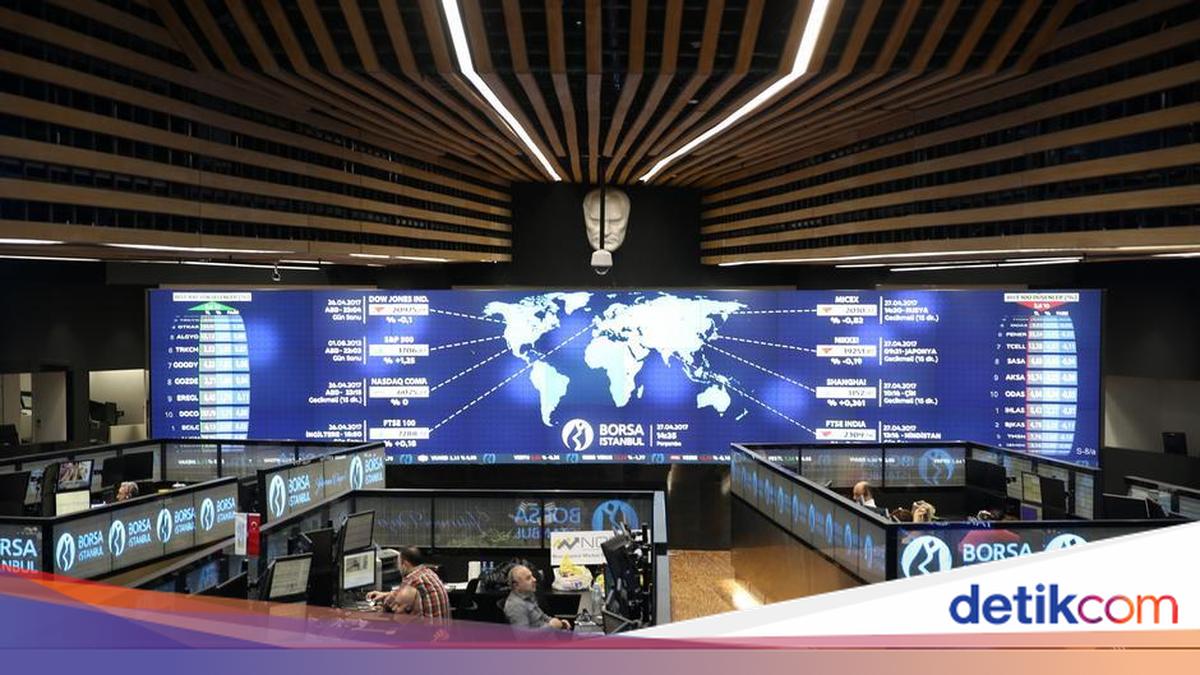
However, the stock market has instead become a trap for around half a million Turkish investors. In mid-September, the BIST 100 benchmark index plummeted by 6% in a single day and lost approximately 12% of its value within just a few trading days.
This sharp decline in share prices was triggered by a massive market manipulation scandal. Around 455,000 investors have been affected, more than 45 people have been arrested, and a senior politician from the ruling AKP party has resigned.
What happened?
It all began when several mutual fund providers experienced difficulties repaying investors on time. Among those affected were funds managed by companies Pusula Portfoy and Tera. Two Tera funds alone held assets worth approximately 6.5 billion euros (around Rp134.5 trillion).
In response, the Capital Markets Board (SPK) intervened and closed funds from seven asset managers, including Tera, Pusula, and Atlas. According to the state-owned news agency Anadolu, a total of 131 funds will be liquidated.
The Istanbul Public Prosecutor’s Office is now investigating allegations of fraud, violations of capital market laws, and the formation of a criminal organisation, as announced by Minister of Justice Akin Gurlek.
The suspicion is that these fund companies artificially inflated the value of their funds, while in reality, their holdings consisted of worthless ‘junk stocks’.
Among the 45 people arrested so far are executives from investment firms. Furthermore, the assets of 42 individuals and 46 legal entities have been frozen, according to Gurlek on X.
The Istanbul Stock Exchange has also taken action: as of 1 October, 27 stocks were removed from the BIST 100 benchmark index.
Will investors get their money back?
The funds are currently being liquidated: assets will be sold and the proceeds distributed to investors proportionally according to their shareholdings. The deadline for this has been extended from three to six months. According to Aysel Gundogdu, an independent financial advisor in Istanbul, this is intended to reduce selling pressure so that shares are not sold at low prices. However, this does not mean the liquidation of every fund will take six months. Depending on market conditions, the process could conclude sooner.
However, there are no guarantees. Mutual funds are not savings accounts, and any decrease in value is borne by the investor. Gundogul predicts that money market funds will largely be able to be liquidated. However, for hedge funds and equity funds holding ‘junk stocks’ that are practically untradeable, the situation could be more difficult.
It is important to distinguish between market losses and losses resulting from potential irregularities.
Economist and columnist Guldem Atabay emphasised that there must be a distinction between price losses and manipulation: investors bear market risk, but they should not have to accept false information, artificially inflated prices, or a lack of oversight.
Are the companies and fund managers responsible for the losses?
If funds are closed or liquidated, the shares and other securities in the portfolio can be sold. The question is what their value is and how easily they can be sold.
Financial expert Gundogdu believes that the fund assets will not cover investor claims. She also cited structural failures. “This crisis is much larger than a mere liquidity crisis. There are flaws in management and oversight.”
Consequently, she considers it possible that the assets of the fund founders and managers could also be seized to cover the shortfall.
Economist Atabay called for those responsible to be identified and for losses to be recovered from them. Following the liquidation of the funds, it must be clarified who is responsible for every legal violation. “Liquidation is not a substitute for accountability,” said Atabay.
What is the political impact?
The crisis has already led to the resignation of a senior female politician from the ruling AKP. Fatma Betul Sayan Kaya, deputy chair of the party and former minister for family affairs, requested President Recep Tayyip Erdogan, leader of the AKP, to “release her from all her positions.” This phrase has been used frequently within the AKP for years when someone is forced to resign.
She faces allegations related to stock transactions by herself and her husband, Ilyas Kaya, in connection with the fund crisis. Political responsibility, she wrote on social media, transcends legal responsibility. She stated that her position should not hinder the investigation.
The opposition now intends to bring the matter before parliament. Selcuk Ozdag, deputy leader of the Yeni Yol parliamentary group, announced that once parliament reconvenes, he will submit a motion for a parliamentary inquiry. The investigation is intended to determine whether any politicians were involved in this manipulation scandal.
Source: jawawa.id (https://jawawa.id/newsitem/turkish-stock-market-manipulation-scandal-leaves-455-000-investors-victimised-1790945764)
Originally published by detikcom (https://news.detik.com/dw/d-8689896/skandal-manipulasi-pasar-saham-turki-455-000-investor-jadi-korban), translated from Indonesian