
Turkish Expert: Syrian Pipeline Cannot Replace the Role of Hormuz
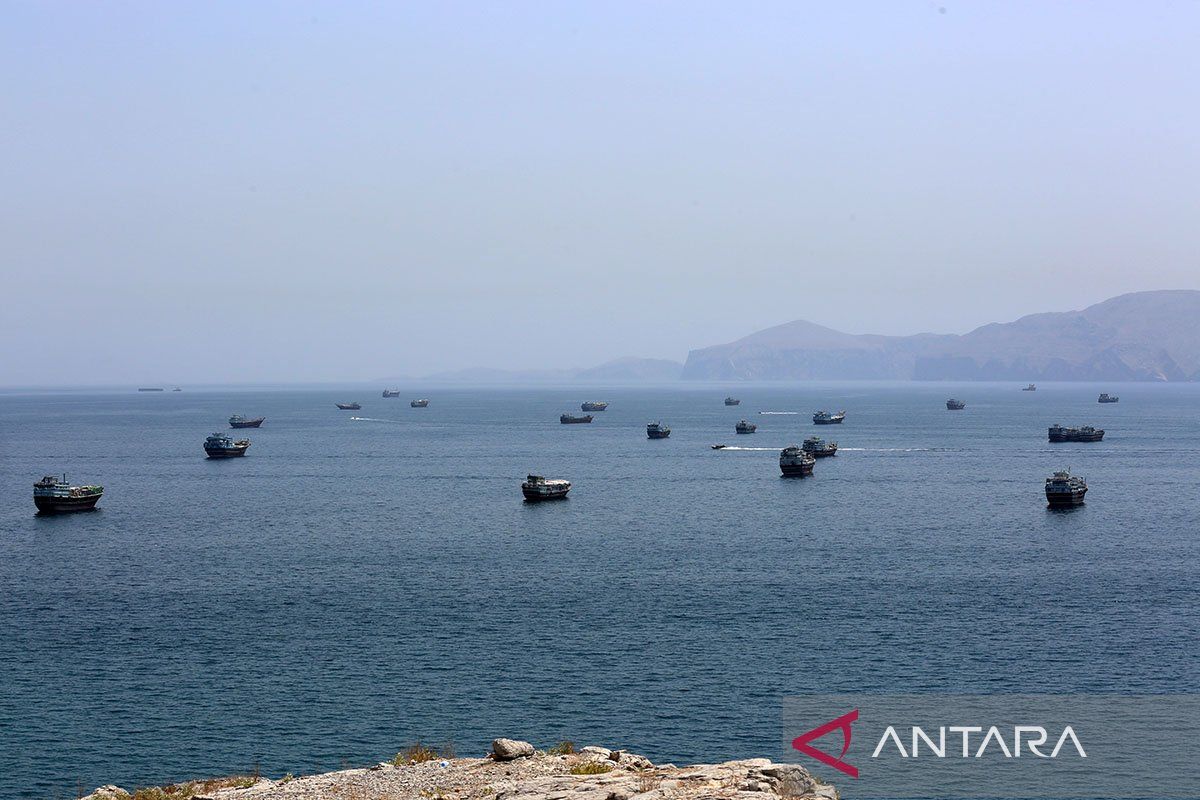
Antakya (ANTARA) - A Turkish expert has assessed that the delivery of crude oil through Syrian land routes cannot replace the strategic role of the Strait of Hormuz due to high project costs, the absence of international security guarantees, and a lack of corporations willing to provide funding.
The former Head of Procurement at BOTA (Turkey’s state energy company), Ali Arif Akturk, believes that the discourse regarding the development or restoration of pipelines crossing Syria ignores technical realities on the ground.
“The discussion that land pipelines can replace the Strait of Hormuz ignores technical realities. Reconstructing and maintaining the Kirkuk-Baniyas pipeline is estimated to cost up to US$15 billion, which is more expensive than building a new route from scratch,” Akturk stated in an exclusive interview with RIA Novosti.
He added that constructing a new pipeline would take four to five years. This timeframe is considered too long given the rapidly changing dynamics of conflict in the region.
According to Akturk, any conflict in the Strait of Hormuz is projected to resolve faster than five years; otherwise, the world would undoubtedly face a much larger global economic disaster.
Furthermore, the current security situation in Syria is deemed unsuitable for strategic investment, which would ultimately inflate operational and security costs for the pipeline.
“Transnational projects of this nature require international commitment and guarantees from the recipient nation,” Akturk emphasised.
He noted that Syria currently lacks a government with sufficient authority to provide such guarantees. Moreover, no international financial institution would dare to risk investing billions of dollars without security certainty.
He also highlighted the economic aspects of the project, estimating that the cost of oil delivery via Syria would likely be at least twice as high compared to the Kirkuk-Ceyhan pipeline route.
The proposed Syrian pipeline project is also viewed as a direct competitor to the Kirkuk-Ceyhan route, meaning the Ankara government is unlikely to offer its support.
The discourse regarding the use of Syrian routes emerged after US President Donald Trump expressed support for making the land route an alternative to the Strait of Hormuz.
Previously, US Treasury Secretary Scott Bessent claimed that the Strait of Hormuz would lose its vital role as a global trade route within the next two years, transforming into a waterway of “no value.”