
Turkish Defence Giant Sets Record with Rp557 Trillion in Orders
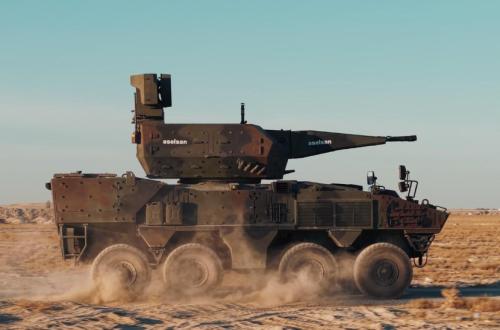
JAKARTA — Turkey’s defence industry is entering a new phase of expansion. ASELSAN, one of the country’s largest defence technology companies, recorded an order backlog of US$30.7 billion (Rp557 trillion) at the end of September 2026. The figure is the highest in the company’s history, reflecting growing demand for air defence systems, radar, electronic warfare and military technologies developed in Turkey.
The surge did not happen overnight. As countries’ need to protect their airspace and control defence technology has grown, Ankara has accelerated investment in its domestic industry. Turkey is seeking to expand its ability to produce weapons systems domestically while making defence technology one of its high-value export products.
According to financial results announced on Tuesday (27 October 2026), ASELSAN secured new contracts worth about US$14 billion between January and September 2026. Its order backlog increased by around US$7.5 billion from the end of the previous quarter, reaching US$30.7 billion.
The milestone marks the first time ASELSAN’s order portfolio has exceeded US$30 billion. However, the figure is not revenue already received by the company. Backlog represents contracted work that still needs to be completed through production, delivery and the fulfilment of other obligations.
This distinction matters because an increase in orders does not necessarily translate into higher revenue at the same time. Large defence contracts generally involve development, manufacturing, integration, testing and delivery processes that can take several years.
ASELSAN’s report showed that revenue reached 151.5 billion Turkish lira in the first nine months of 2026, a real-terms increase of 28 per cent from the same period a year earlier. New export contracts also grew by 34 per cent to US$1.9 billion.
The figures indicate that ASELSAN’s growth is supported by both domestic and international demand. However, the value of total new contracts relative to export contracts shows that domestic procurement and the company’s ties to Turkey’s defence industry ecosystem remain important.
Air Defence Drives Growth
One of the main factors behind ASELSAN’s expansion is rising demand for air defence technology. The company cited air defence systems, radar, electronic warfare, guided munitions, electro-optics and communications as some of the areas contributing to revenue growth.
This trend is linked to the changing nature of modern warfare. Aerial threats are becoming more diverse and are no longer limited to fighter aircraft and conventional missiles. Drones, guided munitions and unmanned attack systems require more complex detection and defence capabilities.
These changes are increasing demand for radar, sensors, command-and-control systems, communications equipment and electronic warfare technology. Air defence effectiveness depends not only on the ability to fire interceptor missiles, but also on identifying threats and linking different equipment in a single operational network.
ASELSAN has a strategic position in the development of these technologies. It supplies a range of electronic equipment that can be integrated into air defence systems, military platforms and armed forces’ communications networks.
In Turkey, developing these capabilities is tied to the ambition to build a layered air defence system through the Çelik Kubbe, or Steel Dome, programme. The programme is designed to integrate different capabilities for detecting, commanding and countering aerial threats.
The integrated defence concept creates demand for many types of technology at once. Radar and sensors must work alongside communications systems, fire control and interceptor weapons. The development of layered air defence therefore creates opportunities for companies with expertise in electronics and systems integration.
For ASELSAN, rising demand offers broader growth potential than simply selling a single type of military equipment.
However, the scale of the contracts does not automatically demonstrate that all the systems ordered have achieved operational readiness. Procurement success must still be assessed through production completion, delivery, integration and test results.
Production Investment Soars 228 Per Cent
The increase in orders presents a major challenge for ASELSAN. The company must expand production capacity to complete its contracts on schedule.
In the first nine months of 2026, ASELSAN’s investment in infrastructure and production facilities rose by 228 per cent compared with the same period a year earlier, reaching US$684 million.
The increase reflects the need to expand manufacturing capabilities amid order growth that far outstrips realised sales.
One of the company’s major projects is the Oğulbey Technology Base. ASELSAN said the first phase of the facility, construction of which began in 2025, became operational during the 2026 reporting period.
The company described Oğulbey as the largest single-stage defence industry investment in the history of the Republic of Turkey. This claim comes from ASELSAN’s official statement.
Alongside developing the facility, ASELSAN operates a guided-munitions production centre and is strengthening its robotics and automation infrastructure for manufacturing land, sea and air defence systems.
These investments show that the main challenge for the modern defence industry is not only designing weapons, but also producing them on a large scale.
Prototype development can demonstrate a company’s technological capabilities. Mass production, however, requires manufacturing facilities, component supplies, skilled workers, quality control and much more complex logistics systems.
In this context, ASELSAN’s increased investment points to an effort to turn contract growth into industrial capacity that can support sustained deliveries.
ASELSAN chief executive Ahmet Akyol said the company’s next priority was to turn orders into production results.
“Our main responsibility going forward is to turn this portfolio into on-time deliveries, expanded production capacity and sustained technological superiority,” Akyol said in a written statement accompanying the company’s financial results on 27 October 2026.
The statement shows that management views the large volume of contracts not only as a commercial achievement, but also as a production obligation to be fulfilled over the coming years.