
Turkish Ambassador: Islamic World Must Be Represented on UN Security Council
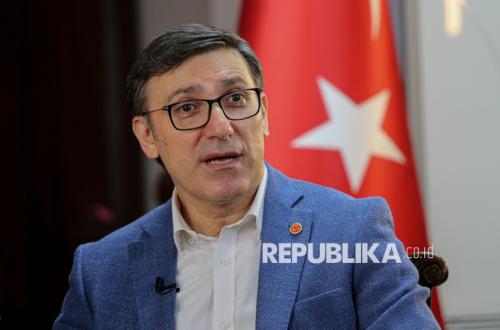
Turkish Ambassador to Indonesia Prof Talip Küçükcan has stressed the need for comprehensive reform of the international system to make it fairer and more representative. In an exclusive interview with Republika at the Turkish Embassy in Jakarta on Monday (24/6/2026), Küçükcan said the structure of the UN Security Council, established after World War II, no longer reflects current global political realities. “What we want is not for Turkey to become a permanent member of the UN Security Council. What we want is UN reform so that it becomes more representative, more inclusive, and better reflects the realities of today’s world,” Küçükcan said. According to him, President Recep Tayyip Erdoğan has repeatedly raised this issue in various international forums, including the UN General Assembly. Ankara believes many countries and community groups around the world have not yet obtained adequate representation in the current international system. Küçükcan cited large countries such as Indonesia and India, as well as many nations in Africa, which do not have permanent seats on the Security Council. Meanwhile, Muslims, who number nearly two billion people, also lack permanent representation in the body. He assessed that the weakness of the current system is clearly visible in the Palestinian issue. According to him, various efforts to produce firmer resolutions are often hampered by the use of veto power by permanent Security Council members who support Israel. “As a result, the effectiveness of the UN is being called into question,” he said. Therefore, Küçükcan continued, Turkey continues to push for reform of the international system to provide greater space for Global South countries in the global decision-making process. Responding to a question about the possibility of unity among Muslim countries with different historical backgrounds and identities, Küçükcan assessed that various prejudices that emerged after the collapse of the Ottoman Empire are slowly beginning to diminish. He explained that for centuries the Ottoman Empire ruled a very vast territory without erasing the cultural or religious identities of local communities. After the empire collapsed, he said, dozens of new countries were born which then built their own national identities. In that process, nationalism often gave rise to misunderstandings and prejudices between communities. “But I see that condition is now starting to change. People are beginning to realise that we have a long history of living together for hundreds of years,” Küçükcan said. Nevertheless, he stressed that Turkey has no agenda to revive the Ottoman Empire or run a neo-Ottomanism project. “Of course it is impossible to revive the Ottoman Empire. There is no neo-Ottomanism agenda in Turkey. What we want to do is take inspiration from history to build closer cooperation among Muslim countries,” he said. According to Küçükcan, President Erdoğan always emphasises the principle of equality between nations in building relations within the Islamic world. Therefore, cooperation must be carried out through joint institutions such as the Organisation of Islamic Cooperation (OIC), not through the domination of one country over another. “All countries are equal. Cooperation must be built through joint institutions like the OIC, not through the domination of one country over another,” Küçükcan said.