
Turkey Under Erdogan: NATO's Second Largest Military Power and a Global Defence Industry Player
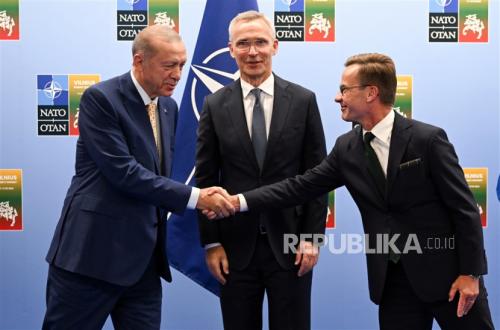
Turkey is entering a new phase in its military history. The country, long known as NATO’s southeastern fortress, is no longer seen merely as a provider of troops, bases, and strategic geography. Under the leadership of Recep Tayyip Erdogan, Turkey is gradually shifting into a defence industry hub increasingly reckoned with by Europe, the United States, the Middle East, Africa, and Asia. This transformation did not occur in a vacuum. It was shaped by a combination of state investment, modern warfare experience, NATO requirements, and major changes in the global security architecture following the war in Ukraine. As Europe rearms and many nations question their long-standing dependence on the United States, Turkey presents an offer that is difficult to ignore: defence systems that are relatively cheaper, quickly delivered, flexible enough to be tailored to buyer needs, and, in many cases, already battle-tested in conflict zones. Since joining in 1952, Turkey has been one of the alliance’s important members. Its location at the crossroads of Europe, Asia, and the Middle East gives Ankara a vital role in Euro-Atlantic security. Turkey controls access to the Black Sea through the Bosporus and Dardanelles straits under the 1936 Montreux Convention, a position that became highly strategic after the Russia-Ukraine war erupted. Turkey also possesses the second-largest standing military force in NATO after the United States. The country hosts a number of the alliance’s critical infrastructures, including Incirlik Air Base and the headquarters of the Allied Land Command in Izmir. Its troops have been involved in various NATO missions, from Bosnia-Herzegovina, Kosovo, and Afghanistan to Iraq. In other words, Turkey is not a peripheral NATO member; it is one of the alliance’s operational pillars. However, Turkey’s role now extends beyond conventional military functions. Ankara no longer just contributes troops but is also building a defence industry capable of supplying modern military technology. One of the most striking data points is the claim that Turkey holds approximately 65 percent of the global armed drone export market share. This figure demonstrates a massive leap from a country once heavily dependent on foreign weapons producers to a major exporter of unmanned combat aerial systems. Two decades of state investment have transformed Turkey into a major exporter of drones and other military equipment. Turkish defence exports are said to have more than tripled since 2021, reaching around 10 billion US dollars in 2025. Exports to Europe and the United States nearly quadrupled in the same period to approximately 5.6 billion US dollars. This growth shows that Turkey’s defence industry is no longer resting solely on a symbol of technological nationalism; it has become a strategic economic engine. Companies like Baykar, Turkish Aerospace Industries, Kale, and Arca Defense are growing within an ecosystem that receives strong state support. They offer systems that many buyers view as cheaper, more readily available, and easier to customise compared to Western products, which are often tied to lengthy procedures, high prices, and limited production capacity. The geopolitical context is also favourable to Turkey. Global military spending has risen sharply, especially in Europe, following the war in Ukraine. At the same time, many countries need defence systems that can be produced quickly and used immediately. In this space, Turkey has stepped into a gap that major Western producers cannot always fill. The Bayraktar TB2 drone, used by Ukraine in the early phases of the war against Russia, has become a global showcase for Turkish technological capability.