
Turkey Says Egypt Could Join Makkah Defence Pact
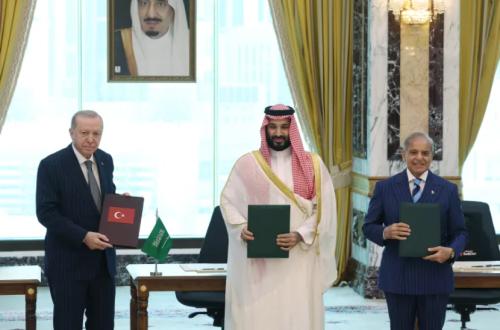
Turkish Foreign Minister Hakan Fidan has stated that Egypt could join a significant mutual defence agreement between Saudi Arabia, Turkey, and Pakistan, which was signed in Makkah last week. Egypt’s accession could substantially bolster the pact among Muslim nations. Fidan told Anadolu Agency that President Recep Tayyip Erdogan’s vision is to expand the scope of the pact to other countries in the region. He stressed, however, that the agreement—which stipulates that an attack on one party is considered an attack on all three—is purely defensive, and they have no expansionist ambitions. “Our president’s vision is that this initiative should not be limited to three countries, but should continue to grow and, if necessary, embrace all countries under the umbrella of this cooperation,” Fidan said on Saturday. According to him, Egypt could also become part of the deal in the next phase. He added that the agreement does not specifically mention any particular “common threat,” and stated that military exercises and training sessions will be conducted within the framework of the Makkah Defence Pact. Fidan said the pact does not designate Iran—or any country—as a common threat. The Makkah Mutual Defence Agreement was signed on Friday by Turkish President Recep Tayyip Erdogan, Saudi Crown Prince Mohammed bin Salman, and Pakistani Prime Minister Shehbaz Sharif. The deal states that an armed attack against one of the three countries will be considered an attack against all three. “There is no specific threat we have put in writing,” Fidan told Turkey’s state-run Anadolu news agency. He added that countries that do not attack the signatories will not be considered targets. Fidan described the pact as “technically” similar to NATO’s Article 5 collective defence clause, which stipulates that an attack on one member is considered an attack on all. However, the response provided will depend on the situation and conditions. The country under attack must submit a request for assistance and detail the type of support needed, Fidan said. Such support could range from intelligence and logistics to ammunition or the deployment of military units. The alliance will also establish political and military committees—involving foreign ministers, defence ministers, and military chiefs—as well as a secretariat in Saudi Arabia. Fidan said the three countries will cooperate on joint training, intelligence sharing, logistics, threat assessment, and military interoperability.