
Turkey, Saudi Arabia, and Pakistan Forge 'Islamic NATO' Defence Pact
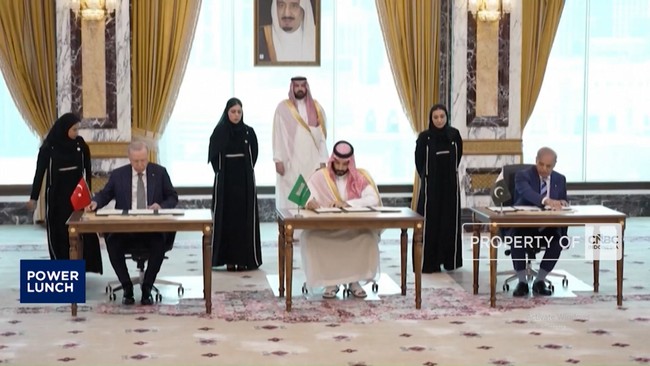
The power map of the Middle East has shifted once again. Turkey, Saudi Arabia and Pakistan signed a joint defence pact in Mecca on 7 August 2026, which contains the principle that an armed attack against one country will be considered an attack against all three.
The agreement, known as the Mecca Joint Defense Agreement, was signed by Turkish President Recep Tayyip Erdogan, Saudi Crown Prince Mohammed bin Salman (MBS), and Pakistani Prime Minister Shehbaz Sharif. What is behind it?
Citing RT on Tuesday (11/8/2026), the pact has triggered the label ‘Islamic NATO’ because it has a collective defence principle reminiscent of the NATO defence alliance mechanism. However, the three countries have not officially referred to the agreement as an ‘Islamic NATO’.
‘For Turkey, this agreement is not merely military cooperation. The pact opens space for Ankara to expand its influence in the Middle East while strengthening its bargaining position amid the changing geopolitical map of the region,’ wrote Mishel Bychkova, Deputy Director of the Moscow Middle East Centre.
Turkey has one of the largest military forces in the region and is a NATO member. The country has also aggressively developed its defence industry in recent years, from drones to weapons systems and warships.
Meanwhile, Saudi Arabia has financial strength and a strategic position in the Gulf region. Pakistan adds another dimension because it has a large military and nuclear capability.
‘The combination of these three forces creates an interesting mix: Turkey’s military capability and defence industry, Saudi Arabia’s financial strength, and Pakistan’s military capacity,’ she added.
Not Necessarily Leaving NATO
Particularly for Turkey, Bychkova’s analysis continues, this agreement does not mean Turkey is leaving NATO. On the contrary, Ankara can use the new cooperation to expand its room for manoeuvre.
Turkey remains within the NATO security system, but at the same time is building a new defence network with countries outside the Western alliance. This step is in line with President Erdogan’s approach, which for years has sought to maintain relations with various centres of world power.
‘Turkey still has strategic relations with Western countries, but also maintains communication with Russia and Iran, as well as strengthening relations with Gulf countries,’ she added.
‘With the Mecca pact, Ankara has the opportunity to play a greater role in determining the direction of Middle East security without fully depending on Washington,’ she explained.
Turkish Weapons as Capital
One of Turkey’s greatest assets in this cooperation is its defence industry. Turkish defence products have developed into an important instrument of Ankara’s diplomacy. Defence relations with Saudi Arabia, for example, have included industrial cooperation and technology transfer.
Saudi Arabia itself is seeking to reduce its dependence on Western arms suppliers and build a domestic defence industry. This situation creates mutually complementary interests.
Turkey needs markets and investment to expand its defence industry, while Saudi Arabia needs technology and production capability to strengthen its military industry. Pakistan adds another strategic dimension through its military experience and long-standing defence relations with Turkey and Saudi Arabia.
‘However, the pact does not automatically mean the three countries are forming a single integrated military force. Its impact will depend heavily on how far the cooperation is translated into joint exercises, intelligence sharing, defence planning, and defence industry integration,’ she explained.
Israel and Iran in Focus
According to Bychkova, the emergence of this new axis comes as the Middle East faces rising tensions. Turkey’s relations with Israel have deteriorated in recent years.
Ankara has become increasingly vocal in criticising Israeli policy. Meanwhile, the interests of the two countries have begun to intersect in Syria.
On the other hand, Iran is also an important factor. Turkey has economic and diplomatic relations with Tehran, but the two countries also compete for influence in several areas, including Syria, Iraq and the Caucasus region.
‘Therefore, the Mecca pact cannot automatically be called an anti-Iran or anti-Israel alliance,’ she said.
Pakistan even stressed that the agreement is defensive in nature and open to other countries. Egypt is mentioned as one of the countries that could potentially join, although it is not yet part of the current agreement.
The Middle East Begins to Build Its Own Strength
Furthermore, this agreement shows the desire of regional countries to have more options in security affairs. Saudi Arabia has for decades been heavily dependent on the United States’ security umbrella.
‘However, increasing conflict in the region has made Riyadh seek additional layers of security,’ she said.
Turkey offers military strength and defence technology. Pakistan offers military experience and a strategic position in South Asia. Saudi Arabia provides economic strength and access to markets and capital.
‘For Ankara, this combination can become capital to transform its military power into greater political influence,’ she explained.
Therefore, although it is too early to call the Mecca pact an ‘Islamic NATO’ in the true sense, the agreement clearly shows the emergence of a new security architecture driven more by regional countries. If this cooperation continues to develop, Turkey will not only be a NATO member on the European side, but could also emerge as one of the main players in shaping a new security order in the Middle East.