
Turkey Claims to Have Disabled 51 Drones in Seconds Without Missiles; ASELSAN Says It Is a World First
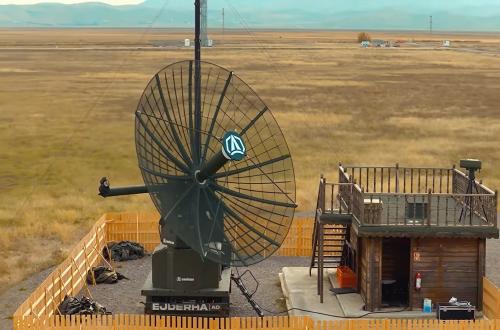
ANKARA — Turkey’s defence industry has made a new advance in electromagnetic warfare technology. Defence company ASELSAN announced that its EJDERHA system had successfully disabled 51 drones simultaneously in seconds, without firing missiles or using conventional ammunition. The demonstration showed the potential of directed-energy weapons against drone-swarm attacks, which are an increasingly significant threat to modern military defences.
According to Anadolu Agency on 15 November 2026, the test took place at ASELSAN’s Gölbek Firing and Testing Centre to mark the company’s 51st anniversary. All the drones were launched at the same time before the electromagnetic defence system was activated. ASELSAN said every target was disabled within seconds in a single operation.
“ASELSAN’s EJDERHA system is the first in the world to take down 51 drones at the press of a single button, without firing missiles or using ammunition,” ASELSAN chief executive Ahmet Akyol was quoted as saying by TRT Haber on 15 November 2026.
The attack was countered using ammunition-free electromagnetic technology. The system is designed to counter large numbers of drone threats with a single command.
German media outlet Berliner Zeitung, on 16 November 2026, also highlighted the demonstration as an important development for Turkey’s defence industry. It explained that EJDERHA emits high-power electromagnetic waves to disrupt the electronic systems of uncrewed aircraft. This allows drones to lose their ability to operate without being destroyed by projectiles or missile explosions.
Two Test Stages, Including Cable-Controlled Drones
According to Hürriyet Daily News on 16 November 2026, ASELSAN conducted the demonstration in two separate stages. The first test involved two cable-controlled drones at a distance of about 1,000 metres. Both targets were reportedly disabled using electromagnetic energy.
The ability to counter cable-controlled drones is significant in modern warfare. Such drones do not rely on a conventional radio link between the operator and the aircraft, so ordinary frequency interference or jamming cannot sever their control link. EJDERHA takes a different approach by directing electromagnetic energy at the electronic components inside the drones.
The second test was designed to simulate the threat posed by multiple drones operating at the same time. A total of 51 drones were launched to symbolise the company’s age, and then targeted by EJDERHA’s electromagnetic system. Defence Industry Europe reported on 15 November 2026 that ASELSAN said all the drones had been disabled within a few seconds.
In an interview with CNN Türk, reported by Milliyet on 16 November 2026, Akyol said the system’s radar had detected targets from a distance of about five kilometres during the demonstration. He also said the electromagnetic intervention was demonstrated at a distance of about one kilometre. Detection and disabling ranges are two different measures, while full technical details about the positions of all 51 drones in the mass-attack scenario have not been published.
An Electromagnetic Weapon Without Missiles
EJDERHA uses High-Power Electromagnetic (HPEM) technology: high-power electromagnetic waves directed at a target to affect its electronic equipment. According to ASELSAN’s official technical brochure for EJDERHA/AD 200, the system uses vacuum electronics technology to generate directed electromagnetic waves. Their effects can include temporary disruption, restarting devices, shutting down systems and damaging electronic components.
The system is equipped with target-tracking technology and a high-speed antenna director. Radar is used to detect threats, while electro-optical equipment assists with tracking and directing energy towards targets. Unlike air-defence missiles, EJDERHA does not need a physical projectile to disable a target.
This capability could be relevant when military forces face attacks involving large numbers of drones. Conventional missile systems must account for ammunition supplies, launch capacity and the cost of each interception. Electromagnetic weapons offer a different defensive approach because they can affect multiple electronic targets in an area, although their effectiveness still depends on the characteristics of the targets and operating conditions.
ASELSAN is developing EJDERHA as part of Turkey’s layered air-defence architecture, known as Çelik Kubbe or Steel Dome. The system integrates a range of capabilities, including radar, electronic warfare, laser weapons, interceptors and command-and-control networks. Within this architecture, EJDERHA is intended primarily to counter mini- and micro-class drone threats.
Source: jawawa.id (https://jawawa.id/newsitem/turkey-claims-to-have-disabled-51-drones-in-seconds-without-missiles-aselsan-says-it-is-a-world-first-1794873055)
Originally published by Republika (https://news.republika.co.id/berita/tombjf451/tanpa-rudal-turki-klaim-lumpuhkan-51-drone-dalam-hitungan-detik-aselsan-pertama-di-dunia), translated from Indonesian