
TTS Police Chief Encourages Development of Legendary Soe Apple Seedlings
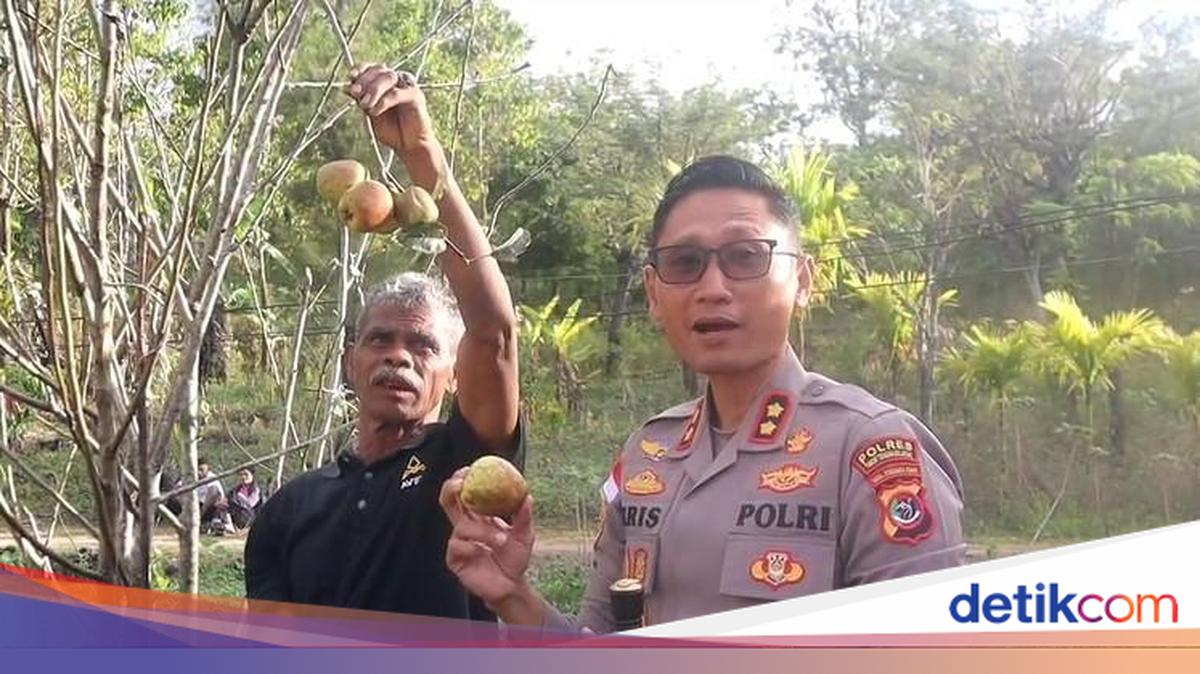
The Soe apple, a legendary fruit that was once the pride of South Central Timor Regency (TTS), East Nusa Tenggara (NTT), has reappeared from Bijaepunu Village, North Mollo District. The apple tree is growing and bearing fruit in the yard of a resident named Simon Oematan.
TTS Police Chief AKBP Kristiyan B Martino visited the site to see the apple tree, which was planted about three years ago. He expressed a desire for the Soe apple to be more than just a story of past glory. According to him, collaboration is needed to develop seedlings and encourage the community to cultivate it again.
“We want the Indonesian people to know that from the land of Timor, the legendary Soe apple was once born. Future generations should not only know it from stories. Let us research it, develop it, and if possible, together restore the glory of the Soe apple,” Kristiyan said in a statement on Tuesday (11/8/2026).
It is known that the seedling was obtained from Ajaobaki Village and developed using a grafting technique onto wild apple trees. Of the nine trees planted, one has successfully borne fruit. In the last period, the tree produced around 40 apples.
Kristiyan even picked and tasted the legendary apple. During his visit to the resident’s house, there were still seven apples left on the tree.
The owner of the plant revealed that the apple tree grew and bore fruit without being given any fertiliser. The Soe apple has a very sweet taste, making it a potential subject for further research and development.
“I picked and tried it directly from the tree. It tastes very sweet. What is more interesting, according to the owner, this plant can grow and bear fruit without being given fertiliser,” said Kristiyan.
“Of course, one tree cannot yet serve as a scientific conclusion, but this fact is interesting enough to be a starting point for more serious research,” he added.
The Soe apple has a long history in TTS. According to records from Suluh Desa NTT (2021), the Soe apple was widely known from the 1970s until the late 1980s. During that period, Kapan Market was one of the trading centres for Soe apples.
Entering the early 1990s, the glory of the fruit began to fade. By the 2000s, the apple trees became increasingly difficult to find.
For Kristiyan, the growth of the Soe apple tree at a resident’s home in Bijaepunu Village needs attention from various parties. He believes research is needed to identify the variety, genetic characteristics, soil and climate suitability, breeding techniques, fruit characteristics, and the potential for developing Soe apples on a wider scale.
“This is a regional potential that we must support. I hope the regional government, the central government, research institutions, universities, and experts can see this potential, conduct research, and help with its development,” he concluded.