
TTL deploys electric cargo-handling equipment as container volumes rise
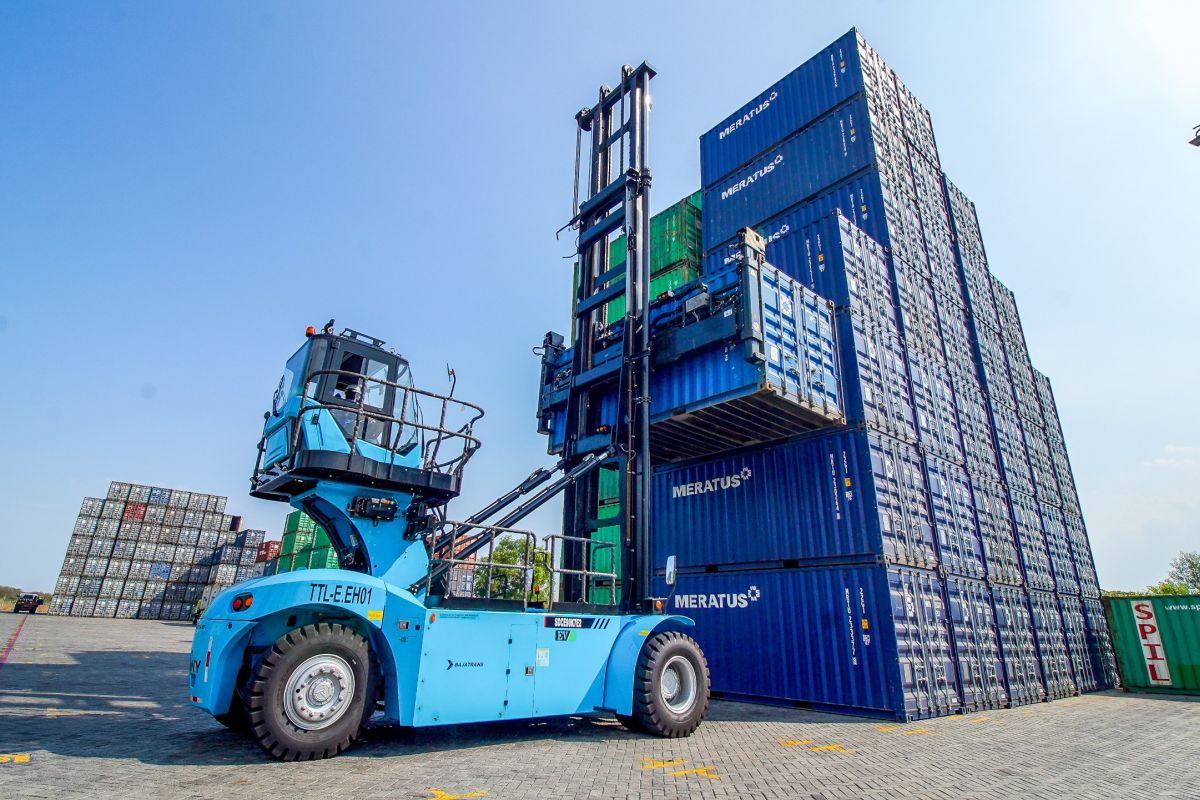
Surabaya, East Java (ANTARA) – PT Terminal Teluk Lamong (TTL) is operating an electric empty-container handling machine to increase service capacity amid a surge in container traffic, while improving energy efficiency and reducing emissions in the port sector.
Syaiful Anam, the company’s corporate secretary, said the use of an electric Empty Container Handler (EH) was part of the Green and Smart Port concept, aimed at making terminal operations more efficient and environmentally friendly.
“We continue to promote the use of technology that can improve operational efficiency while supporting environmental sustainability,” he said in Surabaya, East Java, on Friday.
Syaiful said the electrification of container-lifting and transport equipment would be carried out in stages as part of TTL’s commitment to strengthening its Green Port practices and supporting the port sector’s Net Zero Emissions (NZE) target.
The machine began operating at Teluk Lamong Container Terminal (TPK) on 28 October 2026 to support the loading, unloading and handling of empty containers.
The electric EH is also intended to help the company prepare for rising demand for logistics services, as the volume of empty containers at TPK Teluk Lamong continues to increase.
From January to September 2026, container traffic reached 34,967 TEUs, an increase of 83.82 per cent from 19,023 TEUs in the same period a year earlier.
With the addition of one machine, TPK Teluk Lamong now operates four Empty Container Handlers to ensure the smooth handling of empty containers for both domestic and international needs.
The electric EH has a lifting capacity of up to nine tonnes and can stack containers up to seven high.
It is powered by a 350 kWh battery and a 135 kW electric motor, enabling it to operate for up to 12 hours on a single charge.
As well as increasing container-handling capacity, the use of electric power is expected to reduce reliance on fossil fuels in terminal operations.
The initiative is in line with government efforts to promote the energy transition and cut emissions, including through the development of more sustainable transport and logistics infrastructure.
By gradually electrifying its equipment, TTL aims to balance growth in logistics service capacity with operational efficiency and environmental protection in the port area.