
Tsunami Sweeps 250 km of Southern Java, 600 Killed — Survivor Thrown to Third Floor
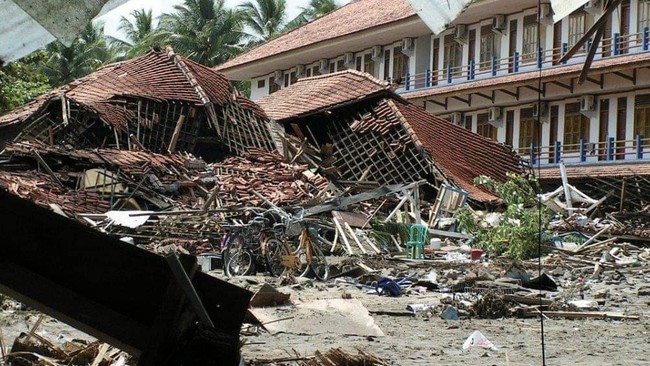
The 17 July 2006 remains an unforgettable day for Neni Nurhayati. While attending a training session in Pangandaran, West Java, she saw a black wave rising in the distance about an hour after an earthquake shook the region. Initially thinking it was a normal wave, panic set in when a beach officer blew a whistle and shouted for everyone to flee. Neni tried to run, but the wave struck from behind, lifting her body and throwing her onto the balcony of a third-floor hotel. Fortunately, the balcony door was unlocked, allowing her to enter and survive. Hours later, as the water receded and she descended, she was met with a heartbreaking scene of bodies scattered everywhere.
Her testimony is one of many from the Pangandaran tsunami, one of the deadliest in Indonesian history after the 2004 Aceh disaster. The catastrophe began on Monday, 17 July 2006, when a magnitude 7.7 earthquake struck the Indian Ocean floor south of Java. Unlike typical large quakes, the shaking felt on land was relatively weak, leading many residents and tourists to remain near the shore, unaware of the impending tsunami.
BMKG seismologist Pepen Supendi explained that the Pangandaran event was a ‘tsunami earthquake’, a type of tremor that generates disproportionately large waves compared to its perceived shaking. This occurs because the rupture process is very slow, radiating energy predominantly at low frequencies that humans feel only weakly. The shaking intensity in Pangandaran was only around III-IV MMI, insufficient to trigger mass evacuations, unlike the Aceh 2004 quake which reached IX MMI. The source of the quake was very close to the subduction trench south of Java, causing significant seabed deformation that displaced a massive volume of water and generated the tsunami. Pepen also noted that local submarine landslides likely amplified wave heights in certain areas, with run-ups estimated at up to 21 metres in Nusakambangan and 5-10 metres elsewhere. The tsunami impacted a 250-kilometre stretch of coastline, killing over 600 people, injuring thousands, and leaving many more homeless, marking a turning point in Indonesia’s approach to tsunami mitigation.