
Trump's Visit to China: A Path to Ending the War?
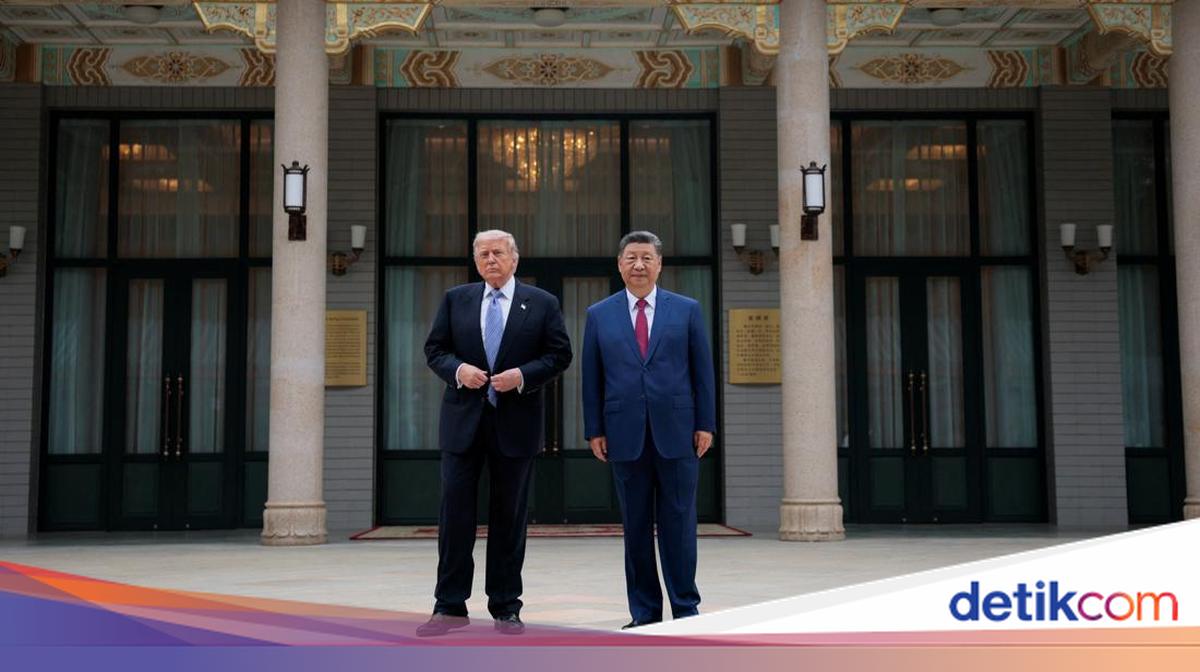
Trump’s visit has certainly captured the attention of the international public, as it marks the first visit by a US president in the last decade and comes amidst the complex peace negotiations between the US and Iran. The international public is now speculating whether this is a sign that Trump is frustrated and sees China as an important actor in resolving the conflict.
Since Trump announced a ceasefire with Iran on April 7, 2026, and it has been extended, there have been no positive signals that the conflict will end peacefully. Discussions of a peace proposal between the two sides have not found common ground. The situation has worsened when Iran closed the Strait of Hormuz and the US responded by imposing a naval blockade.
Mutual attacks between the two countries have also occurred frequently. The peace mediation facilitated by Pakistan on April 11, 2026, ended in a deadlock and there was no agreement between the two countries.
Trump needs China
The escalating tensions in the Middle East as a result of the US vs. Iran war highlight the geopolitical irony that a country considered a superpower is unable to resolve this conflict alone. In the current multipolar global political constellation, Trump needs China as a partner in pushing for de-escalation of the conflict with Iran.
Why is China important? First, Martin Jaquez, in his book When China Rules the World (2011), positions China as a global power of the 21st century that will shift the dominance of the West, not only in terms of economics but also in terms of political influence in various parts of the world. Using Goldman Sachs’ projections, the book predicts that China will replace the US as the country with the largest economy in the world by 2050.
Currently, based on 2025 data, the US still leads with a GDP of $30.34 trillion, and China is in second place with a GDP of $19.53 trillion. This means that with China’s rapid economic growth in recent decades, Trump knows that China also does not want its economic stability to be disrupted by the escalation of the Middle East conflict.
Second, China is now seen not only as a global economic power, but also as an important actor in the Middle East, especially when China successfully normalized relations between Iran and Saudi Arabia in 2023 through the signing of a Joint Trilateral Statement in Beijing. This event shows that China has strong influence in the Middle East with its success in mediating the relationship between Saudi Arabia and Iran, which had been strained since 2016.
Third, China also has a strategic position for the Iranian economy. The US economic sanctions against Iran, which were tightened again during Trump’s first term in 2018, have caused Iran to be creative in selling its oil as the country’s mainstay commodity. The US isolation of Iran from most global oil buyers has forced Iran to seek alternative buyer countries. To attract buyers, Iran sells its oil at a lower price.
China has become the main buyer of Iranian oil in recent years. This dominance is supported by more than 80% of Iran’s oil exports flowing to China, with export value of about US$32.5 billion or about IDR 549.3 trillion. The relationship between Iran and China shows an asymmetrical dependence.
Iran depends on the Chinese market to maintain revenue from the oil sector, while China benefits through access to cheap energy while also strengthening its influence in the Middle East region. Therefore, China also actually has an interest in the importance of stability in the Strait of Hormuz for its oil supply in the future.
It is this position that gives China stronger leverage than the US. The coercive approach that the US has taken has not been able to make Iran comply with US wishes. In fact, the experience of two US aggressions with Israel in 2025 and February 28, 2026, which killed Iranian Supreme Leader Ali Khamenei, has caused Iran’s trust in the US to be at its lowest point. This is what makes it difficult to reach an agreement on crucial points such as Iran’s nuclear issue, management of the Strait of Hormuz, and guarantees of non-aggression against Iran in the future.
China’s Incentives for Peace
In this context, Trump’s visit to China is interpreted by the public as a way for Trump to find a way out to end the conflict well amid economic and political pressures in the US and to save face for the US as a superpower. The US’s need for China will temporarily shift the rivalry between the two countries towards cooperation to prevent the escalation of conflict in the Middle East.
This was also emphasized by Xi Jinping in the meeting that the relationship between the US and China must be built on partnership, not competition. Confrontation only brings losses to both sides.
China’s reputation and influence will be an incentive for stability in the Middle East. It is not impossible that after this meeting, China will communicate with Iran to encourage the achievement of a peace agreement with the US.
But it should also be understood that the meeting does not immediately make China an ally of the US in the Iran conflict. China will continue to play its role as a stabilizer and, pragmatically, because of its domestic economic interests in the region, China will also be involved in regional peace together with the US.
Regardless of the Taiwan issue, which until the end of the Trump meeting did not change its position, while Xi Jinping has clearly stated that the US’s wrong steps in the Taiwan issue can change the relationship between the two countries, the meeting shows the US’s recognition of China as a global power to pressure Iran to reach a common ground and immediately end the conflict.
Trump must acknowledge that China is no longer just a rival in various arenas, but China is part of a global mechanism that cannot be ignored. Perhaps this is what is called competitive interdependence. The relationship between the US and China remains in the corridor of strategic competition.