
Trump's Trade War Turns Indonesia's Batam into a Manufacturing 'Paradise'
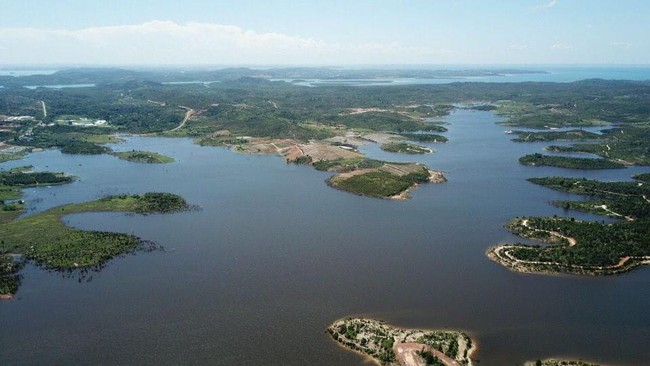
The tariff policy of United States President Donald Trump is said to be bringing benefits to Indonesia. Foreign media report that Batam Island has now transformed into one of the new manufacturing ‘havens’ in Southeast Asia after the wave of the US-China trade war pushed global companies to move their production out of China.
The Business Times report, citing Bloomberg, states that Batam, which for decades was largely overlooked by global investors, is now beginning to enter the world manufacturing map. The main cause is the rising trade tension between the US and China, which has heated up again during Trump’s second administration.
One company that has already taken this step is Chinese toy manufacturer Dongguan Welson Plastic Hardware Products, a supplier of various products for Disney and Crayola. In July, the company opened its first factory outside China, specifically in Batam.
Welson General Manager Andy Yao revealed that the decision was made because the company had to reduce its dependence on China. ‘If we stay in China, we risk losing orders,’ he said in an article titled ‘Trump trade war puts Indonesia’s Batam on global factory map’.
According to Yao, the ‘Liberation Day’ tariffs announced by Trump in April 2025 prompted many customers to urge the company to diversify their supply chains. In addition, production costs in China have continued to rise.
Initially, Batam was not even on the company’s list of destinations. However, after conducting surveys in Malaysia, Thailand, Cambodia, and Vietnam, Welson ultimately chose Batam because of its location, which is only about a 40-minute ferry ride from Singapore, its large young workforce, and the various free trade zone incentives it enjoys.
Free trade zone status allows companies to obtain tax exemptions on imports of raw materials and machinery, while export products are also exempt from export duties. Since Trump first took office in 2017, Batam’s exports have more than doubled, reaching approximately US$19.6 billion in 2025.
Amid various national economic challenges, Batam has emerged as one of Indonesia’s growth engines. In 2025, Batam’s economy grew by 6.8%, higher than the national growth rate of 5.1%. In the first quarter of this year, Batam’s growth also reached 5.8%, slightly above the national figure of 5.6%.
The wave of investment continues to arrive. Apple has built an AirTag factory in Batam that now produces around 70% of the world’s AirTag supply. In addition, Oracle, Gaw Capital Advisors, and Firmus Technologies together with Nvidia have also invested in building data centres in the area.
The Indonesian government is also working to accelerate Batam’s transformation into an international industrial and logistics hub. President Prabowo Subianto in July discussed accelerating Batam’s development, including the development of an international port to boost export competitiveness.
Although it must compete with Malaysia, Thailand, and the Johor-Singapore Special Economic Zone, industry players believe Batam’s momentum will continue. In fact, one industrial estate developer in Batam believes Trump may not realise that his trade policies have actually helped lift Batam’s position in the eyes of global investors.
‘I don’t think Trump realises that he may have accelerated Batam’s rise. Not just Batam, but most of Southeast Asia has benefited from the global supply chain shift. This trend will continue,’ as quoted by The Business Times.