
Trump's Threats and the Future of Iranian Diplomacy
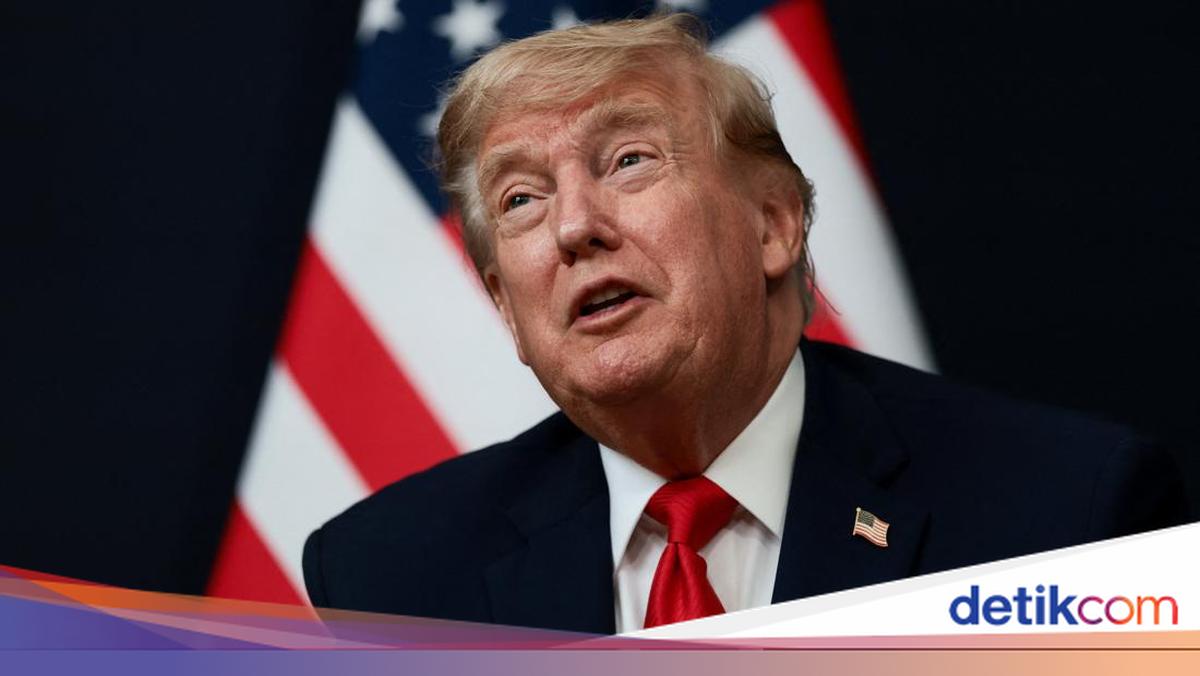
Amidst rising tensions in the Middle East, US President Donald Trump has issued a statement shaking the international political landscape. He stated that the United States is prepared to strike Pickaxe Mountain—believed to be a strategic site related to Iran’s defence infrastructure—as well as other targets, should negotiations with Tehran fail to reach an agreement. Simultaneously, Trump claimed he is still open to diplomacy, citing ‘very good talks’ with Iran. This rhetoric embodies a classic paradox in international politics: using the threat of military force as an instrument to generate peace.
Trump’s statement cannot be understood merely as a response to technical developments in Iran’s nuclear programme. The threat is part of a coercive diplomacy strategy, which uses the threat of military force to influence another state’s behaviour without necessarily wanting open war. This strategy has long been a feature of US foreign policy, from the Cuban Missile Crisis and the invasion of Iraq to various pressures on North Korea. However, in the context of Iran, the effectiveness of this strategy is increasingly questionable, as it risks magnifying distrust and narrowing the space for compromise.
Coercive diplomacy operates on the assumption that the opponent will calculate the costs of refusing demands. The threat must be credible enough for the opponent to believe that the use of force is a real possibility. Yet, the threat must not be so extreme that it completely forecloses all opportunities for negotiation. This is Trump’s dilemma. On one hand, he wants to maintain an image as a leader who is tough on Iran. On the other, he recognises that a major war in the Middle East would carry far greater economic, political, and security costs than a diplomatic compromise.
Trump’s remarks about wanting to avoid destroying power plants and bridges show that, even within the rhetoric of threat, there is an effort to maintain moral legitimacy. He seeks to demonstrate that the US does not intend to destroy civilian infrastructure indiscriminately. However, from the perspective of international humanitarian law, threatening civilian objects still raises serious issues. The Geneva Conventions and their Additional Protocols place the protection of civilians and civilian infrastructure as a cardinal principle in armed conflict. Thus, mentioning civilian targets as a military option has not only strategic but also normative implications for the credibility of the US as a state that claims to uphold a rules-based international order.
Iran has historical reasons to view such threats with deep suspicion. A long experience of economic sanctions, the assassination of nuclear scientists, sabotage of strategic facilities, and limited military operations has led Tehran’s political elite to see external pressure as a systematic effort to weaken national sovereignty. Consequently, each new threat from Washington often strengthens internal solidarity and hardens Tehran’s political stance. In many instances, external pressure does not produce moderation but instead empowers hardline factions who argue that compromise with the United States never provides a security guarantee.
Trump continues to maintain the narrative that Iran must not be allowed to possess nuclear weapons. This position is not new; almost every US administration since the 1979 Iranian Revolution has adopted a similar stance. The difference lies in the method. Some administrations have prioritised multilateral diplomacy through nuclear agreements, while others have favoured maximum pressure through economic sanctions and military threats. Trump appears to be attempting to combine both approaches: opening space for dialogue while maintaining the threat of force.
The problem is that the success of diplomacy is not solely determined by the ability to coerce an opponent. Diplomacy also depends on trust, the credibility of commitments, and perceptions of each party’s intentions. When military threats dominate political communication, building trust becomes exceedingly difficult. Iran will question whether negotiations are genuinely intended to achieve a compromise or are merely a tool to extract unilateral concessions. Conversely, the US will continue to suspect that Iran is only using diplomacy to buy time to strengthen its strategic capabilities.
This dynamic creates what international relations scholars call a security dilemma. One state’s efforts to enhance its own security are perceived as a threat by another. As a result, both sides continue to build up their defence capabilities, expand alliances, and intensify their rhetoric. In the long run, this creates a spiral of escalation that becomes increasingly difficult to halt.
The impact of Trump’s threats is also being felt immediately in the global economic sector. International oil markets have responded with sharp price increases. The surge is not solely driven by actual damage to energy production but by market expectations of potential supply disruptions from the Gulf region. The Middle East remains one of the world’s primary energy production centres. As the threat of war increases, market actors factor geopolitical risk into the price of oil. For developing countries, including Indonesia, this situation has direct implications. Although Indonesia is no longer entirely dependent on crude oil imports from the region, such price volatility still affects the national economy.