
Trump's Rhetoric Amounts to Empty Promises; Iranian Regime Not Collapsing Under US Onslaught
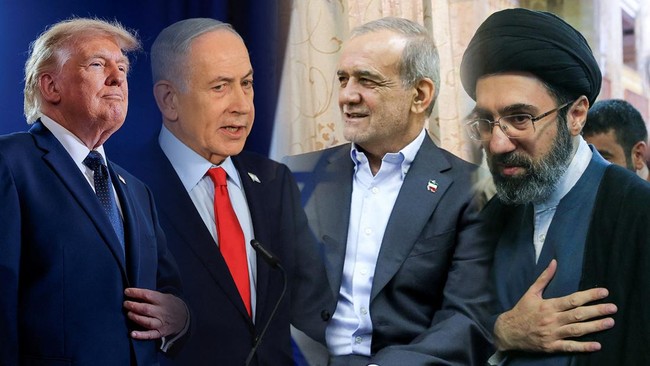
A surprising announcement came from United States President Donald Trump, who again approved a new wave of air strikes against Iran. This followed US accusations that Tehran shot down an Apache helicopter in the Strait of Hormuz. On Tuesday, strikes were carried out on southern Iran, causing six explosions. On Thursday (11/6/2026), new attacks were also conducted by the US under the pretext of ‘self-defence’ against Iranian aggression. However, amidst the increasingly brutal military escalation and massive economic shocks, predictions regarding the collapse of the Tehran regime are waning. This is evident in data from Polymarket. Citing Arab News, there has been a drastic change in global public perception. When the combined US-Israeli strikes first broke out on 28 February, as much as 55% of bettors predicted the Iranian government would fall. Yet as of this week, that pessimism has plummeted drastically, with 99% of bettors now wagering that the Iranian regime will remain firmly in power beyond the crisis. Even though the war has passed the 100-day mark, accompanied by reciprocal missile fire and a suffocating blockade of the Strait of Hormuz, Iranian authorities have proven capable of quelling turmoil. This resilience is considered inseparable from the strong grip of their domestic security institutions. ‘There is no doubt that US and Israeli escalation has placed Iran’s economy and security under immense pressure, but we cannot declare this an existential threat to the regime’s survival,’ explained Caroline Rose, Senior Director at the Soufan Center. Rose added that history has proven the deep resilience of the Tehran regime. They have repeatedly slipped through the net despite crippling international sanctions, chronic water crises, infrastructure hurdles, and domestic social upheavals. Conditions of Iranian resilience on the ground are also reinforced by leaked US intelligence reports to The New York Times and Washington Post. Pentagon data reveals facts that are both surprising and contradictory to Trump’s rhetorical claims that Iran’s military has been completely destroyed. As of mid-May, US intelligence detected that Iran had remarkably managed to repair 30 of the 33 missile sites directly overlooking the Strait of Hormuz. Furthermore, the nation is reported to still control around 70% of mobile missile launchers across the country and to have retained nearly 70% of its total pre-war missile supply. ‘My reading of the current situation is that Iran is in a much stronger position than the US, and I think that is very clear from their behaviour,’ said Andrew Gawthorpe, a history and international relations lecturer at Leiden University. Gawthorpe assesses that Iran is far bolder in taking high risks to escalate militarily to pressure Washington. Meanwhile, Trump’s domestic position is considered increasingly difficult ahead of the midterm elections due to the impact of inflation and soaring global crude oil prices, making Trump prone to wanting to resolve the conflict hastily. Sanam Vakil, MENA Programme Director at Chatham House, asserted that the focus of Tehran’s political elite has now shifted. The question is no longer whether they can survive, but how to translate this military resilience into an advantage at the negotiating table with the US. According to Vakil’s analysis, the end of this major confrontation is likely to boil down to one of three main scenarios. The first is the signing of an initial memorandum of understanding that lays the groundwork for a more comprehensive, long-term negotiation process regarding Iran’s regional role and its nuclear programme. The second scenario is reaching an initial MOU, but follow-up negotiations are never concluded, leaving the region trapped in an endless process similar to the situation in Gaza. ‘The third outcome is that we just remain where we are now—no war, no peace, and the situation just continues,’ explained Sanam Vakil regarding the final scenario option for the Middle East. Former British Ambassador to Saudi Arabia, Sir John Jenkins, cautioned that although Iran currently has the upper hand in the short term, their political leverage through the closure of the Strait of Hormuz has a time limit. ‘In the long term, Arab Gulf states are projected to build alternative export infrastructure to bypass the Strait of Hormuz, which will ultimately further isolate Iran’s economy from the global supply chain,’ he stated.