
Trump's New Space Policy Threatens Global Aerospace Industry
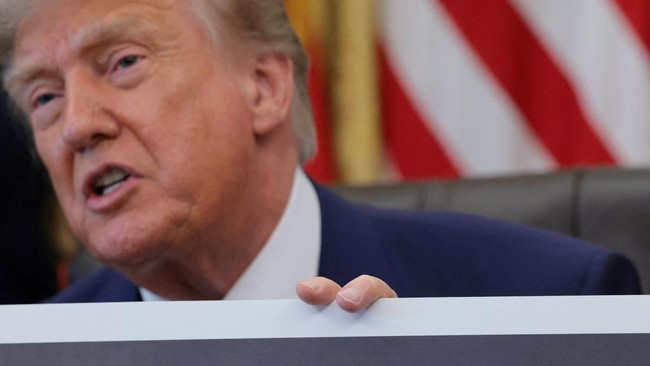
US President Donald Trump has officially issued a new threat to the global aerospace industry. Through a presidential memorandum titled the National Space Transportation Policy, the White House has set an ambitious target of increasing the frequency of commercial spacecraft launches and landings to more than 1,000 missions per year by 2030.
This target is highly aggressive. For context, throughout 2025 the US only completed 178 space launch missions. Although that figure has already jumped tenfold compared to 2013, with the majority contributed by SpaceX, Trump’s new policy is certain to reshuffle the global space business landscape.
“This policy responds to very rapid growth while securing America’s position as a leader in the new space era,” said White House Director of Science and Technology Policy Michael Kratsios.
Replacing the old regulation in force since 2013, the new rule gives all government agencies a 90-day deadline to survey federal lands. These lands will be allocated as new spaceport locations for take-off and landing activities.
A series of regulatory easements has also been prepared to smooth the path for this ambition. Among them, environmental reviews and operational permits for launch facilities will be simplified and accelerated. This environmental impact could extend to other parts of the world, as rocket launches contribute enormous emissions to the Earth’s atmosphere.
In addition, the US government is prioritising wireless spectrum allocation, air navigation coordination, and the massive provision of human resources for the space sector. Government agencies are strictly prohibited from making policies or engaging in activities that could undermine the competitiveness of private players.
Space technology export regulations will be revised periodically to protect US intellectual property rights while opening up sales to international markets.
The memorandum also urges NASA to accelerate its lunar programme. The government is targeting US astronauts to set foot on the Moon again before the end of 2028, followed by the construction of a commercial base two years later as a stepping stone to Mars.
Currently, Elon Musk’s SpaceX remains the sole dominant player in the US space industry after successfully executing 170 missions and launching 2,500 satellites last year.
The Federal Aviation Administration (FAA) has even said SpaceX is targeting a far more ambitious figure of 10,000 flights per year within the next five years.
Nevertheless, the dream of 1,000 launches per year could hit a thick wall in the US Congress. A number of politicians are reportedly continuing to pressure NASA to remain focused on the Artemis project, which has already consumed billions of dollars in state funds, indicating that budget issues and the political map will be the main obstacles to Trump’s ambitions.